

Desperate for money, many log in to Facebook to search for job opportunities every day. For those in poor countries, that could now mean finding yourself trafficked across multiple countries with the promise of international work in places such as Poland, the Czech Republic, or Romania only to find yourself in front of a contract written in Russian and told to sign or disappear forever.
I was invited to speak with two recently captured POWs who recounted their time from poverty to being a combatant in a war they were unaware was even happening. Russia has shown a pattern of targeting impoverished individuals, both within the Russian Federation and abroad, as detailed in a September 10th Amnesty International report, by using deceptive tactics and threatening them to sign or face death.
Both men have given us verbal consent to record them as they speak openly about their experiences; however, it is fundamentally impossible to provide consent while being imprisoned as a combatant. For that reason, we have taken steps to hide identities and some personal information for their safety and dignity.
They cheated us
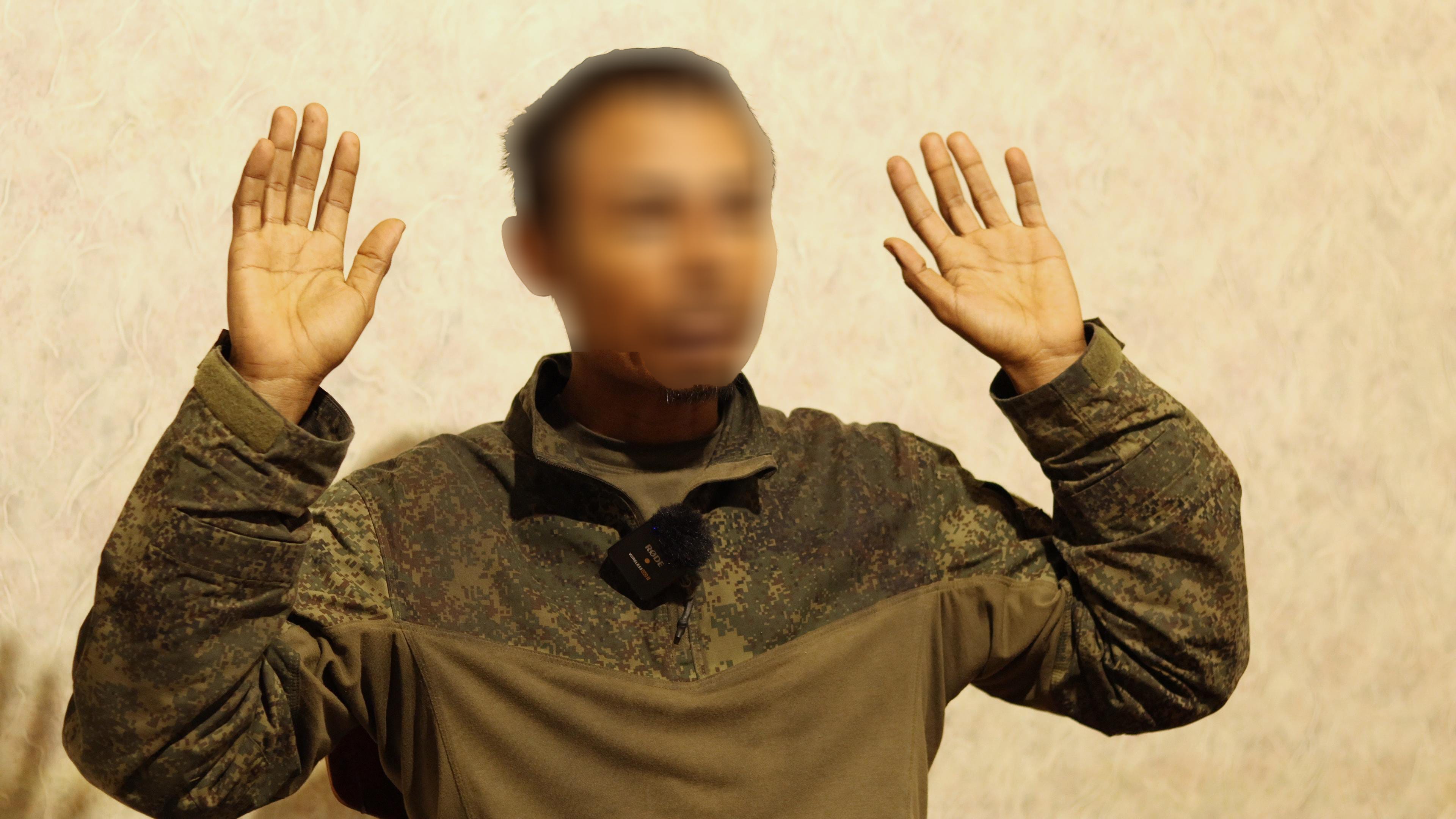
Located in the east of Ukraine, I arrived at a temporary building used to house these men before their transfer to a holding facility in the western part of the country. Both men were still in their uniforms and with hands tied with duct tape and a cover over their eyes. These two: ”Junior” and “Mario” lived very different lives.
Junior was a construction worker who also made comedy videos on Facebook with over 100,000 followers; familiar with the platform, he would search for work after losing his construction job and having his Facebook page taken down. A job picking fruit in Poland appeared, offering a monthly salary of $3,000, which Junior knew could support his longtime partner and child.
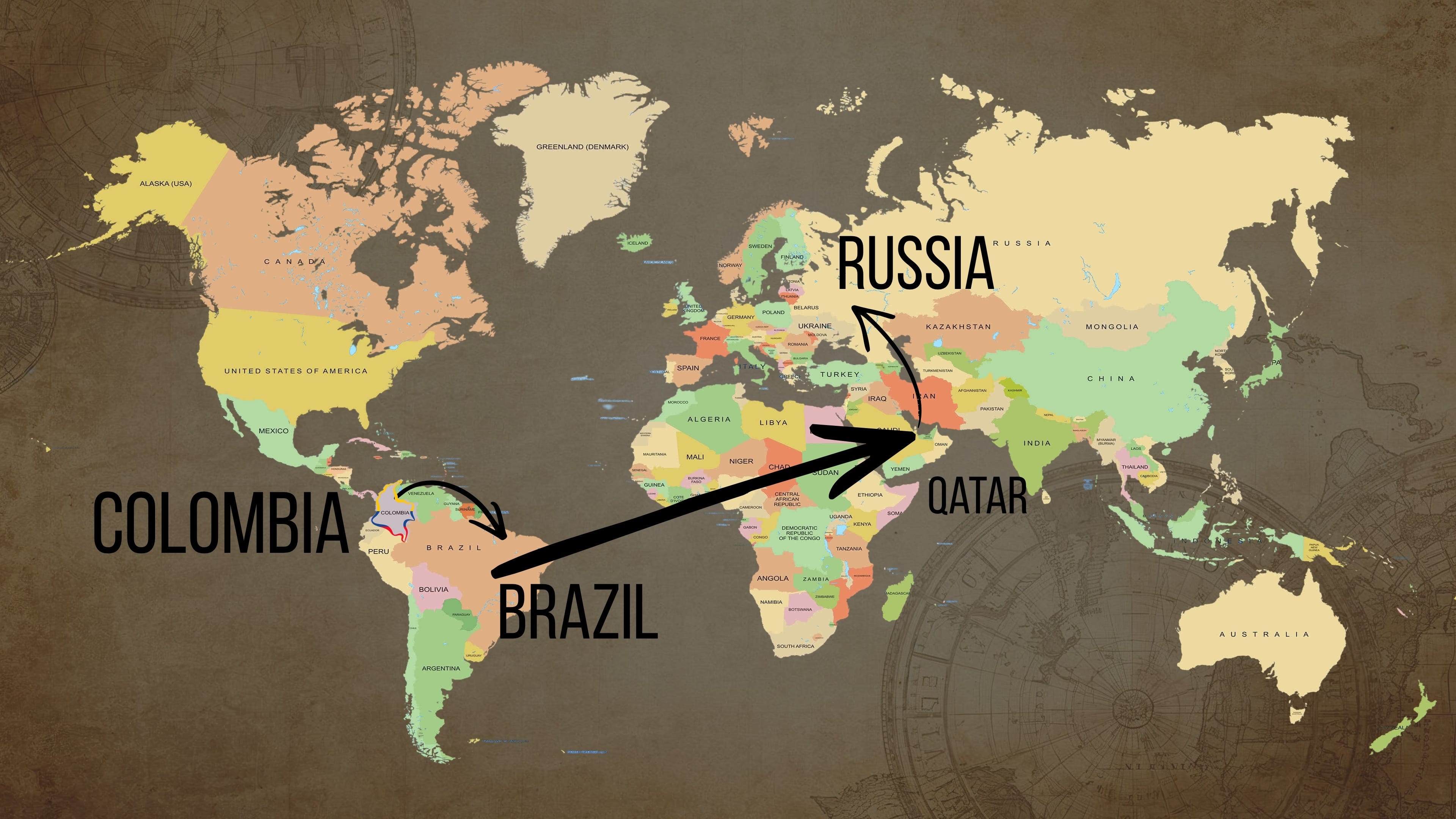
Likewise with Mario, Junior had never left his home country; however, he would be granted a passport with the help of the company and expenses paid to travel to the country’s capital of Bogota. From Bogota, he would meet with the same man that Mario did, a figure who goes by “Miguel,” handed him a ticket to Brazil, once there another figure, “Joana,” was coordinating South Americans to travel. Showering the men with food, alcohol, cigarettes, and a nice hotel, they were sent out five at a time from Brazil to Qatar. They were told that they would now be connecting from Qatar to Moscow and then driven to Poland. When asked if he knew that was impossible, he stated, “I didn’t know, because I, I mean, the first time I’ve traveled to all these places, from here to outside, because I’ve never left Colombia.”
Junior was met at the airport in Moscow with men wearing all black; some South Americans were taken in private cars, while others were taken onto a bus. Promised a fancy hotel to stay in, Junior understood something was wrong when they arrived at an abandoned, run-down building with no WiFi and constant guards. A contract was placed in front of everyone, all in Russian, and Junior was told the document was a contract for the work in Poland; he tried to use his phone to translate the page before being stopped and told to sign. Promised a tour of Moscow the next day; they were instead loaded onto a bus and brought to a military warehouse. As they watched the first person in their group walk in and then come out wearing military clothing, the rest of the group attempted to escape back to the bus, only to find the door shut and told that if the Colombians did not comply, they would be killed or imprisoned and made to disappear.
The men had been fingerprinted and fitted with uniforms; the Russians gave him WiFi access only once after signing to collect bank details for payment to be sent. The money never arrived, but Junior took this opportunity to reach out to his family. They offered to find a way to get him back to Colombia if the Russians let him go, that his daughter was sick, and that a previous injury would be a hindrance, but the request only led to his internet being cut off once again.
Mario had been a reservist in the Colombian military before running a set of bakeries with his wife, but business had slowed down. With no sign of being able to salvage the business, he moved in with family across the country to support his wife and children through working security only to find himself laid off six months later.
With no local prospects, he entered into a Facebook group where there were international job offers for such positions as kitchen staff, gardeners, and truck drivers—the latter being something Mario had a license in. However, seeing that these jobs were far from his home continent, he left the group. That did not stop the group from continuing to reach out to him. “I managed to leave the group, but they kept in touch with me[…]. I don’t remember the name of the girl who was doing the interview for announced employment in Russia. I was going to work as a driver, or I could also be a driver’s assistant to work in a fruit and vegetable company.” He entertained the idea despite his family’s objections. “One day, however, I told her, ‘no, let’s leave things as they are. I have my wife here. I have my daughters, and I don’t want to leave them. Because I am married and I would like to be close to them.’ So she told me, ‘Don’t worry about that because you can open an account and send money so that your family is well.’ Anyway, I tried to say no, but they insisted.”
Once they had convinced him, and with the next month’s bills close, he relented. They got him a passport and arranged his travel to Russia, where he was met with people dressed in civilian clothing, speaking with him only through phone translation. They handed him papers in Russia, papers He believed them to be for the company described to him as a truck driver. When Mario pointed out he did not understand the document he was signing, he was pushed to sign it anyways. Arriving at a clothing warehouse, he saw that these were not trucking uniforms but military ones, telling Mario, “[...] from now on, you are going to be a Russian soldier.” Mario released that he had been cheated and told me that; “In other words, it was all a trap [...] to have us in their hands and make us believe that we were going to work in a company, but it was all to take us to the war.”
Forward
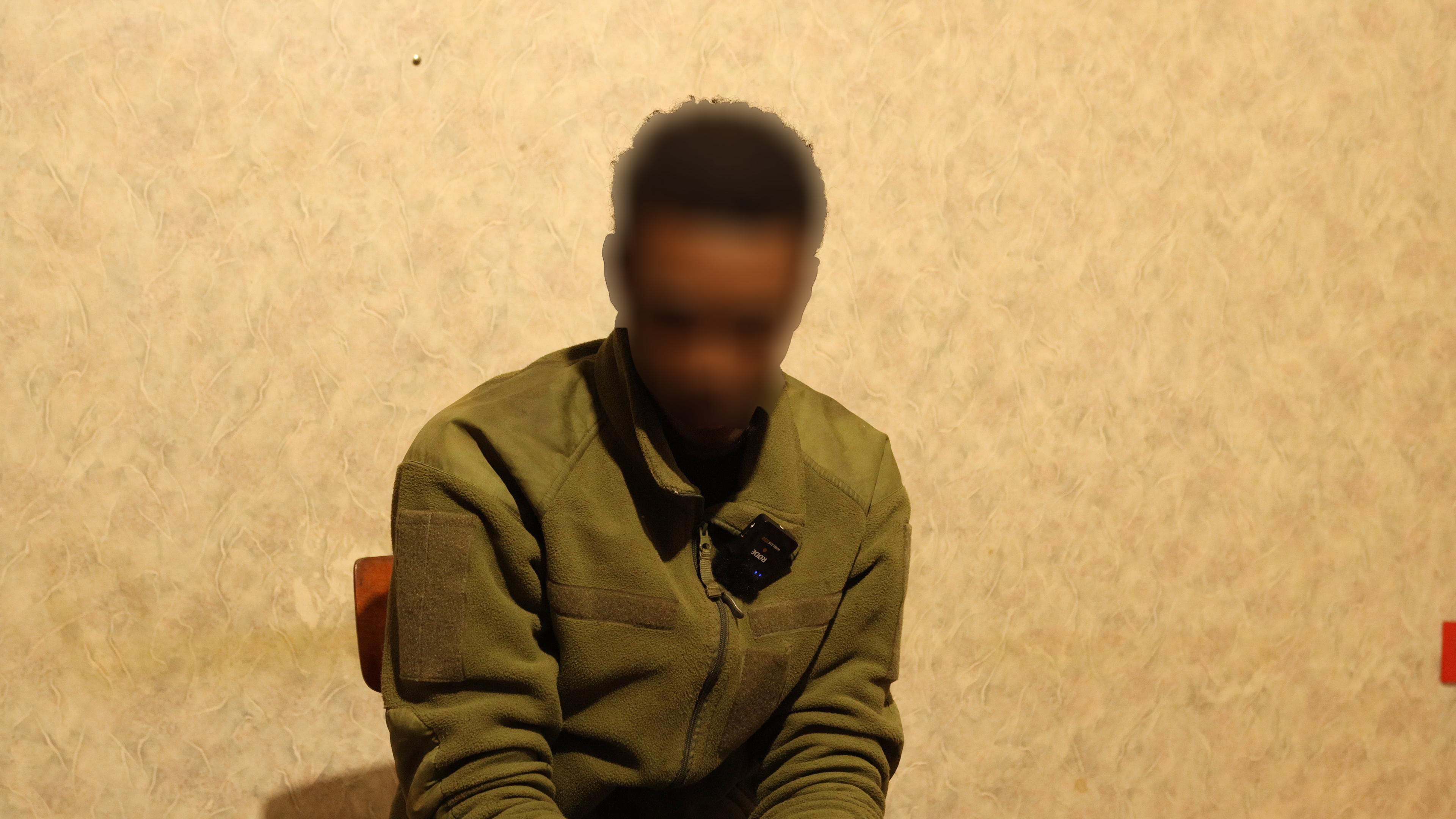
Junior described himself as a problem for the Russians. They had refused to send him back home, so he did not want to comply. Promised 40 days of training, he was given only seven and never with live munitions. He was given no role and only assigned one command: “Forward”. Two Russians, communicating through phone translation, commanded a group of South Americans; Junior watched them fall one by one to the ever-present drone coverage enveloping the kill zone. When he had gone to rescue a fellow Colombian, the Russians pointed a rifle at his head, telling him not to help the man, as he could no longer move forward, and if Junior did not move forward, he too would be left there as a “legalized” kill.
Soon, all that remained from their squad was Junior and the two Russians. When they arrived at a forward position, the Russians locked him inside of the bunker. They had decided that the next day only Junior would march forward, as they had no desire to do so. However, when the next day arrived, Ukrainian forces had pushed close enough to assault the bunker. While the Russians packed, they handed him a sign that said, “You are going to die.” Junior claims to have picked up a couple of Russian phrases and sat there in a stunned moment before having rifles aimed at him. Moving around in the limited space of the bunker, eventually the situation got too hot, one of the Russian men kicking him onto the bed before fleeing from the approaching Ukrainian forces.
Turning off all of the lights and taking any remaining bags to surround himself with, grenades were thrown down into the bunker, smoke filled the space and fire spread quickly. Junior was able to put himself out and cover his mouth with a urine-soaked coat, something he attributes to his time in Colombia, where police would deploy smoke grenades often. After surviving and crawling out, he saw a group of soldiers; initially thinking they were Russian, he got their attention only to later learn they were Ukrainian and that he had surrendered.
Left for dead
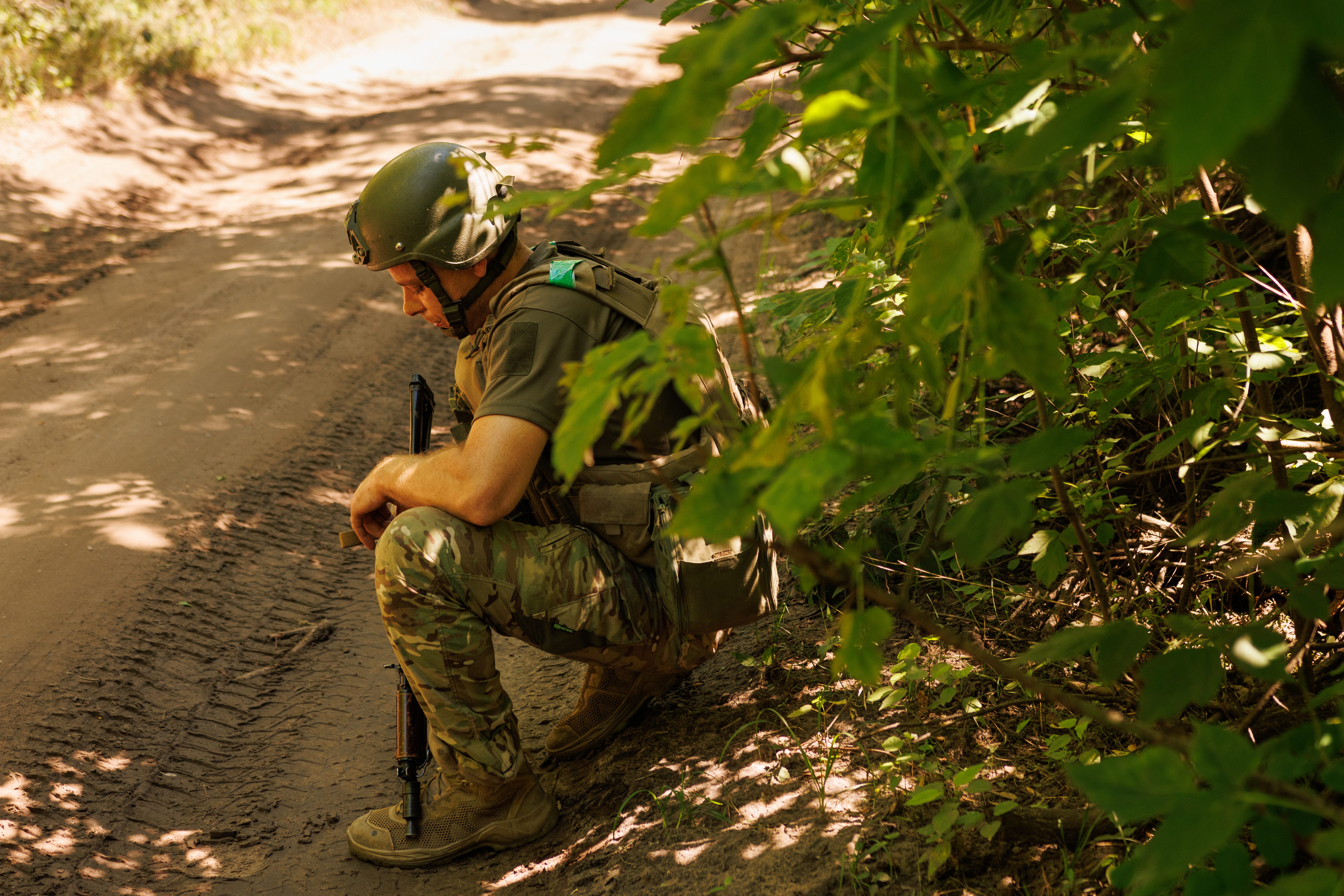
Mario was given more training due to his history of military service in Colombia and was assigned the task of bringing supplies from position to position with another South American and a Russian to lead them. During one of these runs Mario and the others in his group would have to walk through a minefield; dead Russian soldiers lay around them. As they walked cautiously, a mine exploded, sending shrapnel into Mario’s left leg. As he spoke to me, he would continuously subtly rub his leg; “[...]when I felt that the mine hit me, I fell; I thought my leg was broken; I didn’t feel it; I told him Sánchez, ‘Please don’t leave me here.’ “ I gave him a rifle, and I said, ‘Pull me, pull me,’ and he said, ‘No, Mario, I can’t.’” being left for dead and with no response for help from his radio, Mario fashioned his own tourniquet, dragged himself through the minefield, and eventually found a Russian trench. After getting an injection and having his wound bandaged, he was told the next day that he could not remain and was forced to travel alone to a different position.
Mario had no idea where this second position was but was sent out anyway. Sleeping in the forest, he would wander the battlefield until encountering Ukrainian soldiers who were assaulting the area. The Ukrainian soldiers picked him up and told him to be calm. “They told me, ‘Calm down, we are going to help you.’ They gave me food, and they gave me water again. I was scared [...] I got scared because I said, ‘They will kill me’ because I was serving in the opposite army.”
Mario and Junior both express apologies to the Ukrainian people for having been in the Russian army and hope to return to their families back in Colombia. Mario would go further to make a plea to Colombian men. “For me, I would advise the guys who are now looking for a job, please be very careful. Don’t let them fool you. If they suddenly offer you a job in Russia, don’t accept it, because they are fooling you. They are simply using us to bring us to a war that is not our country.”
Job postings on Facebook now carry a high risk of individuals being trafficked through multiple countries into exploitative situations for Russia’s war of choice.
Meta declined to comment when East/West FM reached out to them about this Situation.