


While facing Russia’s full-scale invasion, the Ukrainian state emergency services are facing ever-increasing drone attacks, “double-tap” strikes designed to kill first responders, new weapon systems, and an emergency system that has languished for years. The city of Kharkiv suffers heavily from all of these things but has met the horrific conditions head-on by creating the first of its kind command and coordination center. The first not only in Ukraine but in all of Eastern Europe, the command and coordination center is a groundbreaking modernization of Kharkiv’s civil protection system—done all under wartime conditions.
In this three-part series I will be showing multiple perspectives and responses to airstrikes from those of civilians on the ground, journalists reporting on strikes, the DSNS firefighters who have faced frontline conditions, and even exclusive access inside the Kharkiv command and coordination center.
Today I will show an exclusive look inside the Kharkiv command and coordination center and sit down with the man responsible for the center’s conception and implementation, Bohdan Hladkykh. A look behind the curtain into how these systems are saving lives and the brutal realities of “double tap” attacks and how this center has worked to save rescue workers’ lives.
Given a righteous task
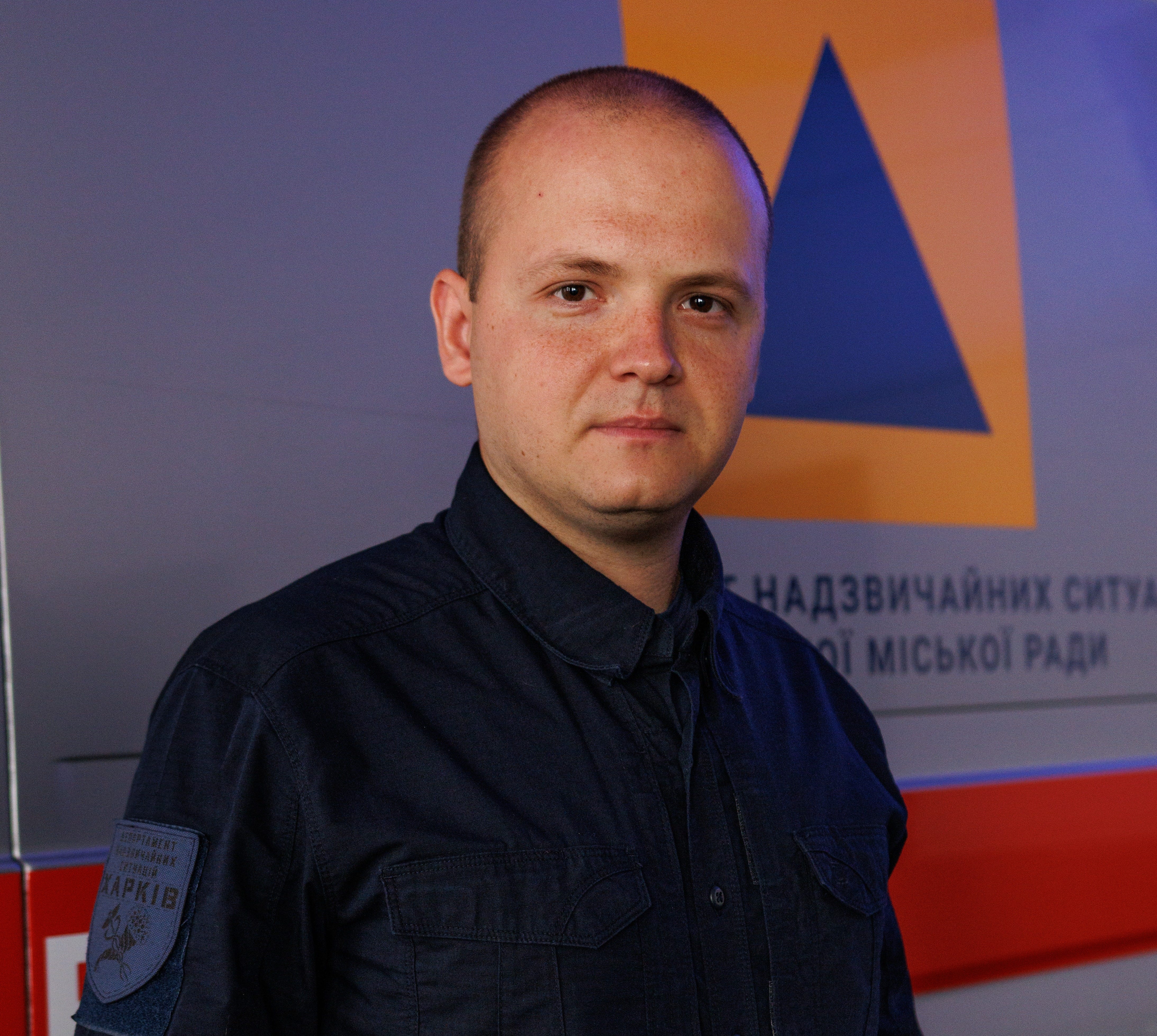
32-year-old Bohdan Hladkykh, Director of the Department of Emergency Situations of the Kharkiv City Council, was not a rescue worker but rather a lawyer by study. Bohdan spent his career working with IT technologies to help in Ukraine’s digital transformation before being personally invited by the mayor of Kharkiv to bring Kharkiv’s Civil Protection system to a new level in 2024. He would tell me, “I’ll be honest, probably since childhood, one of my dreams was to become a rescuer. Let’s say it didn’t fully come true, but it still led to the need to reform the civil protection system that existed in the city at that time.” A task was set for Bohdan to come up with a proposal to modernize the civil protection system.
This would be an incredibly difficult task, to rectify a civil protection system that had been neglected for years and underfunded as a matter of state policy, and to do so in the middle of the largest war in Europe since WWII. Convincing the mayor and seeking funds from domestic and international partners, Bohdan went about implementing this concept into reality. He would tell me, “Not sure how it may come across, but I can say this: But thanks to the war, the state emergency services and overall the civil protection system got an entirely new life. Just like the police and all rescue services.”
This was all coming off of the back of 2024’s intensive bombing by Russian “KAB” aerial glide bombs launched from jets that were kept just out of range of the U.S.’s limit on “Deep Strikes” into Russian territory. These attacks, sometimes reaching as many as 15 bombings a day, were the new terror of the city. Launched around the clock, they found particular prominence during the daytime when mobile anti-air units are not allowed to leave their position in fear their position would be identified. Many residents remember this time just as badly as the attacks in 2022, at the start of the full-scale invasion. With a colleague writing to myself and others they are close to, they knew that during this time that they believed they would die if these strikes continued.
I experienced these attacks myself whilst reporting from Kharkiv in early 2024.
Double tapped

The Epicenter attack of May 25th, 2024, was a particularly horrible day. Russians launched two D-30 UMBP “KAB” aerial glide bombs at a supermarket on a busy Saturday afternoon. I was on scene shortly after the second explosion and could document the uncontrollable fire that ensued, as was DSNS crew lead Turgut Asif-Ogku Abbasov, whom I had interviewed in the previous part of this series. Turgut arrived to assist in the rotation of the first firefighters who had arrived on the scene. He would help extinguish the extremely hot fire and begin the long process of body recovery; three would be identified while on his shift, but a total of nineteen people would be confirmed dead with over fifty injured in the attack.
This was a “double tap” attack. Double taps, or repeat strikes, are a tactic adopted by the Russian military so that they may kill as many first responders as possible on an emergency site by delaying a second attack just long enough for rescuers to arrive on the scene.
Turgut would talk with me about that Epicenter attack. “There were two KABs, yes, it was two KABs. So in 2022, the threat was from MLRS. And then, of course, they started terrorizing and killing us with KABs. Unfortunately, that’s our bitter experience. These repeated strikes—we fell into those traps. They double tap with either KABs or Shaheds. Second strike about 15-20 minutes later, when there was already a gathering, lots of rescue services, police. Firefighters arrived, and they repeated the strike, double-tapped.”
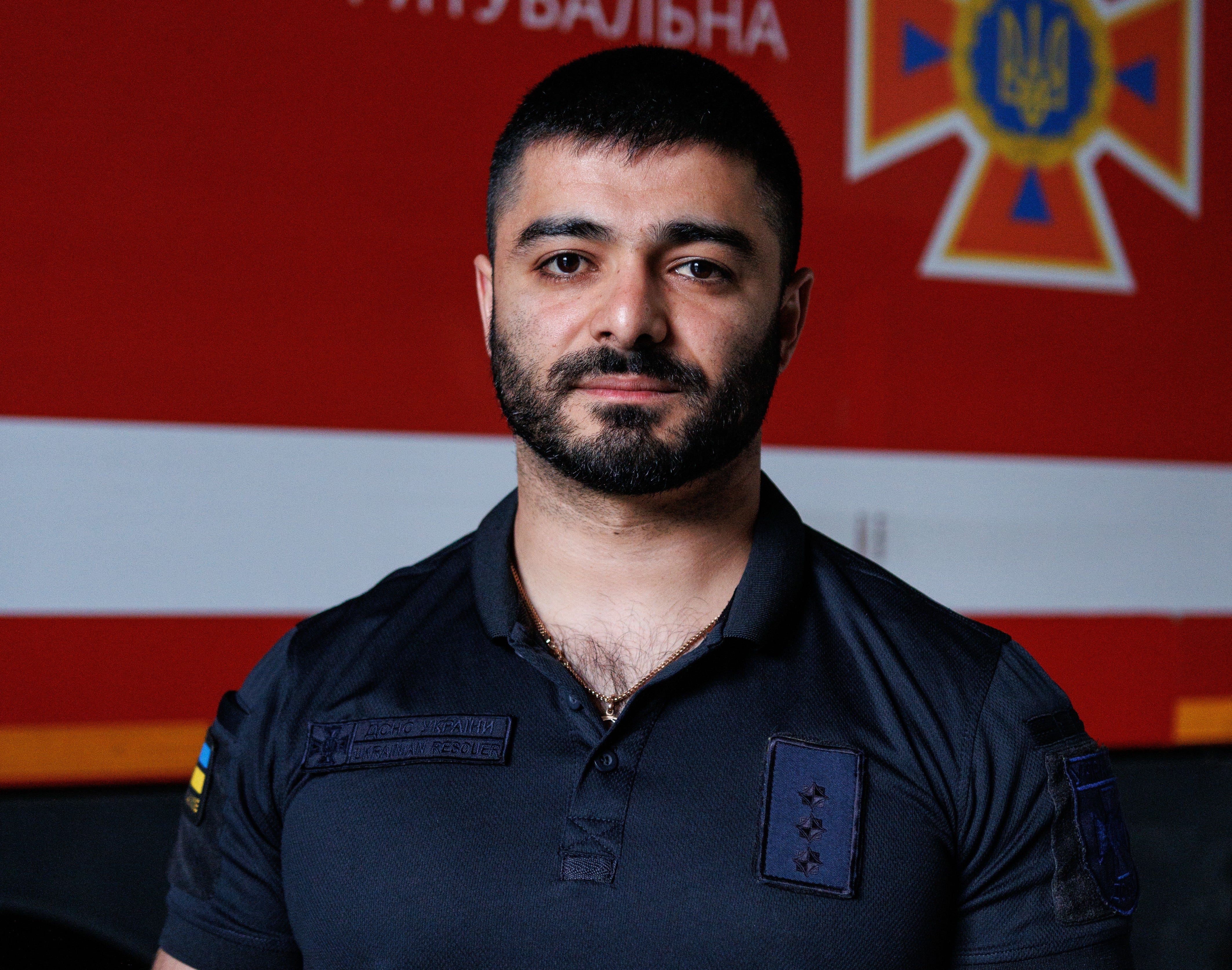
Turgut knows the loss these strikes cause, as his friend and fellow firefighter Oleksandr Podolskyy was killed by a double tap attack in March of 2022 when a Grad missile struck Kharkiv’s Barabashovo market. Turget would tell me that hearing the Grad missiles landing, everyone on the scene had taken cover and that, “when everyone started to get up, two of our men stayed on the ground. They didn’t get up. One had a shoulder injury, a fracture in the humerus. He had surgery and is doing fine now. But Sasha got a shrapnel wound to the head, and he didn’t make it to the hospital. He is gone.”
These double-tap attacks are one of the areas where the Command and Coordination Center needed to quickly adapt and find a solution to minimize the impact of, to give advanced warnings of these repeated attacks and save lives. Bohdan tells me, “Starting from, as you correctly said, when KABs began to hit the city, at first we didn’t see them at all. Then there was a situation when we didn’t see the “Molniya” drones (lightweight, fast-moving suicide drones), which were used for the first time against Kharkiv by the enemy. Now we see them.”
I was given an example of this in the aftermath of a “KAB” aerial glide bomb strike in the Kyivskyy district of Kharkiv, where over a hundred people were on site. Utility workers, rescue workers, municipal services, and even the heads of departments were there when the call came in that two Iskander missiles were launched at them. With the new advanced warning system provided by the command and coordination center, every single person on site was able to get into shelter. Of over one hundred people, not a single one was killed, and I am told that as of today in Kharkiv, injuries from repeat strike attacks have been minimized, and fatalities from these double taps have been eliminated.
The priority is not just the rescuers on site but also those who have been rescued and those still present on site of the emergency in need of help. Bohdan tells me that “in almost 90 percent of cases, civilian infrastructure is attacked. Things that have nothing to do with the military or military units. That’s why this component is so important.” A number echoed by Ukrainian diplomats and UN council meetings.
A brave new world
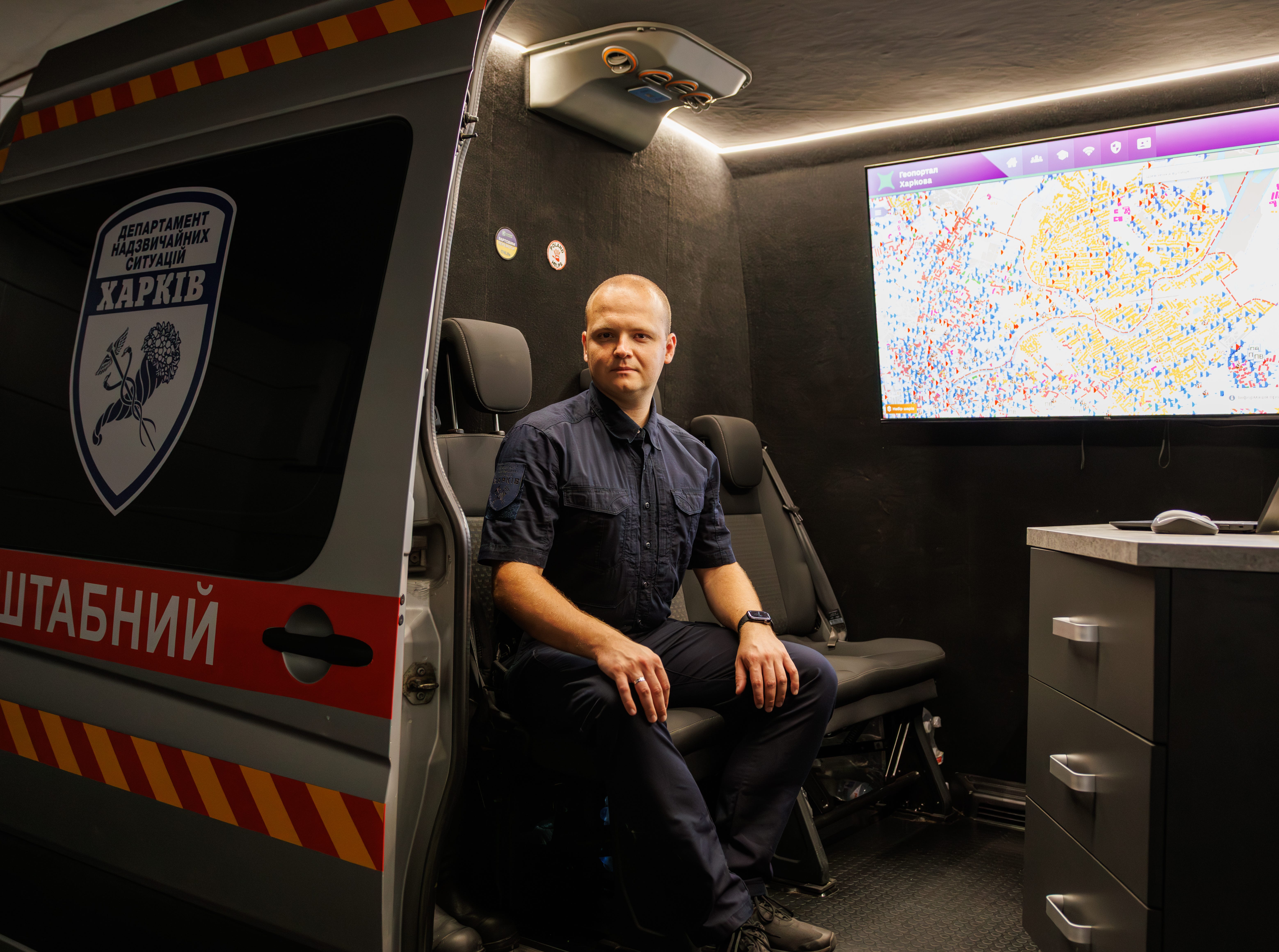
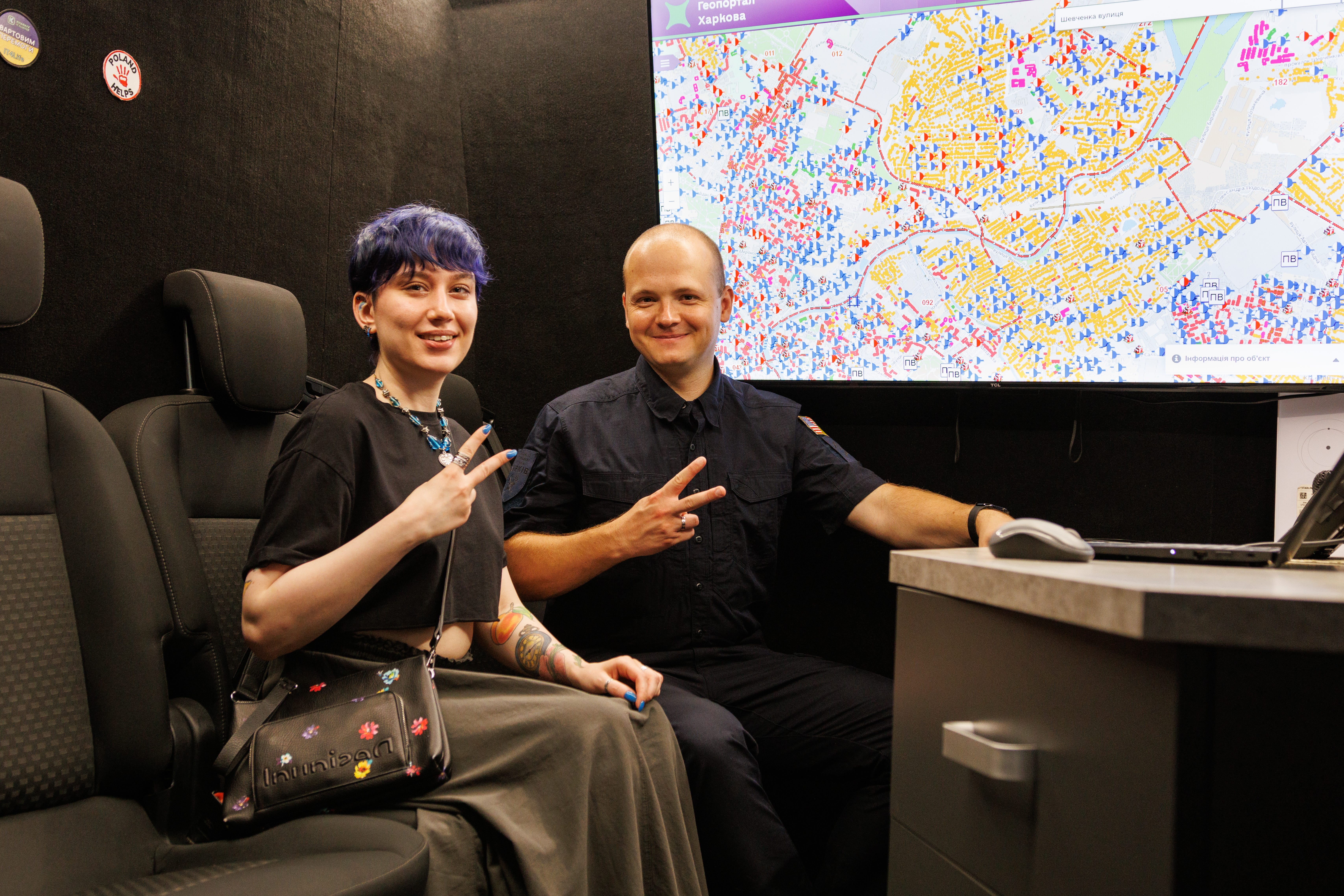
As I stand in the main room of the command and coordination center, I am told about all the desks set around the room and what service they correspond to. Electrical services, police, anti-air military coordination, and DSNS rescue workers all sit at desks no more than 10 feet apart from each other so that they may communicate without delay. On the floor-to-ceiling monitors I am shown recordings from all over Kharkiv of Russian airstrikes—all taken from a new network of cameras scattered around the city. I am even able to meet the person responsible for pushing the infamous air siren button that sets off the air alarm warning system for the city. Even this system has been updated with the changes Bohdan and his team have implemented—sirens now also speak a specific threat type, be it drones, aerial bombs, or missiles.
There was truly nothing like this before in Ukraine. typically, all emergency services worked separately from the others, and that would often lead to necessary services not being on-site for even something as simple as a house fire. Frankly, the new coordination center it looks like a set from a TV crime show.
Bohdan shows a digital map of Kharkiv with icons over every home and apartment block. Clicking on one of these shows an apartment’s occupants, the floor they are on, the number of their apartment inside the building, and their phone number. A digital map of people across the city allows emergency service workers to understand who could be under rubble, who to call to check, and if there is no response, who to search for. “We were the first to do this during the war. Under the conditions Kharkiv lives under, no less. And now many cities in Ukraine, and even in Europe, are adopting our experience and implementing it in their own communities with a coordination center model.” This system is setting a standard for this part of the world—it is not lost on anyone involved here or those in other parts of Ukraine.
Plans were made to implement command and coordination centers across Ukraine based off of the Kharkiv model; however, these systems are mighty expensive. The truth is that this center in Kharkiv was largely funded by USAID. I would be told by Bohdan, “There is a significant contribution from USAID in building such a modern security center, our emergency center here. And if not for international partners, it would have been extremely difficult for the city budget.” While other partners such as Poland Helps and Kharkiv IT contributed quite a bit, USAID would make up around half of the total funding.
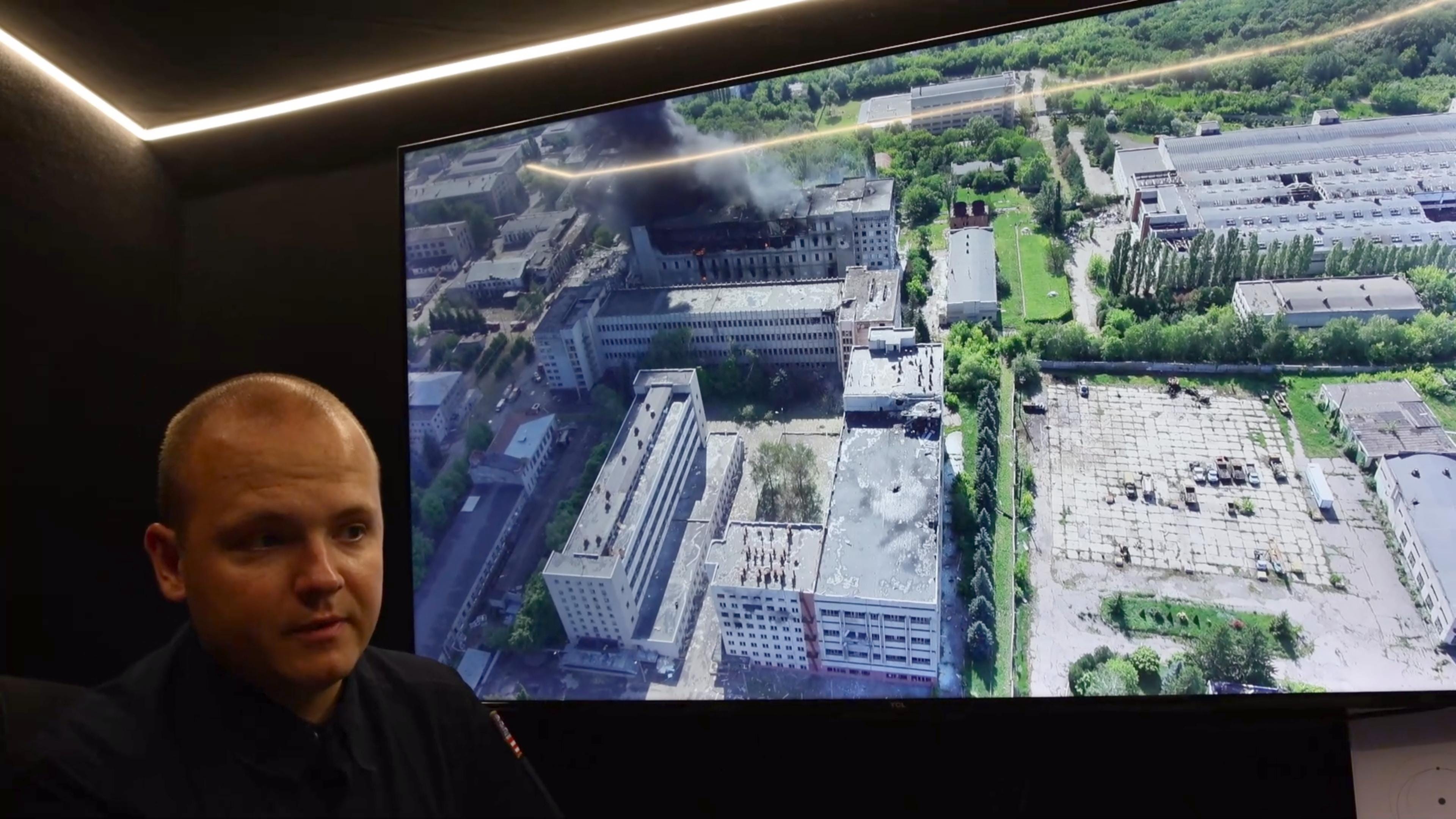
Due to this command center, the emergency response time has dropped from minutes to seconds. When an emergency occurs, the surveillance operator detects it and provides the location to every service in the command center; they are on the same page about the type and location of emergency and what is needed as new details arrive. A quick dial system means that at any moment those at the command and coordination center can contact any of their crews across the city to get involved or relay information. When asked about his role, if Bohdan stays at the command center or goes to the scene of these attacks and emergencies, he tells me, “Well, of course, I also go out. We have rotations; all our guys work 12-hour shifts. The command post works 24/7, as does the emergency. All the people here right now also work 12-hour shifts and rotate. So of course, I’m present at every shelling incident.” Utilizing a mobile command center, he is able to fulfill his role and be on scene to personally oversee the emergency situation.
Bohdan speaks very passionately not only for those of the emergency service workers but also for his team. With an average age of 29 years old, the emergency center is quick to adapt, and as circumstances change, I am told the policy is “minimum bureaucracy, maximum innovation.” “As you know, we have built the center, tested it in wartime mode, and continue to test it. If there are moments where we need to change, or we have to introduce some innovations, we do it very quickly and learn just as fast. Because we don’t have time, you know, for all those bureaucratic things.” Bohdan tells me.
Reflecting once again on his team and how proud he is of them Bohdan tells me, “One thing I can say—I’m often asked, ‘Where did you find such a team? Where did you get such people, especially young ones?” Well, first of all, I want to say they all have fire in their eyes. They love their work. And most importantly—you know, I’ll say this: You don’t always need to have a specialized professional education in this field. What unites all of us working at the center is one thing—an incredible love for the city of Kharkiv. And it makes extraordinary things happen.”
Worth fighting for
War creates the need for innovation, and many from the “Maidan generation,” those people who challenge the bureaucracy inherited from the old Soviet system, continue to do so during Russia’s full-scale invasion. They see areas in their country where they can improve for the benefit of their people, where they can truly make a difference and work to implement said change. This doesn’t mean that all problems are solved, but just the fact that people today are continuing the dream of a better world that many held tightly to in 2014.
That same colleague who messaged me accepting that she would probably die under Russian KAB attacks, now, upon leaving the command and coordination center, said that this type of innovation and breaking of the old Soviet system is why she fought for and became a Maidan revolutionary back in 2014.
During my time gathering reports and information--if that is being out of patrol with Anti-aircraft teams, sitting inside of a fire station, deep inside the command and coordination center, or on the action sites of Russian air strikes for this series of articles I have seen a fair share of horrific things. The fact is, I can never make you understand the feeling of terror that those sitting under sirens feel. How mothers, fathers, sons and daughters feel to wait in their hallways with their families feel as their building shakes from impacts close by. You will never understand it unless or until, dear reader, you experience it--and even then those here in Ukraine have been experiencing it for what is now nearly five years.