In the autumn of 2026, the Khartiia brigade posted a video of a Russian saboteur from St. Petersburg who had shot five people during his attempt to infiltrate the city of Kharkiv. After spending nearly eight years in prison, the Russian saboteur went straight from his cell to the front, where he was sent on a solo mission following a route on his phone; he was later found by members of the Khartiia brigade between the village of Bobrivka and the neighborhood of Saltivka, where he was surrounded and apprehended.
The most northern part of the city of Kharkiv, a place known as Piatykhatky, sits just 13.6 miles or roughly 22 kilometers from the Russian border. Since the 2022 Kharkiv counter-offensive pushed out Russian forces, they have crept ever closer. Many areas of Kharkiv have seen a slow, yet continuous Russian advance—Vovchans’k along the Russian border, the areas surrounding Kupiansk to the east, around the village of Anyshchyne sitting on the border between both previously mentioned areas, and as of recently, a renewed excursion around Kozacha Lopan directly north of the city.
Now teams are working hard across the Kharkiv front to hold the land they fought hard to retake back in 2022, but that was four years ago, and this is a different war than it had been before. Drones have become the defining tool of modern warfare, battles underground in tunnels, and the attacks against civilians have never been higher. You may not have heard much from Kharkiv, but war rages on.
“The larger the caliber, the more they fear us”
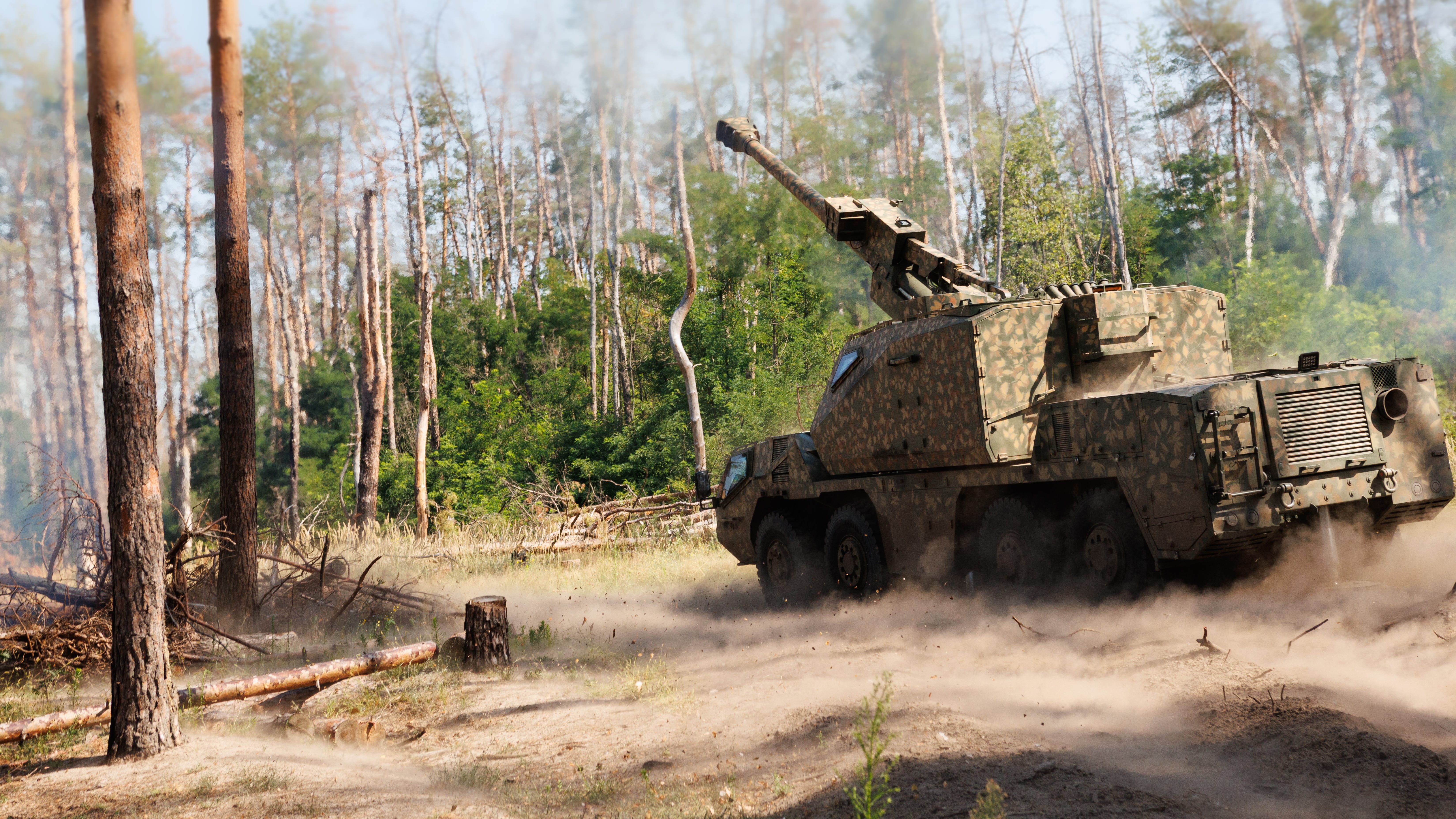
In the early morning light, we departed the city of Kharkiv, headed closer to the Russian border. The FPV drone threat remains high as drones already push deeper into the city. Jumping out of the truck, we quickly make our way inside, meet the crew, and see the system we’ll be working with today: a Czech-made 155 mm DITA is a self-propelled artillery system operated by the Khartiia Brigade.
Ammunition is loaded into the DITA artillery system’s automatic loader. Designed just a year before the full-scale invasion of Ukraine in 2021, the DITA, or Digital Integrated Artillery System, has all the modern-day updates an artilleryman could dream up. The turret has a magazine system that allows for pre-loading of shells, gunpowder, and primers; this—paired with the automatic loading—allows for the crew needed to fire being reduced to just two, although now they are accompanied by two more gunmen whose job it is to scan for drones and deal with any jams that may occur.
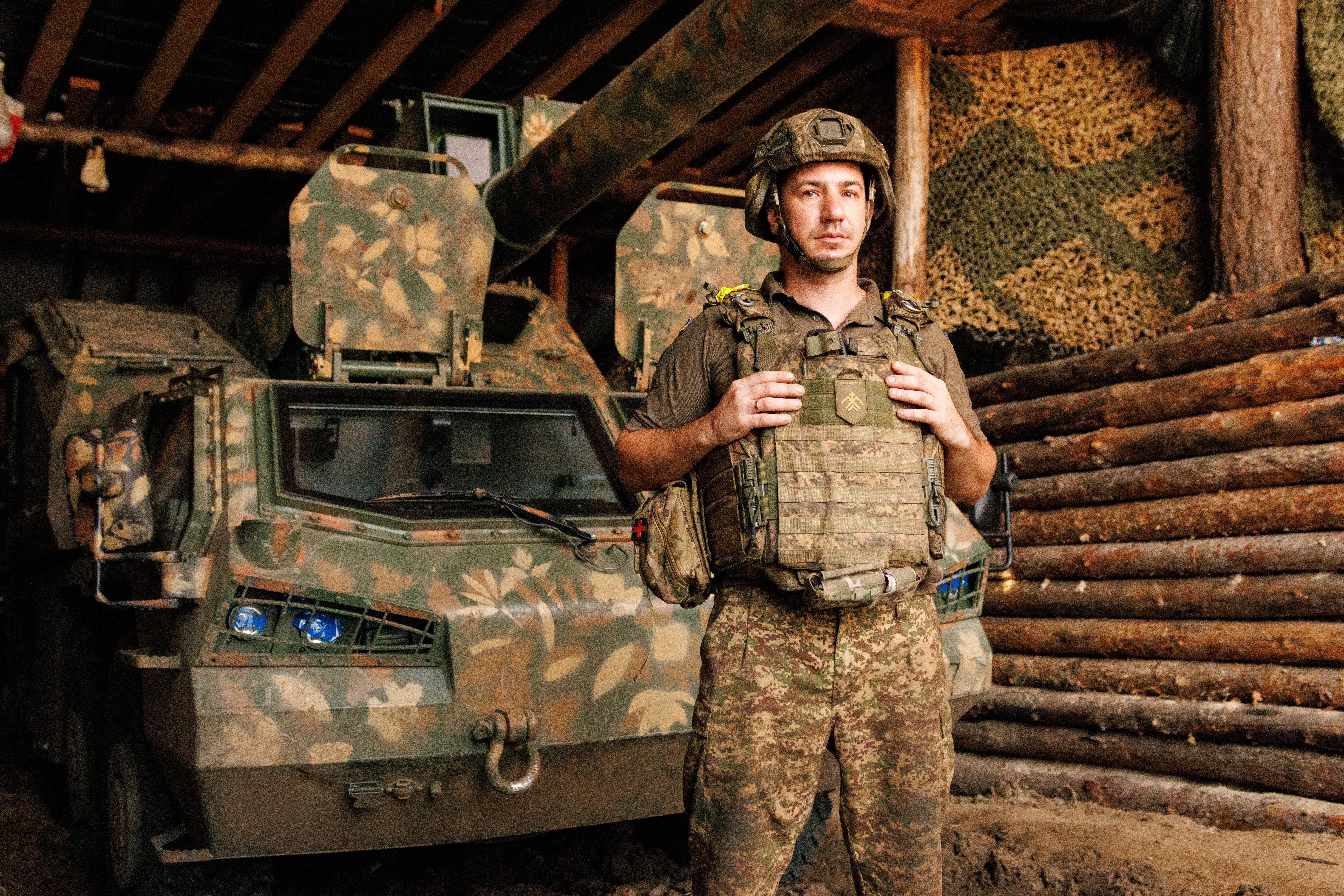
With an effective range anywhere from 14 to 40 kilometers, the gun is automatically set to fire based on calculations entered in from the intended firing coordinates. “Chucky,” the junior sergeant and commander of the DITA, lovingly refers to it as “our girl” when describing the system. “It’s a very good gun; with a solid Tatra-based chassis, it has good off-road capability and a smooth ride. [...] It’s very accurate—we hit the target on the first or second shot.”
Chucky’s journey through the military started within the same month as the full-scale invasion. Joining an engineering unit, he kept finding larger guns more attractive; transferring into a mortar unit, he says that he learned the basics there before moving on to heavy artillery—something he grew a fondness for. When I asked why he enjoyed heavy artillery so much, he got a smile on his face. “I like it when the “Pidars” (a typical slur against Russians) are afraid of us. The larger the caliber, the more they fear us! He says this while bursting into a hearty laugh.
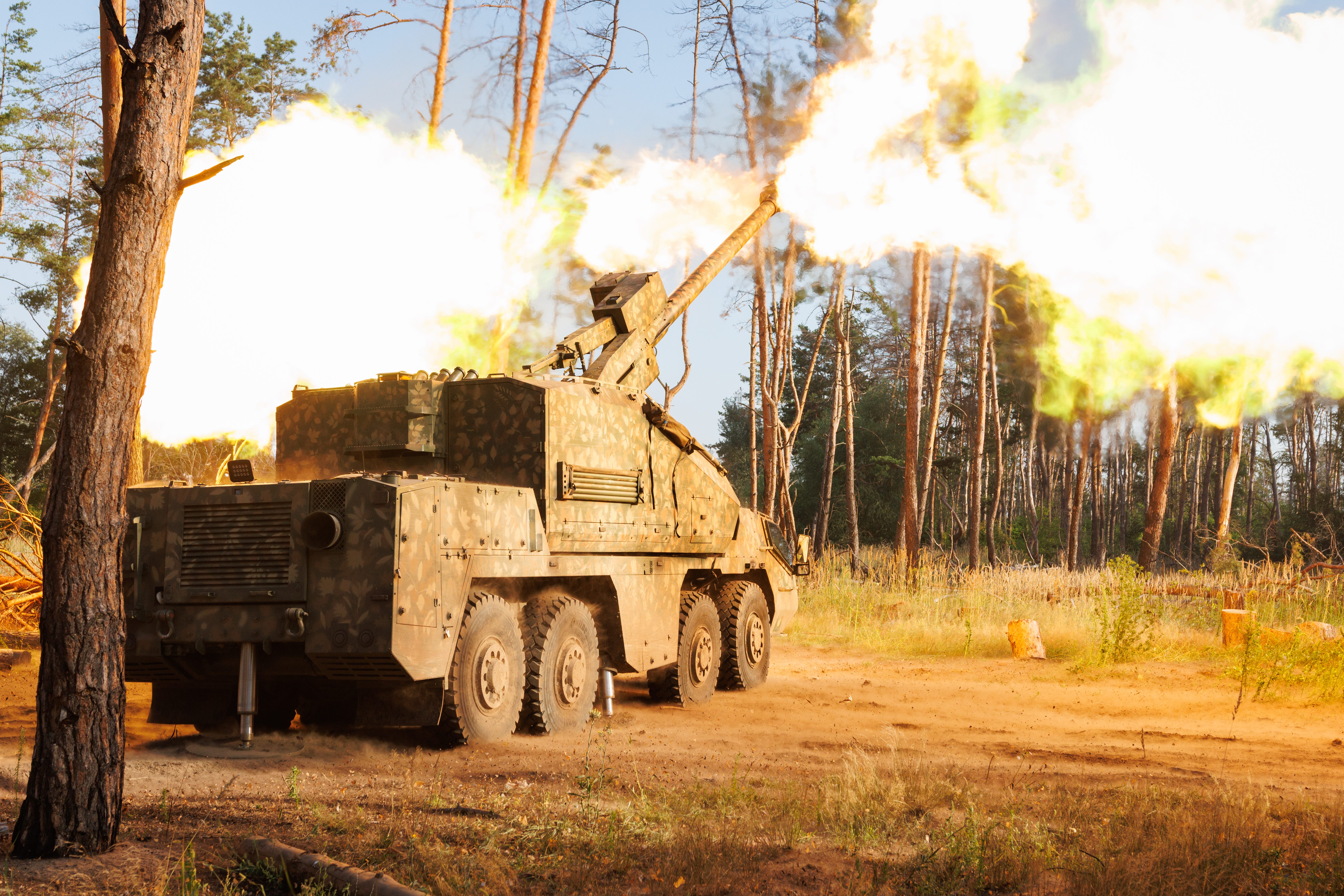
Holding on tight as I am, sat upon the DITA’s turret, we rush down the forested paths towards the firing point. Jumping down my armor only makes the landing harder once we reach position, dashing to a safe distance as the cannon rises. A minute passes, and the automatic loader locks in both the shell and propellant. The primer magazine pushes it into place, and fire shoots out around us, the force of the blast making it nearly impossible for me or my camera’s internal stabilization to hold steady. Thirty seconds pass, another one fires off, shaking up the dirt around us, followed by another and another – that day would see nearly fifteen shots sent down range in only a couple of hours.
Khartiia has been a cornerstone of Kharkiv’s defense since the beginning of the full-scale invasion. It began as a DFTG unit of volunteers – DFTG, or “Volunteer Formation of the Territorial Community”, can be best understood as a civilian militia force given authorization to fight as military forces. While DFTG forces remain a part of Ukraine’s defense until this day – with prominent examples being the “Bucha Witches” or “Phoenix” – that I had previously reported with Khartiia remains the greatest success story of the programme. While many DFTG formations hold positions along the third line, Khartiia was one of the first units to reach the Russian border and was later deployed during the battle of Bakhmut.
Now, not only was Khartiia reformed into a brigade under the National Guard of Ukraine, but there is an entire corps that is home to brigades such as “Sloviansk”, “Spartan”, and the Latin American brigade “Rug”. When asking Chucky if he had any fear of another major breakthrough on the Kharkiv front: “Fear? I don’t think there’s any fear—we’re holding our ground just fine here. We’ve dug in well, built many positions, and are holding the line. Of course, there are suspicions that there will be assaults, and they’ll be major ones, but we’ll hold our ground—we’re ready to stand our ground to the very end.”
A war of drones
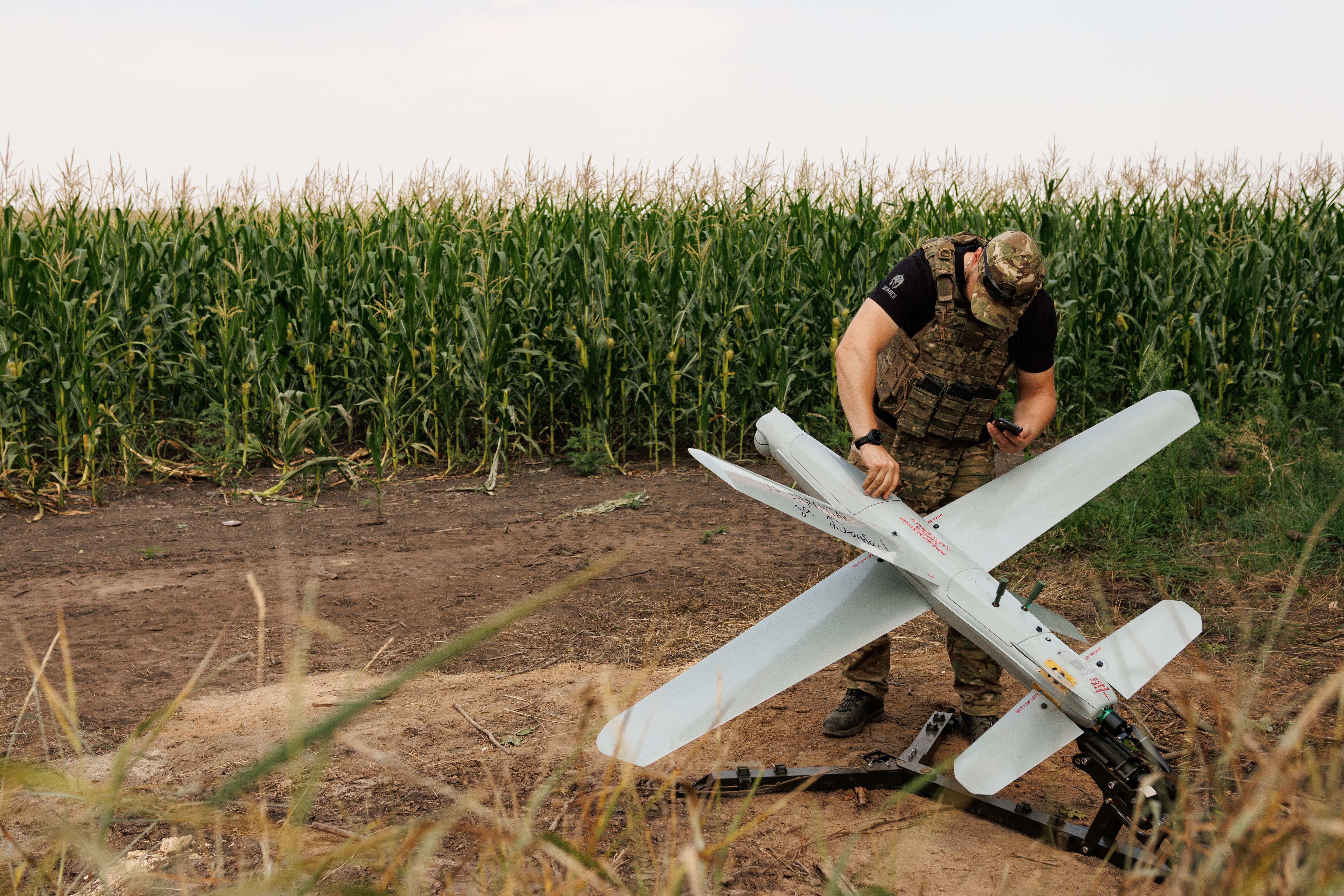
When thinking of police, you probably do not imagine them with advanced X-wing-style loitering munitions, silly you; the patrol police officers of the Khyzhak brigade have become well versed in the trade of mid-range strike drones. In the north of the Kharkiv region, they lay in wait among the tree lines, awaiting their time to strike and fight at the edges of the cornfields.
The crew operates the “Bulava” strike drone, which is similar in concept to the highly effective Russian lancet drone. They aim to hit high-priority targets further behind the zero line, such as anti-aircraft equipment and tanks, and as their target today, a drone pilot center inside of an abandoned home. Building the drone, it is nearly as long as the men are tall; racing against the oncoming storm, they load the drone onto a pressurized air launch system and fire it off. Reaching speeds nearing 100 kilometers an hour, it flies deep behind Russian lines, and with assistance from another brigade’s scout drone, it is able to maintain a signal through a localized mesh network. The village comes into view as the pilot sets the target on the drone center.
Right before impact, the Ukrainian scout drone is disabled, leaving the officers with no eyes on their Bulava drone; still, impact occurs. They review the footage and find that the drone hit near the target, but it’s unclear if it was a direct hit. Such is common with drone operations along the frontline. The mid-range strike drone campaign has been a great success for the Armed Forces of Ukraine, as they have been able to cripple Russian logistics, target far behind Russian lines, and decimate Russian assault forces in a way that was previously the domain of Russia. However, such success comes with the same challenges that were faced by Russian efforts to do the same to Ukraine. The challenges include signal jamming, active air defense, and drone interceptors.
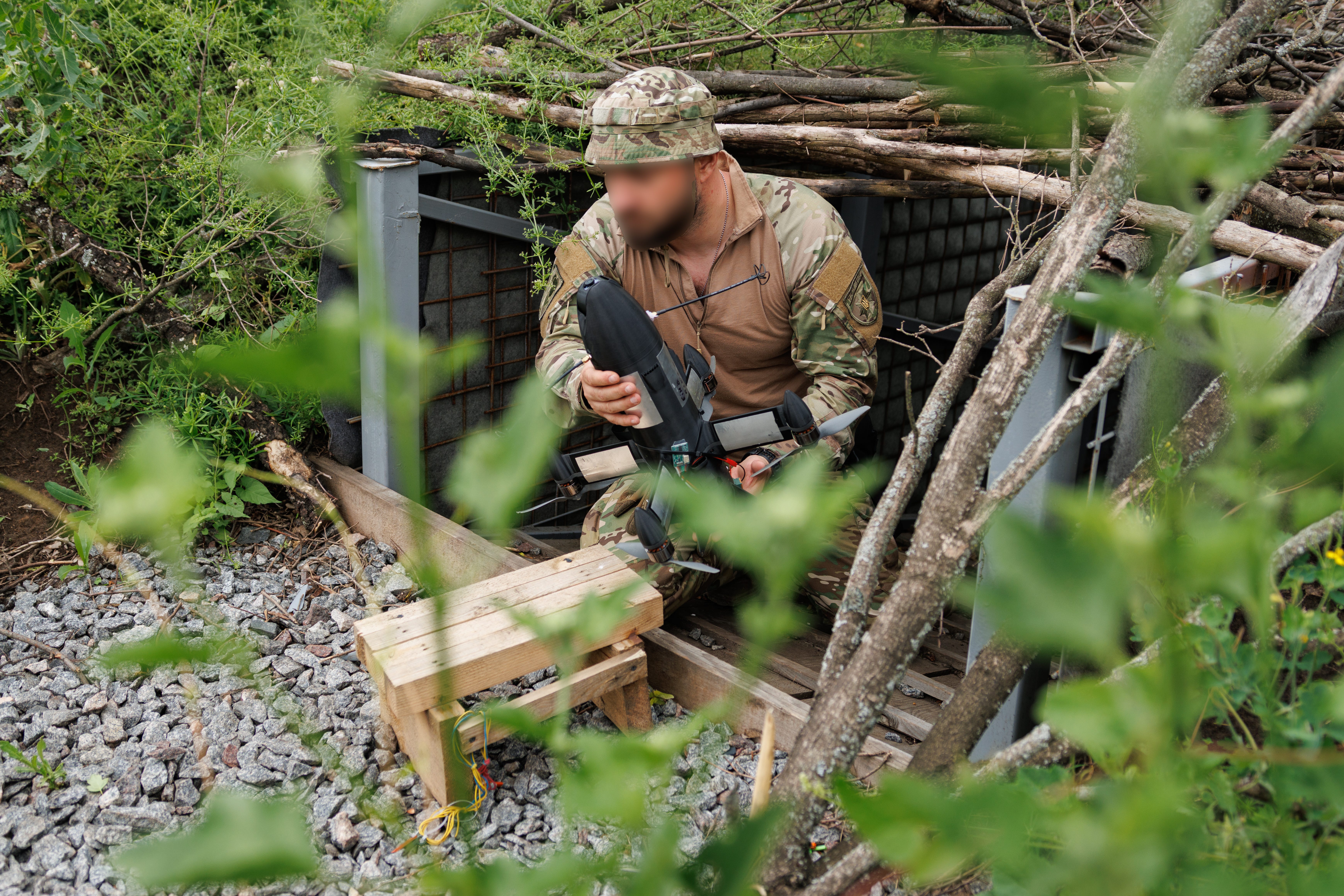
The Khyzhak brigade also uses drone interceptors to down Russian targets over the skies of the Kharkiv region. As we drive further east, we speed down a road flanked on both sides by stacked barbed wire and anti-drone netting. Passing defensive line after defensive line, there are multiple trenches, lines of barbed wire, and anti-armor dragon teeth installations lined up one after another.
Turning off of the main road, I am told to hold on as the dirt path bounces the truck up and down, side-to-side, before we hide it into the tree line. Doing our armor, we double-time it across the gap into the position. Differing from my time in Donetsk Region, this tunnel is not a hastily built hole in the dirt. This is a well-built tunnel system with walls lined with cloth and wire, the floor is gravel, and steel doors shut behind us. Aerial targets can be spotted heading towards Ukrainian positions or the city of Kharkiv from here, and the police officers are equipped to handle either. Different drones decorate the walls: simple FPV-style interceptors for Russian scouting drones and more advanced capsule drones such as the infamous P1-Sun for larger targets such as Shahed drones.
After a day’s work we begin to head towards Kharkiv, but as we make our way to the truck, we must quickly dash into the nearby tree line. Breathing heavily, we sit among the trees listening for the sounds of air cut by the small propellers. With the threat passed, we use this time to load up and peel down the road back to a city where, despite the war being so close, life goes on.
Ferroconcrete
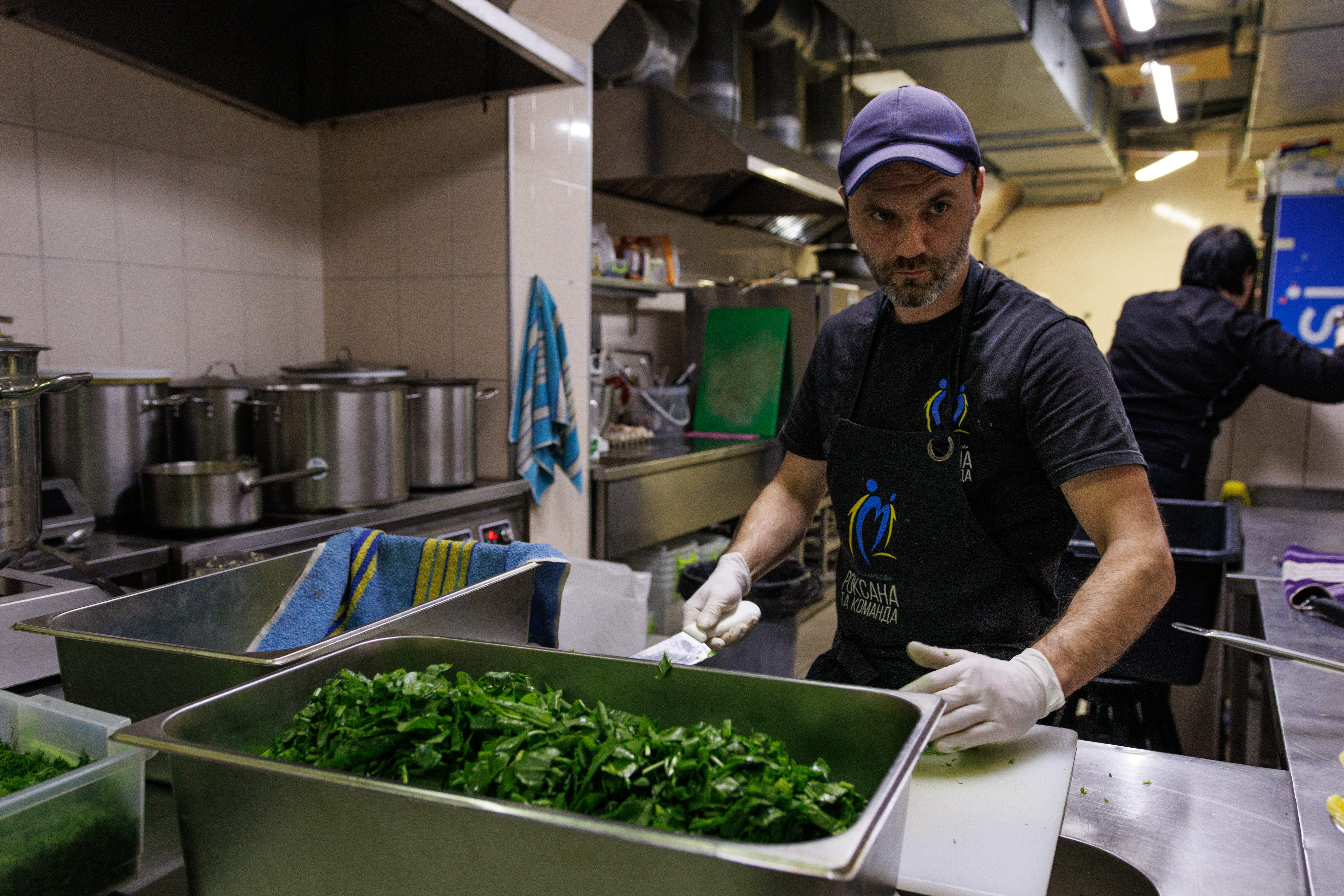
The civilians in Kharkiv are tough and stubborn; I mean this in the most complimentary way. Ferroconcrete (iron-reinforced concrete) is the nickname of the city and is a fitting descriptor, as Kharkiv has the largest volunteer movement in Ukraine. Max from Dusha Kharkiv tells me that for many people here the war is very personal. Many people felt the hardships together during 2022 when Russians were at the gates of the city, and many more have lost people—family, friends, and other volunteers. he would continue; “We have a lot of death and destruction of the city that everyone can see, and they don’t look at it just from postcards.”
Dusha Kharkiv is an organization that started at the very beginning of the war with volunteers from a local restaurant shuttered by the encroaching Russian offensive and has since woken up at five in the morning every day to make fresh food to deliver to children’s centers, special needs homes, and internally displaced people. They also are part of the emergency response to airstrikes, as they would get the call and immediately load up their equipment to be able to provide survivors and rescue workers with a warm drink, food to eat, and blankets to keep warm. The effort all came at a cost, and Dusha Kharkiv found itself in debt of around $12,000. With government officials unwilling to provide help and the foreclosure of their space imminent, our team, consisting of Anastasiya Paraskevova and Devin Woodall, helped raise that money for them through an online campaign before East/West was founded. Anastasiya, a lifelong Kharkiv native would describe it as one of the most purely good things that she has done.
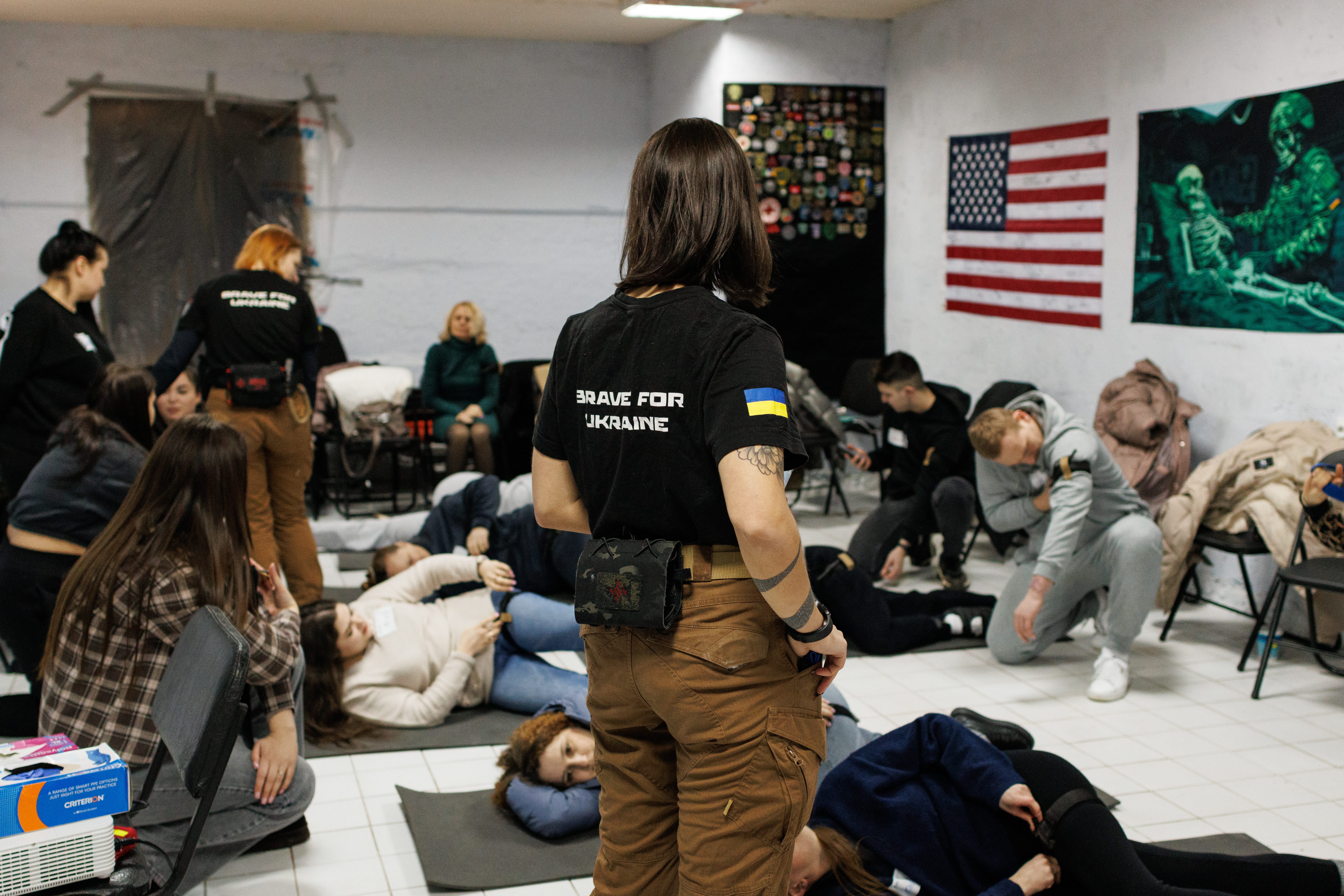
Resources: ERT offers training for civilians in tactical medical first aid. How to apply tourniquets on oneself or others, stop bleeding from shrapnel injuries, all the way to managing hypothermia, clearing airways, and even simulated scenarios of responding to an airstrike.
Shaman, the group’s leader, had been running evacuations from the first days of the war, originally using his Porsche Cayenne, which he would drive into highly dangerous areas and evacuate those in need, before later switching to a proper first-response vehicle. The crew of Resources ERT would also respond to strikes, and while paramedics are unable to enter an active scene and many firefighters lack the same knowledge, the team is able to fill the gaps and arrive when needed most.
Kharkiv is hit often with attacks, and many civilians understand the need to prepare themselves for the realities of war. In Ukraine’s second-largest city, they use FPV drones, cheap strike drones, larger Shahed drones, jet-powered Geren-5s, KAB bombs, and missiles. Their training classes are based on the real, lived experience of the instructors, and the wartime realities mean that classes are rarely empty.
Another night, another shaking blast
On October 13th a video posted by Brazilian GUR international soldier, Lucas Candido, shows the moment of impact an S8000 Banderol, a cheap jet-powered cruise missile, slammed directly into a civilian area of Kharkiv. Air raid sirens blare in the background as he hopes his building is not hit “The fucked-up thing here is, like, you don’t know whether you’re going to die, right? […] At the front, at least you can see the enemy. Here, man, you can’t see them. I could be here, sleeping, for fuck’s sake, and then—bam.”
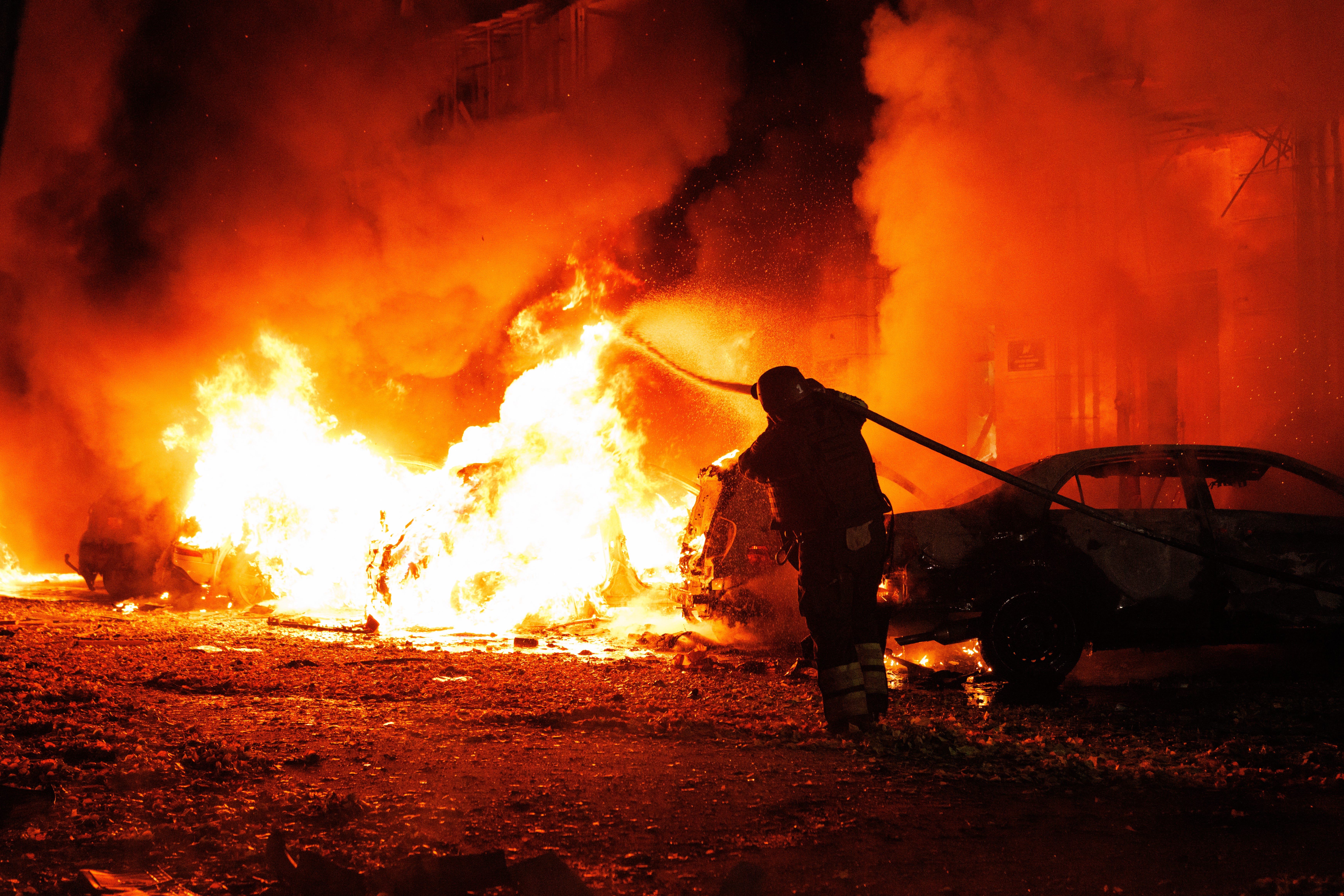
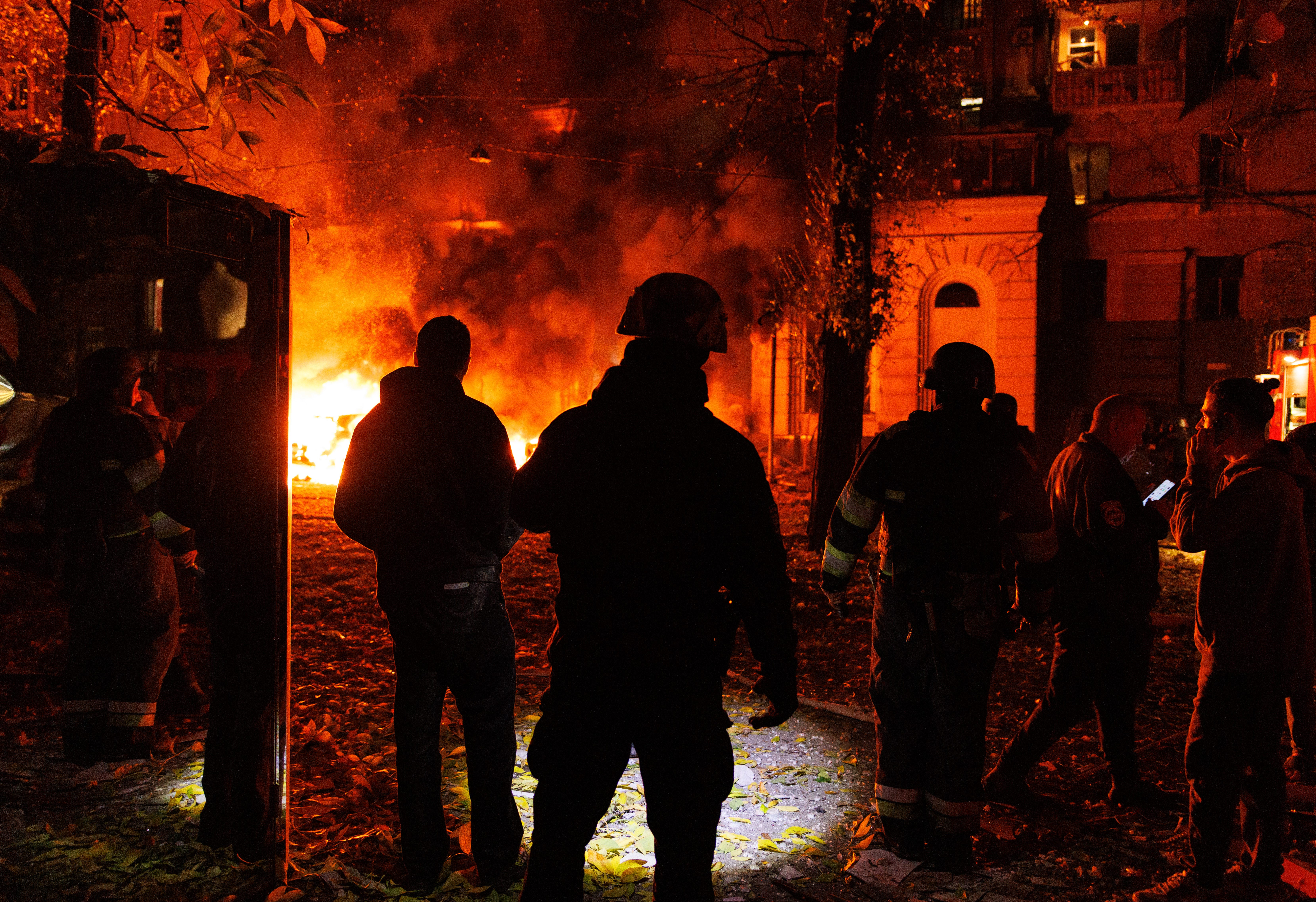
I was the first journalist on the scene as emergency workers rushed to bring in fire trucks; fire raged on from the cars parked on the road. Soon a warning rang out, and we had to rush down into a nearby basement as the threat of repeated attacks reared it’s ugly head, these are clear attacks to target rescue workers and first responders on scene. Once the all clear was given, the firefighters started to work. As water shot out to douse the flames, the car batteries exploded into white sparks.
Civilians rush about in their nightclothes, trying to leave and get behind the safety lines; hours are spent fighting the flames, and such chaos is just another night in the city Kharkiv.