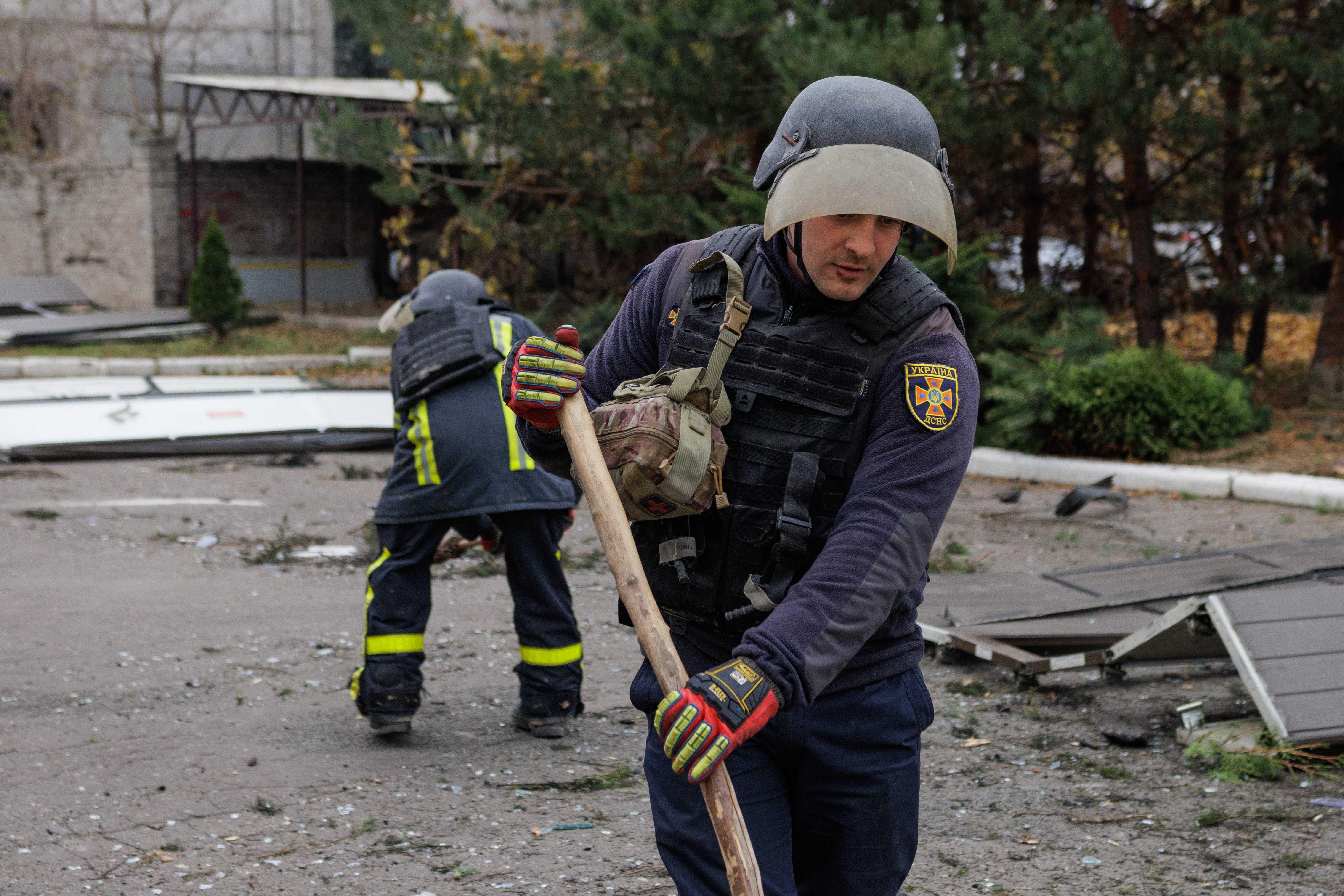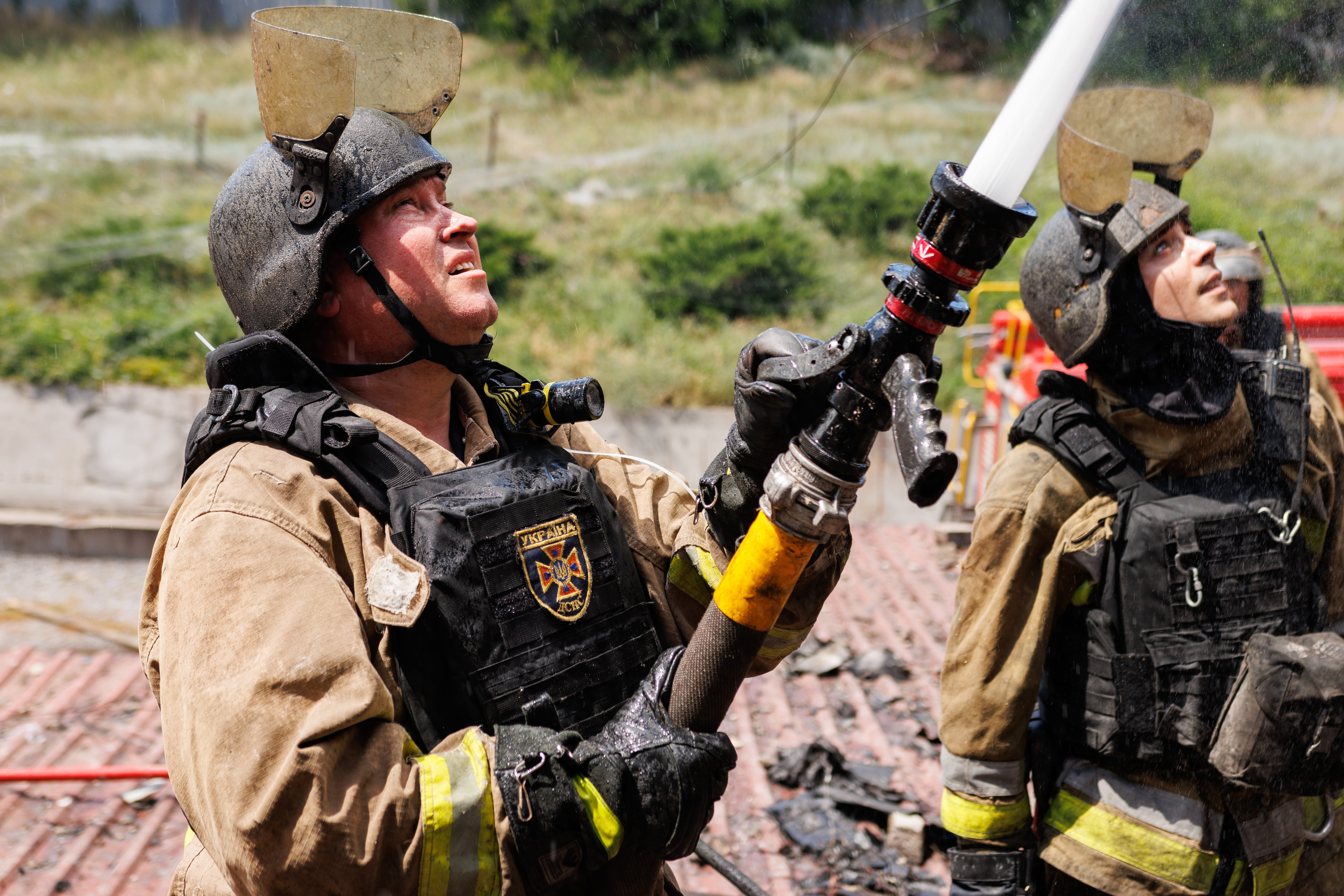
I’m standing under anti-FPV drone netting outside of a fire station in the city of Kramatorsk, one of the last two cities remaining in the unoccupied Donetsk Region. Firefighters are arriving and departing as they go on and off shift. I am here so that I may follow these crews and document the attacks that have exponentially picked up in the past few months when a very familiar bussing sound starts to grow ever louder.
Meanwhile, my colleague, Dylan Burns, is traveling with a military brigade towards the town of Druzhkivka when they see two Shahed drones flying towards Kramatorsk. While the members of the brigade stop and attempt to shoot it down, Dylan says to the camera, “Huh, I wonder where they are going?” I do not have any questions because I am sprinting down the stairs with the DSNS workers as the building shakes and the lights flicker. Both Shahed drones have slammed into the fire station. Firefighters rush up the stairs to fight the fire that is now spreading through the second story of the building, only to be interrupted by the shout of “FPV!”
The firefighters and rescue workers across Ukraine have been common targets across Ukraine, from double-tap attacks to drones hitting their fire stations and trucks. Ukrainian DSNS workers have exceeded the expectations set for them before the full-scale invasion. However, as a DSNS Donetsk official would tell me about this region, “This area has been a frontline for over a decade now.”
Rescue work from the ever growing front
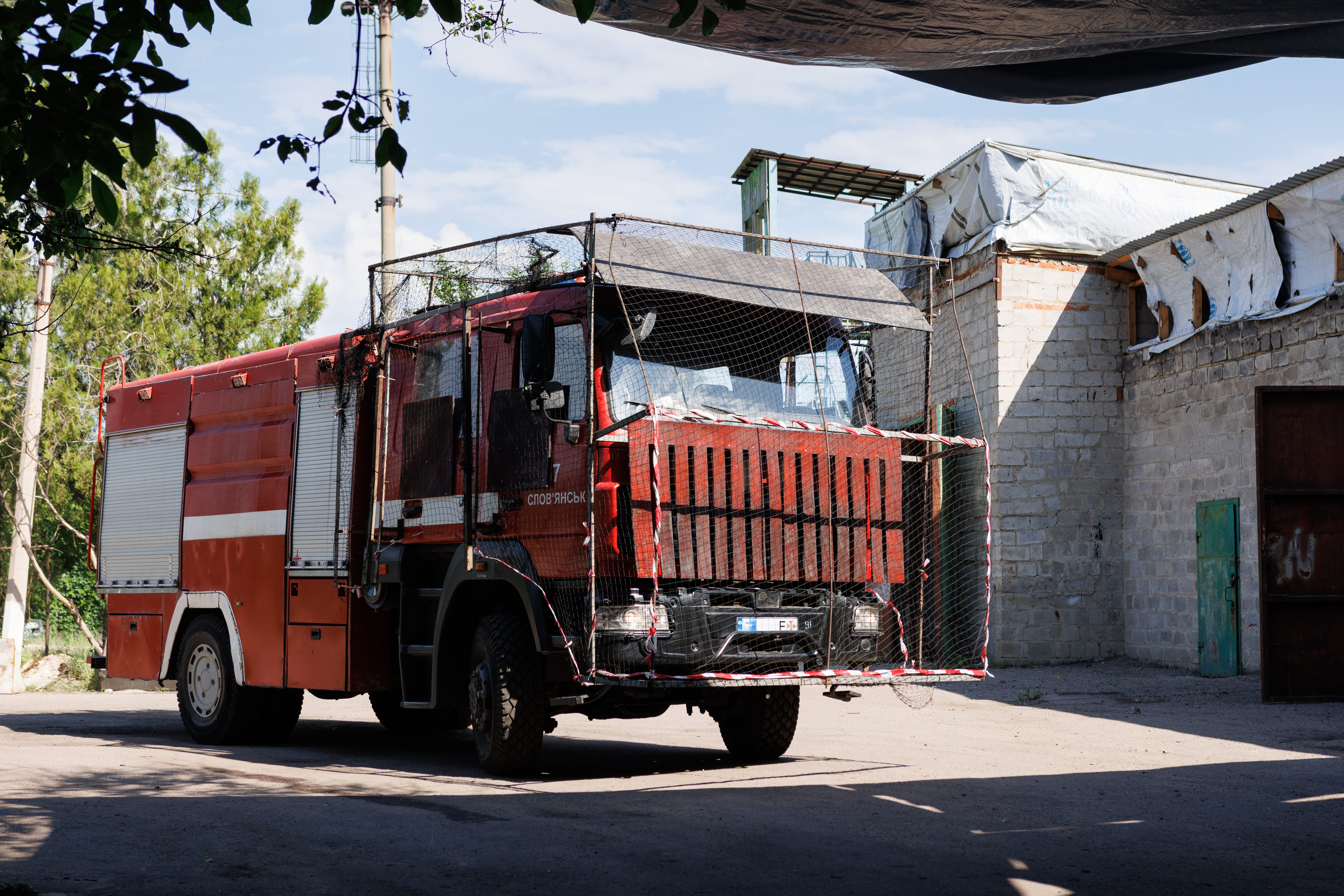
War approaches the town of Druzhkivka in the Donetsk region; half of the town was considered a “Killzone” already when I arrived at this fire station. Despite being in an area where movement is nearly impossible without drones attacking anything in sight, the firehouse still operates. Fire trucks are armored and equipped with anti-drone netting; body armor and ballistic helmets are now considered standard kit. Truly, DSNS firefighters and rescuers must take percussion in fighting the consequences of Russian attacks.
Loading up into a repurposed cash-in-transit van from the Druzhkivka station, I am embedding with the DSNS unit “Phoenix,” who are responsible for evacuating civilians out of dangerous areas. While half of this town is nearly impassable to vehicles, the civilian population is still in need. Anti-drone small arms fire rings out around us nearly constantly, accompanied only by the drone detector’s warning of a nearby threat.
The intercepted radio signal from the FPV made it clear that the drone was flying near us and that we needed to take cover. Pulling off in an alleyway, we filter out of the van and dash into the tree line. Kyryll, the Donetsk police officer in charge of security for the unit, stays closer to the vehicle, scanning the sky for an aerial threat, sunglasses on, shotgun in hand. “It’s best we aren’t close to the vehicle; that is far bigger a target than we are,” a rescue of Phoenix mentions to me.
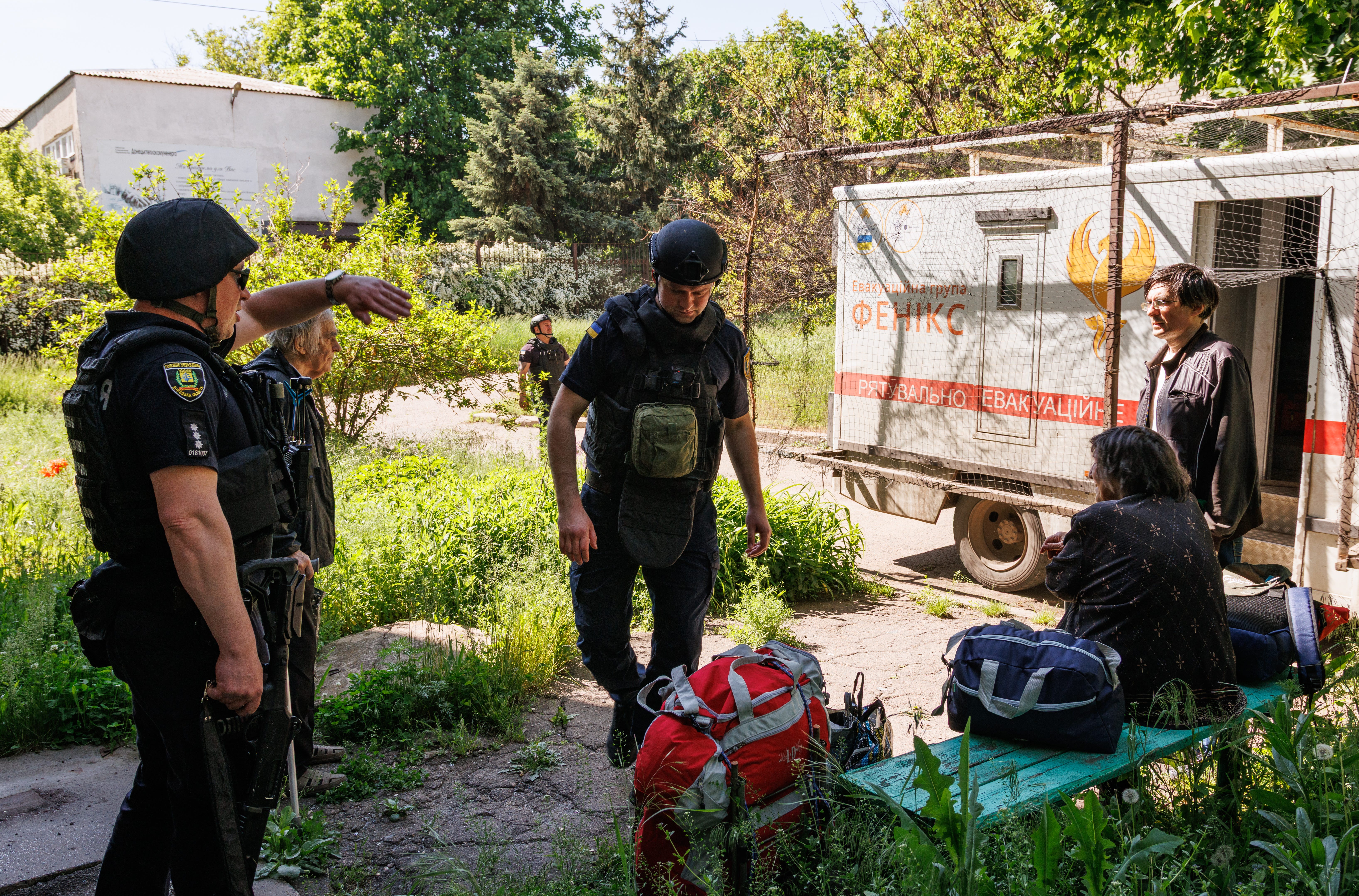
Having loaded back into the van, we traveled down the roads of Druzhkivka. Signs of Russian attacks and military actions are all around us. Eventually pulling up to the approximate address, we exit once again and start our search for the correct building entrance. A man meets us at the door, a former municipal worker for the town, who had requested evacuation for himself and his elderly parents. The family had remained here as long as their son had a job, but as the war had started to fully engulf the town, his job was no longer possible. Walking up the flights of stairs into the elderly couple’s apartments, it is difficult to see scenes such as these. Their lives were packed into just a couple of small bags, while their home remained furnished with items from their soon-to-be former life. Memories, hard-earned possessions, and a space to call your own—all stolen away by Russian forces.
The men of “Phoenix” assist the couple and bring their bags down. It is a quiet ride back to Kramatorsk as the son sits with his arm around his mother—a quiet moment understanding that the life and home where they had lived for countless years has now been turned upside down.
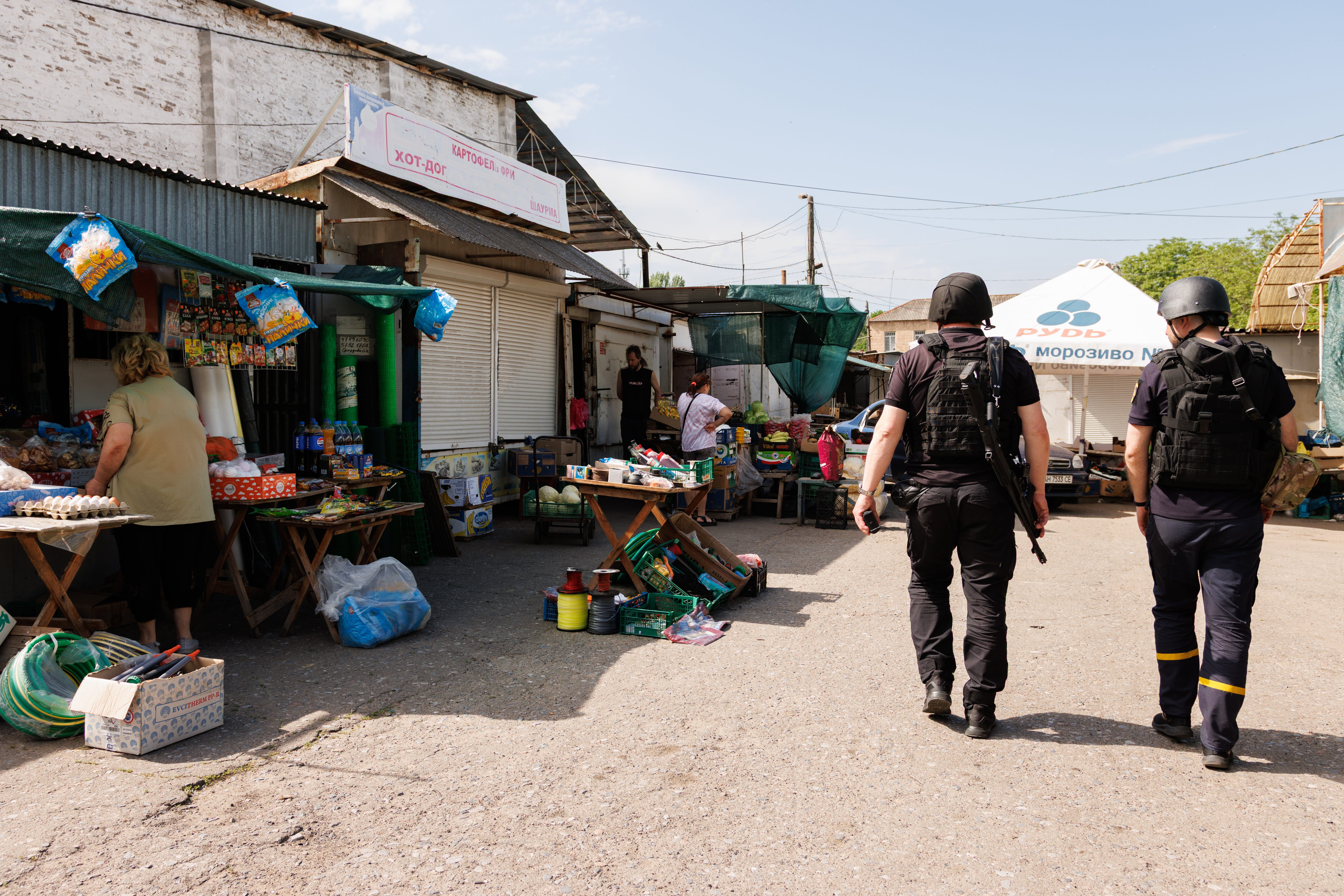
When we returned to Druzhkivka with Phoenix, there had been no evacuation requests for this day; their work now focused on encouraging those who remained to leave before it became too late. Walking through the town, we navigate through rows of stacked barbed wire and crumbling buildings. The last remaining bazaar market now hosts fewer than a dozen shops, offering only the most basic items and easy-to-get food items.
The overwhelming majority of the remaining population consists of elderly individuals who either feel they have nowhere else to go, do not want to leave, or await the Russians. Propaganda is strong in frontline areas and can come disguised in many forms. Groups such as DSNS “Phoenix” and the police unit “White Angels” are the subject of a lot of Russian propaganda in hopes of keeping people in the line of fire; many turn away from reputable evacuation resources in favour of sketchy alternatives or remain in their homes as they are slowly swallowed by the kill zone.
Coming across a couple sitting on the curb of the main road, they say they are awaiting evacuation. Despite having paid a private taxi the equivalent of $50 U.S. to drive them twenty minutes up the road to Kramatorsk, the driver had not yet shown up.
Air alarm fire
Kramatorsk comes under near constant attack; as I sprint out of the apartment towards the smoke rising from the center of town, I can overhear a woman sitting and crying on the phone about how scary the attack was. Two KAB bombs had flown directly above us, shaking the entire building and rattling the windows before the shockwave rippled out.
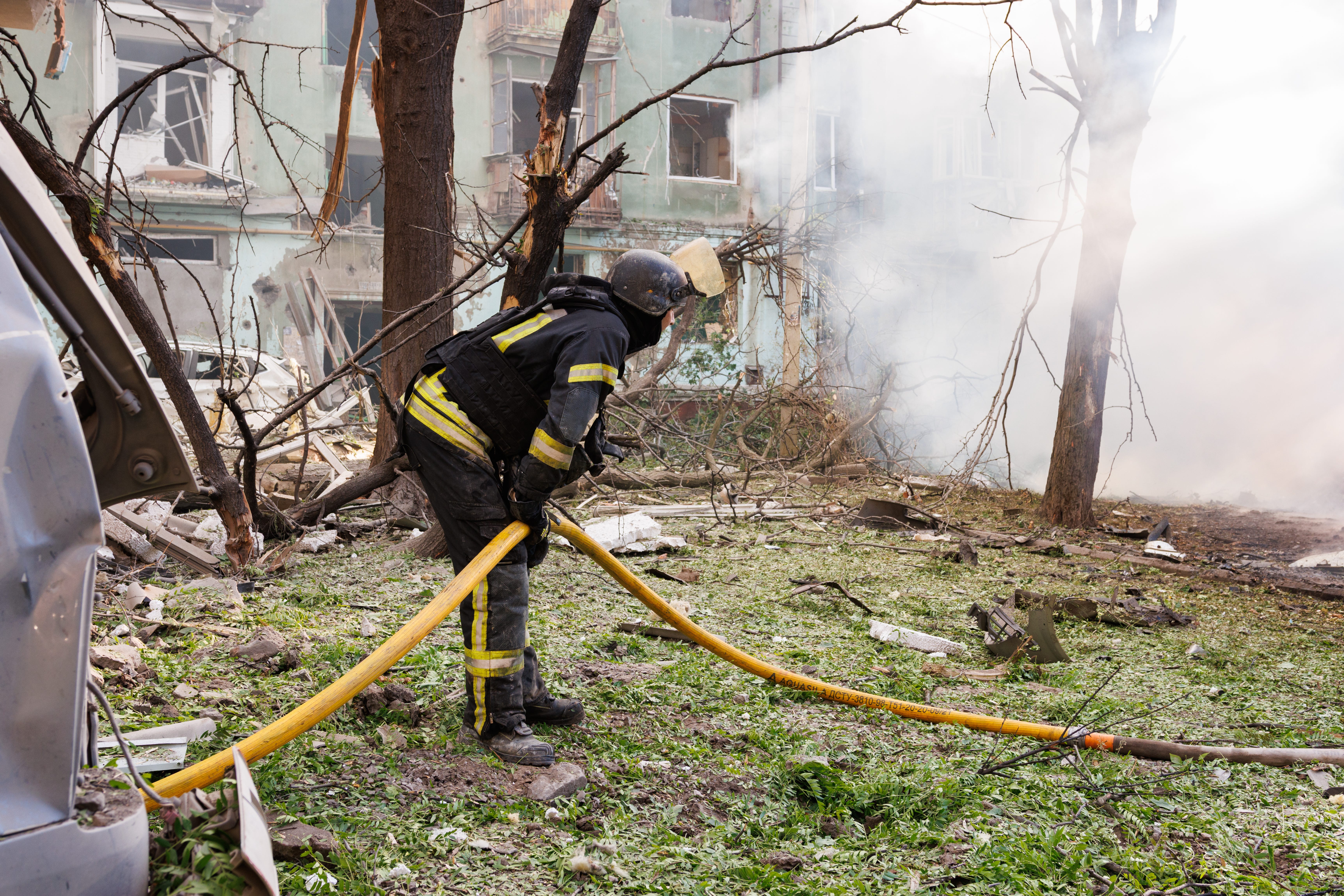
The attack’s direct results become evident as I arrive at the scene—the courtyards of two apartment blocks bear the scars of destruction. Windows are smashed in, cars are burnt to their metal frames, and passing civilian and military personnel are rushing in to remove bent and broken doors in an attempt to rescue any survivors.
Firefighters running through the grassy areas between buildings with hoses in hand, filling the courtyard with steam, focusing on the cars and trucks engulfed in flames. My field producer is itching to get what we need and leave as soon as possible; he mentions that, “The Russians see all of us here.” The reality is that the firefighters, rescue workers, and anyone in the area are in danger as spy drones are used to confirm hits and see the reactions to these strikes from both sides. If a large group of people were to hang around an area for too long, more bombs or drones could be sent. So-called “double tap” or repeat attacks are a very common tactic used by the Russians to target and kill first responders both on the frontlines and in cities far from them.
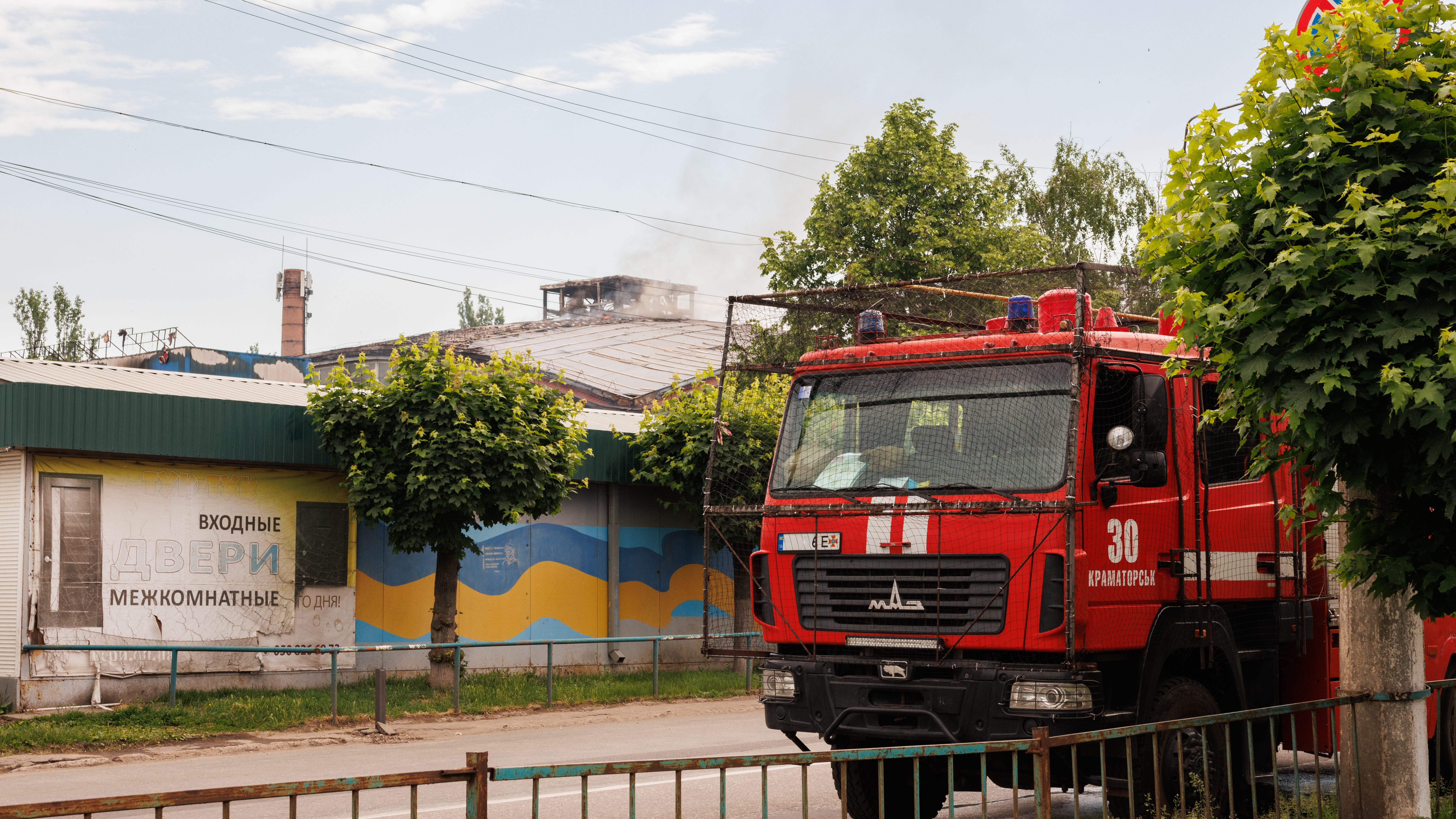
Civilian infrastructure in Kramatorsk is often hit; the public market has been hit multiple times both during the night and during the day while busy with shopgoers. The intended effect has been noticeable, as shops and foot traffic have been reduced over the past few months. Shops around Kramatorsk have closed, gas stations have been targeted by drones—often turn to rouble—and restaurants have either shortened their menus or moved further west to Pavlohrad, as the war means that any space could potentially be a target.
Drone netting has nearly become a constant presence on all city roads, despite the drastic drop in civilian traffic. At the end of summer, the DSNS Phoenix evacuation efforts began in Kramatorsk as the war creeps ever closer.
No safe space
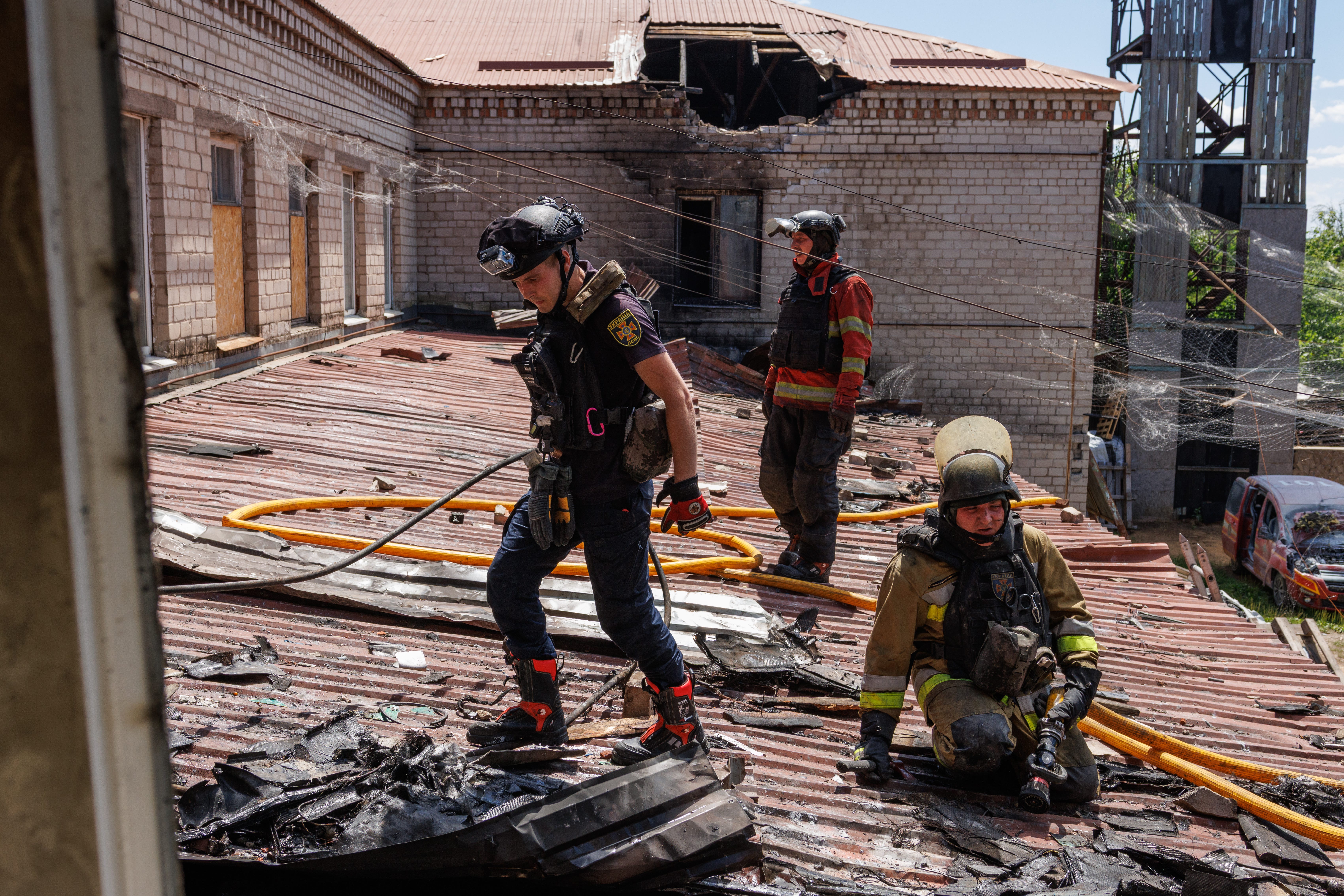
After coming back up from the basement of the Kramatorsk fire station, we climbed onto the roof to see the results of the Shahed attack. A German volunteer had brought a substantial amount of medical aid that he had spent months fundraising for and delivered personally; because of the fire, almost all three thousand euros of it were ruined, with only a handful of supplies remaining. The smell of smoke fills the station as I watch these firefighters climbing in and out of windows, pulling off burnt rubble, trying to reinforce what they can, and putting out the fire that had come home.
This location is not the first fire station I have been to that was attacked in Kramatorsk. Back in November of 2025, I arrived at a station in the eastern part of Kramatorsk immediately after a KAB attack. Evacuation vehicles and windows had been destroyed while the buildings’ integrity had been damaged but ultimately remained standing.
In truth the firefighters of Donetsk have faced war for over a decade, and as the war draws ever closer to the last free cities in the Donetsk region, they have become only more of a target. Direct attacks by FPV drones while fighting fires in Kramatorsk have become common; the “Phoenix” evacuation team had been hit multiple times since I last worked with them, and body armor is now a standard part of their kit. Yet they continue to wake up every day and choose to fight for the people of Donetsk.