

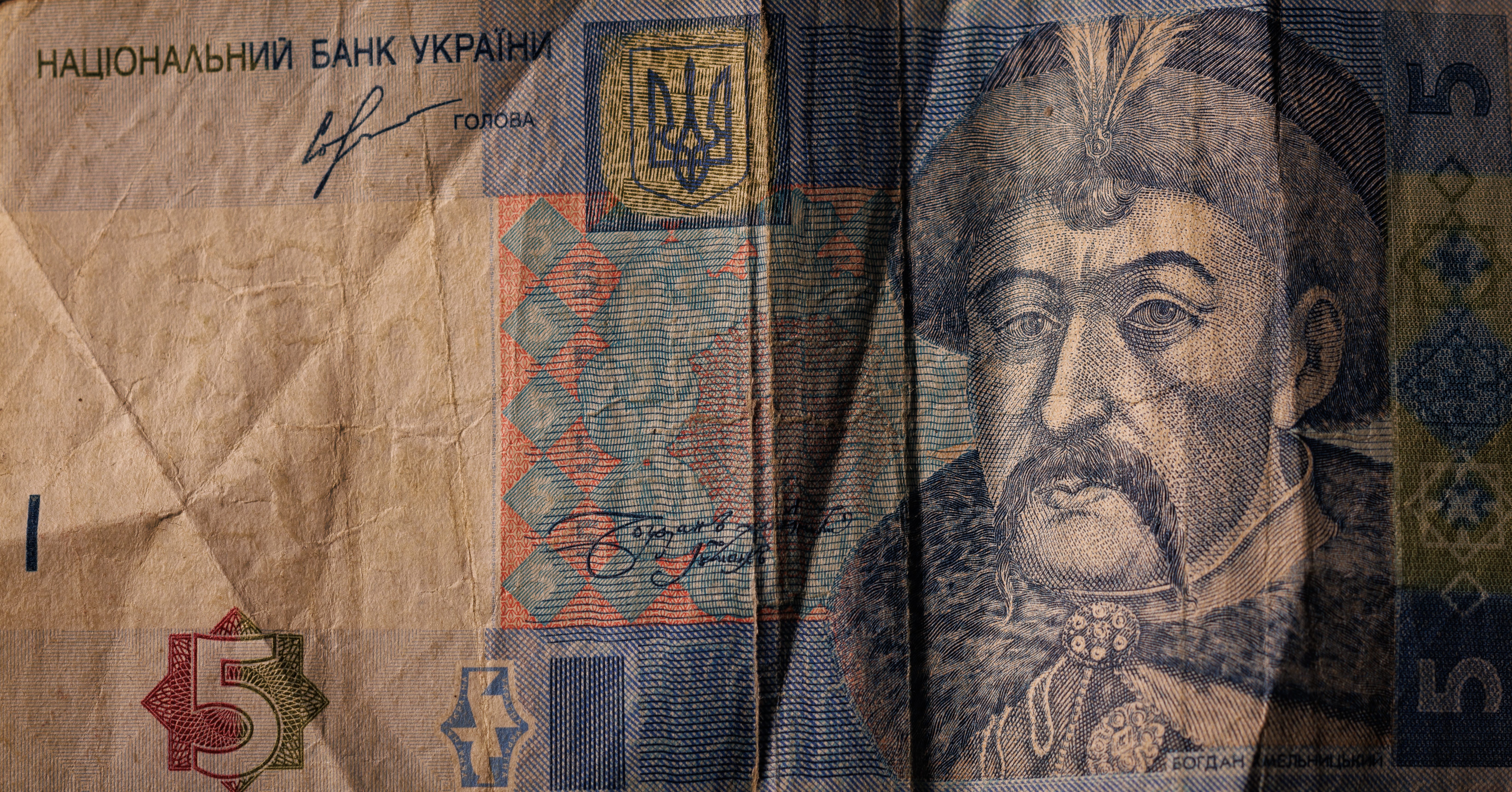
“It was inconceivable, for our brains, for our minds, that (Ukraine’s independence) would be an irrevocable fact."
This is what Gennady Burbulis, adviser to then-Russian President Boris Yeltsin, said when remembering the 1991 vote for the independence of Ukraine. For Russians back in the late 90s, it was a universal truth that Ukraine was just another part of Russia. High-ranking Russians, from military officers to the then-Mayor of Moscow, Yury Luzhkov, would push for the Yeltsin administration to play up historical revisionism. Luzhkov would advocate muddling with the territorial integrity of Ukraine and push for the “recovery” of Crimea against the will of the population on the peninsula.[1] Luzhkov would later be banned from entering Ukraine in 2008 because of his long standing efforts to claim the Ukrainian city of Sevastopol as part of Russia.[2] But of course, In 2016, Vladimir Putin would honor Luzhkov by awarding him with the “Order of Merit of the Fatherland. for active public work."
It should be no surprise that the current President of Russia would honor men like Luzhkov, as Vladimir Putin is one of the most prolific historical revisionists. The annexation of Crimea, the subsequent illegal invasion of the Donbas, and the entire justification coming down to the belief that Russia is the rightful ruler of Ukraine. In fact, I would go so far as to say that a majority of Russians today feel the same unitary belief regarding not just Ukraine but Belarus, Georgia, and Moldova [3] Why, though? What would drive the Russians to hold onto this belief for centuries?
Today I want to take you through one of the most defining moments in Eastern European history and the agreement that would set the stage for modern-day Russian imperialism in Europe.
Before the play, we must set the stage.
The Kyiven Rus’ was an ancient state. The easiest way to understand it is as a collection of principalities. With it’s capital in Kyiv (A city founded in 482 CE (AD)), these principalities would grow to stretch over massive parts of modern-day Ukraine, Belarus, Russia, and parts of Poland, with small parts of the Baltic States included (Estonia, Latvia, and Lithuania). Eventually, the Kyiven Rus’ would find itself with a problem: too many princes. This would lead to more land being incorporated into the state and would lead to land claims in the swamps of north-east Europe. Founding Moscow along the Volga trade route in 1147 CE (AD) as little more than a minor trade hub. However, less than 100 years later, the Mongol Empire would reach the borders of the Kyiven Rus', and in 1240, they would put an end to the vast majority of independent Kyiven Rus’ principalities—not the people in them though.
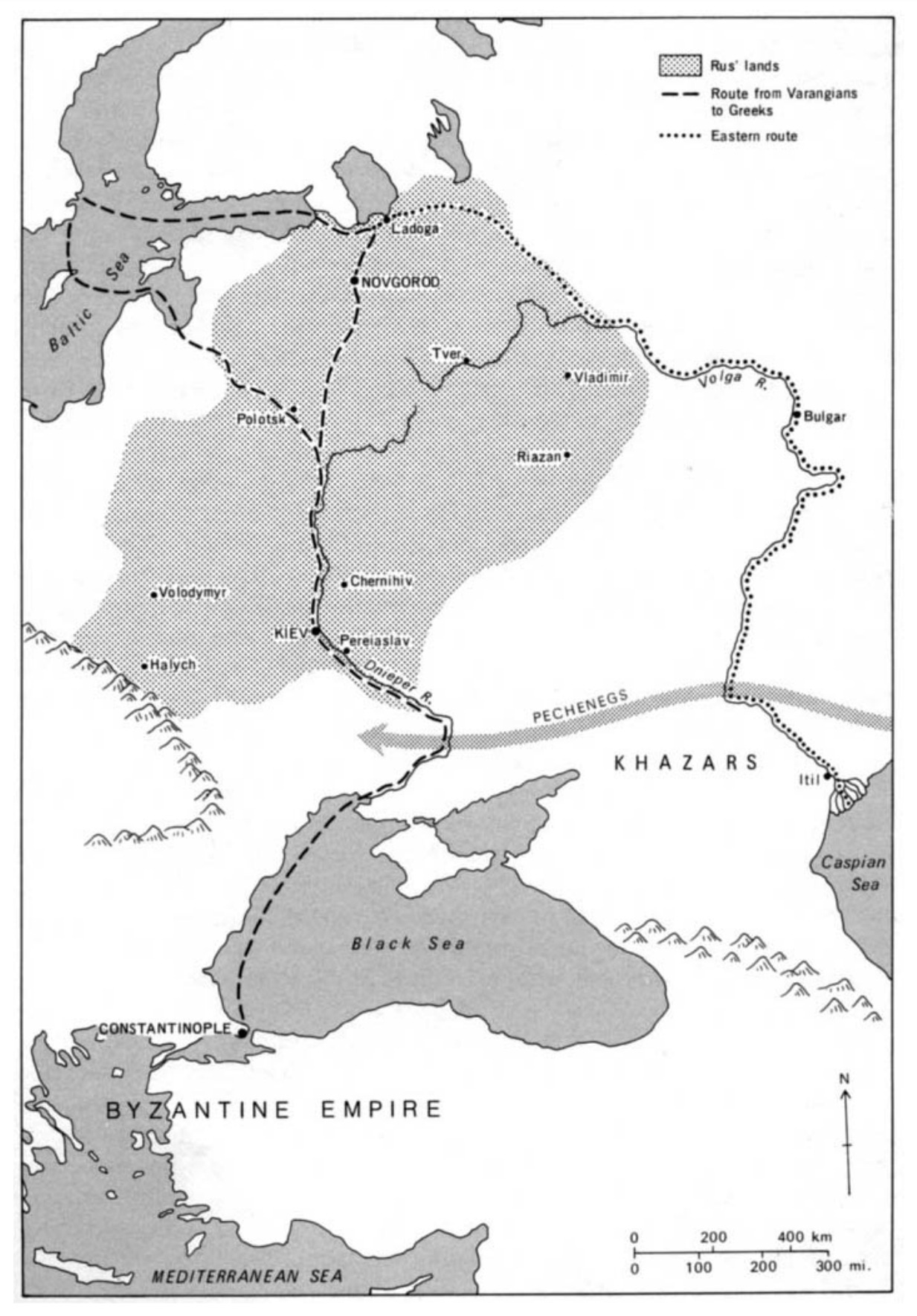
For the sake of time, let me jump through some very complex history and cut it down to the main players.
Eventually, after the great hoard shattered from the Khan’s death, many of the scattered principalities would start building themselves up as either independent nations or vessals with greater autonomy. The Grand Duchy of Moscow (also known as Moscovia) would form from absorbing the fringe areas of the Kyivan Rus’ territorial expanse. The Kingdom of Galicia-Volhynia (also known as Ruthenia) would equally form from the core territories of the old Rus’ state that managed to actually fight back the Mongols. In a surprising twist for most, the line of Genghis Khan would survive in Ukraine. The Turkic people, led by someone directly descended from The Great Khan’s line, would soon be known as the Crimean Tatar, having taken control of Crimea and the less populated southern parts of modern-day Ukraine.
[4][Subtelny - slides 50 through 58]
Skipping forward again to 1648.
The Crimean Khanate would become a vassal state of the Ottoman Empire, notable for having some extra respect and leeway given for having that direct connection with the big papa Khan himself. Most in the lands of Rus’ feared and hated them as not only Muslim infidels but for their brutal slave raids. In fact, the word “slave" comes from these very same enslaved “Slavs.”
Moscovia, under Tsar Ivan III, or more commonly known as Ivan the Terrible, expanded over the northern principalities of the former Kyivan Rus’ and colonized vast swaths of Siberia. But it was also only 35 years past the time referred to in Moscovia as “Smuta” or the “Time of Troubles,” where Moscovia would find itself without a Tsar, overflowing with intense political instability, and under temporary Polish occupation.
Ruthenia, having found itself in a classic succession war death spiral, would also be conquered by the Polish-Lithuanian Commonwealth. Only instead of it being temporary they were incorporated and the far reaches were colonized by the Commonwealth and forced into Serfdom. These already sparse lands of Ruthenia, the border regions often referred to as the “Wild Fields,” would find themselves more of a frontier than a former regional power. However, a new power base had been building in the “Wild Fields” - The Cossacks.
[4][Subtelny - slides 107 through 108
[5][Snyder - slides 129 through 130]
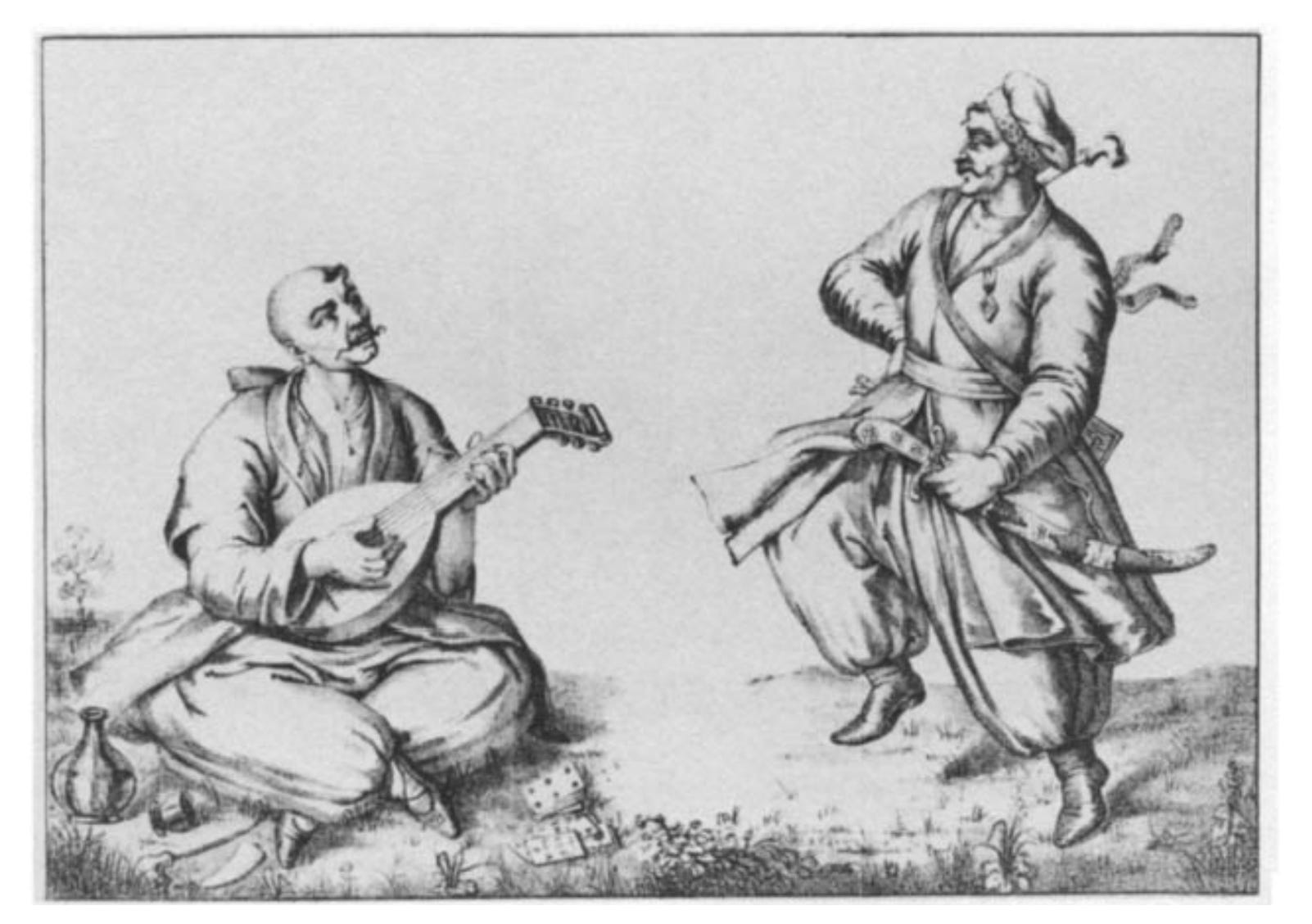
A well disciplined military order of free men, legendary warriors, and largely anti-polish rebels. Between 1591 and 1638 there would be a flare-up of unsuccessful uprisings against the Nobles of the Commonwealth. This is not a surprise though, the freedom of a frontier can do funny things to people, and the Poles quickly developed a system of “might makes right.'' Often believing that "Ukraine is ruled by the lack of rule.” In fact, the recent colonization of the eastern areas of Kyiv, Chernihiv, and Bratslav—these were so uniquely brutal, not just within the Commonwealth but all of Europe—that the Polish historian Orest Subtelny believes them to be the stage for this rebellion. Subtelny writes:
“They were the domain, on the one hand, of some of Europe's most powerful and wealthy magnates and, on the other, of a population that was willing and able to fight effectively for its interests. In other words, in newly colonized Ukraine, some of Europe's most exploitive feudal lords confronted some of its most defiant masses.” [4][Subtelny - slide 152]
Ukraine’s greatest poet, Taras Shevchenko, would later put it:
“The Cossacks punished the nobles, for the nobles ruled poorly.”
The Ukrainians were not only unaccustomed to the brutal hardship of serfdom; they were utterly unwilling to accept it, with many still believing themselves to be free. However, the father of Ukrainian Rebellion, and arguably even the modern state of Ukraine, would be a man of this same noble system.
Bat’ko
Bohdan Khmelnytsky, or "Bat’ko," (the Ukrainian word for father.) To quote from Subtelny again:
“Rarely do individuals dominate epochal developments as completely as did Bohdan Khmelnytsky in the great Ukrainian uprising of 1648. Because of his great personal impact on events that changed the course of Ukrainian and East European history, scholars consider him to be Ukraine's greatest military and political leader. Yet, his debut as a major actor on the historical stage occurred late in life and was almost accidental.” [4][Subtelny - Slide 154]
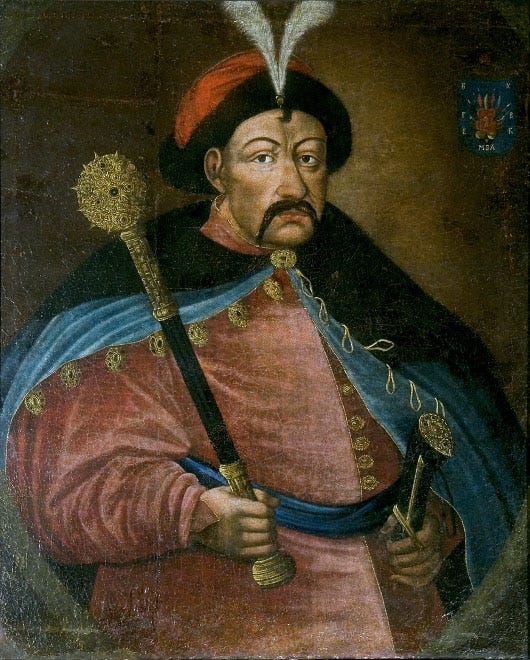
In his 50s, Khmelnytsky had lived a full life. The son of a minor Ukrainian nobleman, he had a good education in a Jesuit school, enlisted in the legal “Registered Cossacks," and successfully avoided being involved in any Cossack rebellions to this point. Even at one point having chancellorship of the Zaporozhian Host (the Cossacks living at the very fringe of Commonwealth control who were considered semi-autonomous). By the time he reached the age of 50, he was a Cossack captain with an estate and a fairly successful career. However, Khmelnytsky, even in his high position, was not immune to the arrogance of Polish colonizers.
In 1646, a wealthy Polish man would make a power play for Khmelnystky’s estate and, in the process, murdered his youngest son and kidnapped his lover. As many Ukrainians that have lost something to Polish ambition, Khmelnystky found the courts utterly unwilling to aid him. With numerous unsuccessful appeals, Khmelnytsky could either back down or fight against a system he had served faithfully for years.
Bohdan Khmelnytsky was a man who was often described as calm and reserved, a lifelong loyal Cossack, and hell, even a Polish noble. And yet he chose to fight back.
[5][Snyder - Slide 131]
[4][Subtelny - Slides 154 through 156]
This “Great Revolt” started very similar to those Khmelnytsky had avoided earlier in his career. An enraged Cossack comes to the Zaporozhian Sich and convinces them to fight in his war, but perhaps Khmelnytsky’s age and experience with the Cossacks (Both registered and Zaporizhian) gave him a different prospective for what to do next. Khmelnytsky, with his loyal Cossack regiment, met with many Cossack leaders to gain allies. Perhaps his biggest departure and greatest advantage would be approaching the Crimeans with ideas of an alliance against the Poles.
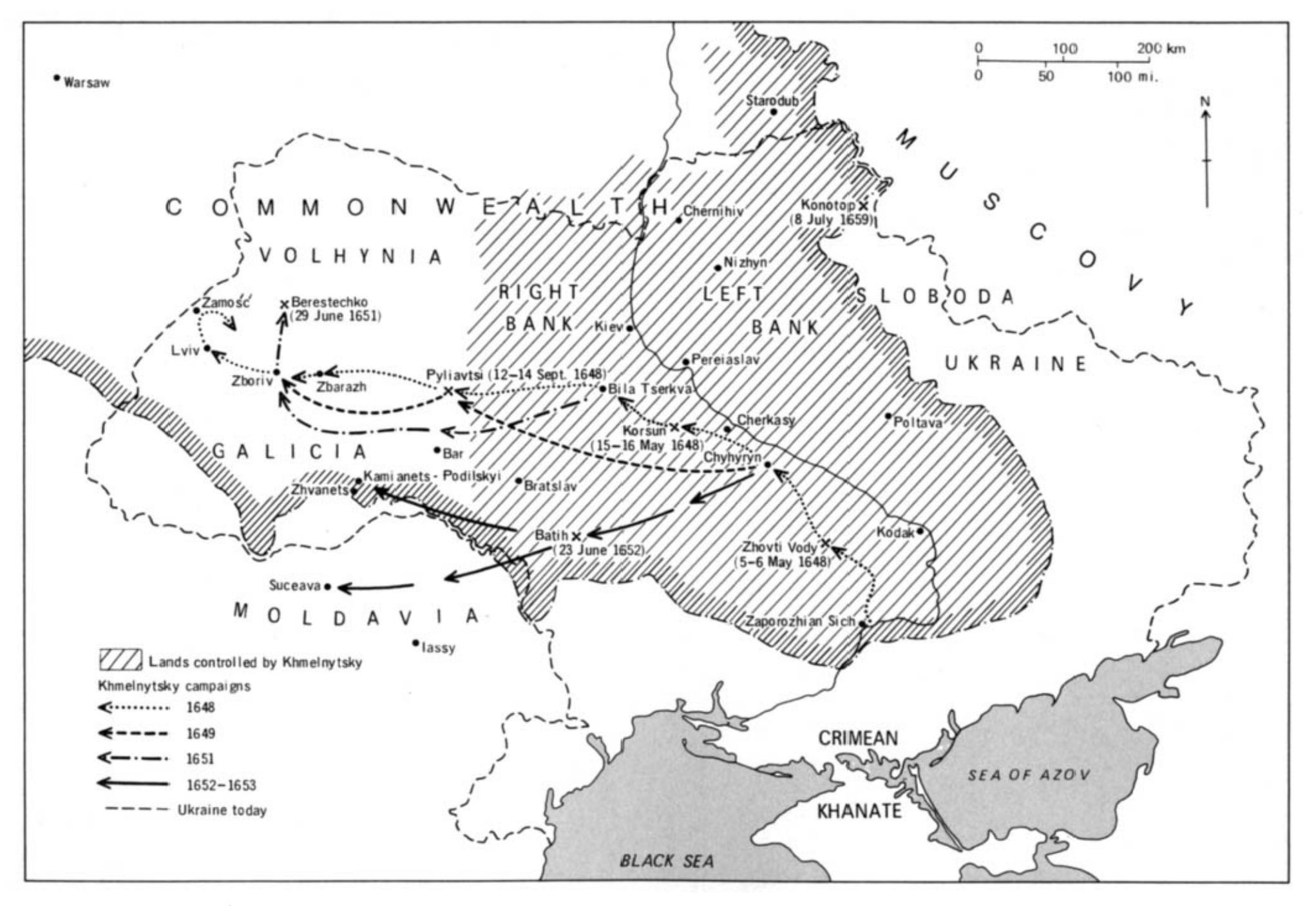
In January of 1648, Bohdan Khmelnytsky would be unanimously voted as Hetman. The highest military leader of the Cossacks. The Khan of the Crimean Khanate would also send forces to aid in Khmelntsky’s Rebellion. Tuhai-Bey, a highly recognized Crimean commander with a large dispatch of Crimean cavalry. Indeed, the Hetman would wage a mighty war against the Commonwealth, even setting up the Cossack Hetman as a form of higher government (Known as the Cossack Hetmanate). These forces nearly captured the Polish King in 1649; however, the Crimean Tatars played both sides. From Orest Subtekny:
“...the Tatar khan betrayed the hetman. Bribed by the Poles and worried by the growing strength of the Ukrainians, Islam Girei withdrew his forces and demanded that Khmelnytsky reach a negotiated settlement with the Polish king. Under the circumstances, the hetman had no choice but to comply.”
[4][Subtelny Slide 158]
The Cossack Hetmanate would enter into a cycle of war and peace with the Poles, but by 1651, it was clear that the Hetmanate would need a foreign power to intervene on their behalf.
[4][Subtelny slides 155 through 158]
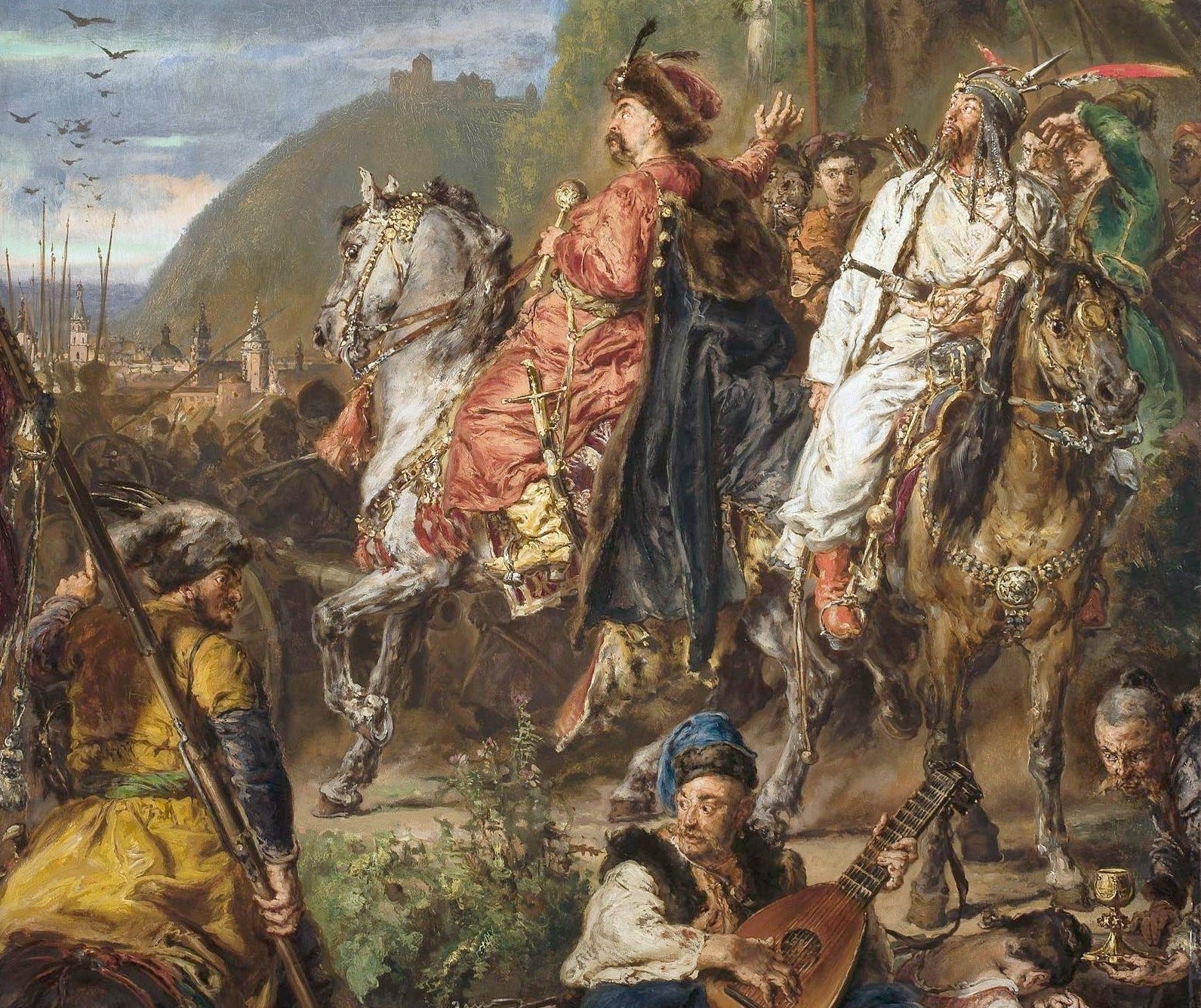
While their alliance with the Crimean Tatars was a long-standing one the Khan had made his intentions of making sure a Christian nation did not gain too much power known. Not to mention the Crimean tendency to take slaves where they could find them, Polish or Ukrainian. So Khmelnytsky looked to the Crimean’s overlord—the Ottoman Empire. A powerful and feared international player who was also far enough from the borders of Ukraine to allow for some breathing room. At first, it seemed promising, as a treaty was written up and signed. One that would allow both the Hetmanate and Zaporozhian Host to be taken on as vassal states of the Ottoman Empire. This treaty was never implemented, though, due to changes in the Ottoman government and the Ukrainian resistance to an “infidel” overlord.
There would be a third option though. Enter, Moscovia.
[4][Subtelny - Slides 162 through 163]
Signing the damn thing - the Pereyaslav Agreement
When Hetman Khmelnytsky was first fighting the Polish, he had asked the Tsar to come to the Cossacks aid on the biases of their shared Christian Orthodox faith. However, the Russian tsar was wary of entering into yet another war with the Commonwealth; the deep and bloody wounds from the war with the Poles in the “time of troubles” had not yet healed. The Muscovites seemed content to allow the Ukrainian Cossacks to wear down the Poles and vice versa. This changed when the Hetmanate approached the Ottomans for overlordship. Tsar Aleksei Mikhailovich decided that, "for the sake of the Orthodox Faith and God's Holy Church, the Monarch should accept them under His High Hand."
On January 18th, 1654, Hetman Bohdan Khmelnytsky would call to the townspeople of Pereyaslav and explain that there were four options for a Ukrainian overlord. The Ottoman Sultan, the Crimean Khan, the Polish King, and the Muscovite Tsar—the crowd cheered at the announcement that they would be allying with the Tsar. And as they cheered, the most pivotal moment of Eastern European history would be made.
So, what were the terms of this agreement exactly? What was it that the Hetman and the Tsar came to agree on? Past the higher principles of Ukrainian protection from the Poles and the acceptance, in some way, of being within “the sphere of Russia” we don’t know. And I mean, we truly do not have a solid idea of what was actually put on paper and signed. Perhaps the Cossacks themselves were not even aware of what they had signed. Some Russian and Ukrainian historians say that the recreations of the original document were forged, so why not just look at the original document? Well, that would be grand but the original document, once signed, was taken to Moscow and was not seen again. While the original document we cannot speak on, we can speak on the effects that this agreement would lead to over the next hundred years.
[4][Subtelny - Slide 163 through 164]
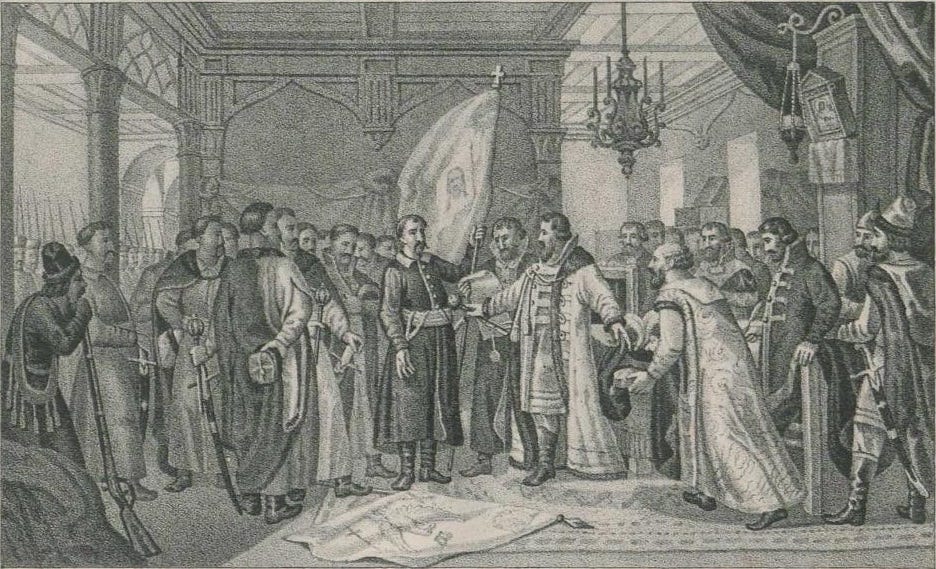
The Ukrainians, for their part in this agreement, would see some victories at first but would soon watch as the Muscovites disregarded the Ukrainian Cossacks on the negotiation table, attacked their allies and interfered with the Hetmanate administration. Eventually even giving over large swaths of Cossack land back to the Polish in clear violation of the founding principle of the agreement. Over the next hundred years, Ukrainian independence would be chipped away at , The Tsar would even break his promise to protect Cossack land from the Poles by signing half of the Hetmanate away in a treaty with the Poles. Eventually the Cossack Hetmanate would be fully incorporated into Moscovia. Annexing the old lands of Rus’ and giving birth in full to the Russian Empire.
Moscovia went from an isolated nation that had been a tributary to the Mongol hordes for half its existence, one that had barely survived a succession crisis less than 50 years ago, to taking the large step into becoming a superpower. They gained overlordship over the traditional lands of the Kyivan Rus’ and opened a door wide for Moscovia to “rebrand” and come face to face with the empires of Western Europe.
Now, you might have heard the term “Rus” a lot in this article. and think to yourself... “Gee, that does sound a lot like “Russian.” The part you might not know is that it is by design. What I haven’t told you yet is that “Russian” is a Greek pronunciation, whereas “Ruthenian” is the Latin pronunciation. Both mean “an inhabitant of the land of Rus.”[10] A distinction that only census takers of the early thousands and those wishing to claim a legacy would be interested in. The principalities around Moscow were a part of the Kyivan Rus'; this is true. However, as the Polish colonization of Ukraine did not make the people there Polish, the Kyivan Rus’ colonization of Moscovia did not make the people there Rus’.
Moscow had only been burned down 91 years after its founding and then became a close partner with their Mongol invaders; they worked closely with them and even collected tribute from their own people[8]. while Russian President Putin skips this part in his interview with shamed American-pseudo-journalist (and bread sniffing extraordinaire) Tucker Carlson, Moscow’s rise to prominence was under Mongol overlordship and its eastern connections. The Muscovites and their new tsar, however, longed to be seen by and associate with European empires. Their past as a Mongolian vassal was inconvenient and now they would be given this perfect opportunity to take on the legacy of medieval Europe's largest state.
[5][Snyder - Slides 136 through 139]
American historian Timothy Snyder would write in his book “The Reconstruction of Nations: Poland, Ukraine, Lithuania, Belarus”
“One Ukrainian churchman invented the idea of the “transfer” of the Kyivan princely seat to Moscow, an idea which came to organize Russian national myth and historiography. In the 1670s professors of the Kyiv Academy were ideologists of the new regime. In these ways, the absorption of eastern Ukraine put into practice a transition from a limited geographic and political notion of Russia as the territory of Muscovy(Moscovia) to an imperial idea of Russia as Great Russia (Moscovia), The Embattled Ukrainian Borderland Little Russia (Ukraine), and White Russia (Belarus). Such political concepts, developed in the early modern period, took on new meaning in the modern age of nationalism.” [5][Snyder - Slides 135 through 136]
Indeed Russian Nationalism
My long-winded yet somehow painfully brief explanation of Ukrainian history—that I have, admittedly, only recently come to know myself—serves an important purpose. In fact, I believe my recent studies have left me wanting to include as much as I did in this article. Ukrainian history is often discarded, told from the Russian perspective, or simply not given a fuck about.
Yet at the same time, it is weaponized against it, as shown in the aforementioned interview between Putin and Carlson. Even in my day-to-day life, I hear the Russian propaganda about this. Prior to 2022 I would often hear about “the Ukraine” when referring to the sovereign nation of Ukraine. I have since heard of Ukrainians being “truly Russian” because a part of the population has Russian ancestry and speaks the language. I have had many westerners ask me, “Isn’t it the case that Ukraine was never really a state prior to 1991?” They are often shocked as I lay out everything, starting, of course, with the fact that Kyivan Rus’ built Moscow.
If you wish to hear a little more about the later history of Ukraine, I have done an entire video with historian Andriy Maslyuk that you can find here (link)
While it is not their fault, referring to uninformed westerners I mean, they do play a part in perpetuating imperial Russian ideas. The beginning of this myth-making of this “Great Russia” would be built on the back of the Pereyaslav agreement. However the ramifications of the agreement would truly come into contemporary history in 1954. Orest Subtelny, in his book “Ukraine: A History," would describe the five major interpretations of what the Pereyaslav Agreement really was. I wish to focus on the fifth interpretation mentioned:
“The fifth interpretation of the Pereyaslav Agreement belongs in a class by itself. In 1954, during the elaborate celebrations of the 300th anniversary of the Ukrainian-Russian union in the USSR, it was announced - not by scholars but by the Communist Party of the Soviet Union - that the Pereyaslav Agreement was the natural culmination of the age-old desire of Ukrainians and Russians to be united and that the union of the two peoples had been the prime goal of the 1648 uprising. In the official Soviet interpretation, Khmelnytsky's greatness lay in the fact that he understood that "The salvation of the Ukrainian people lay only in unity with the great Russian people.”
[4][Subtelny - Slides 164 through 165]
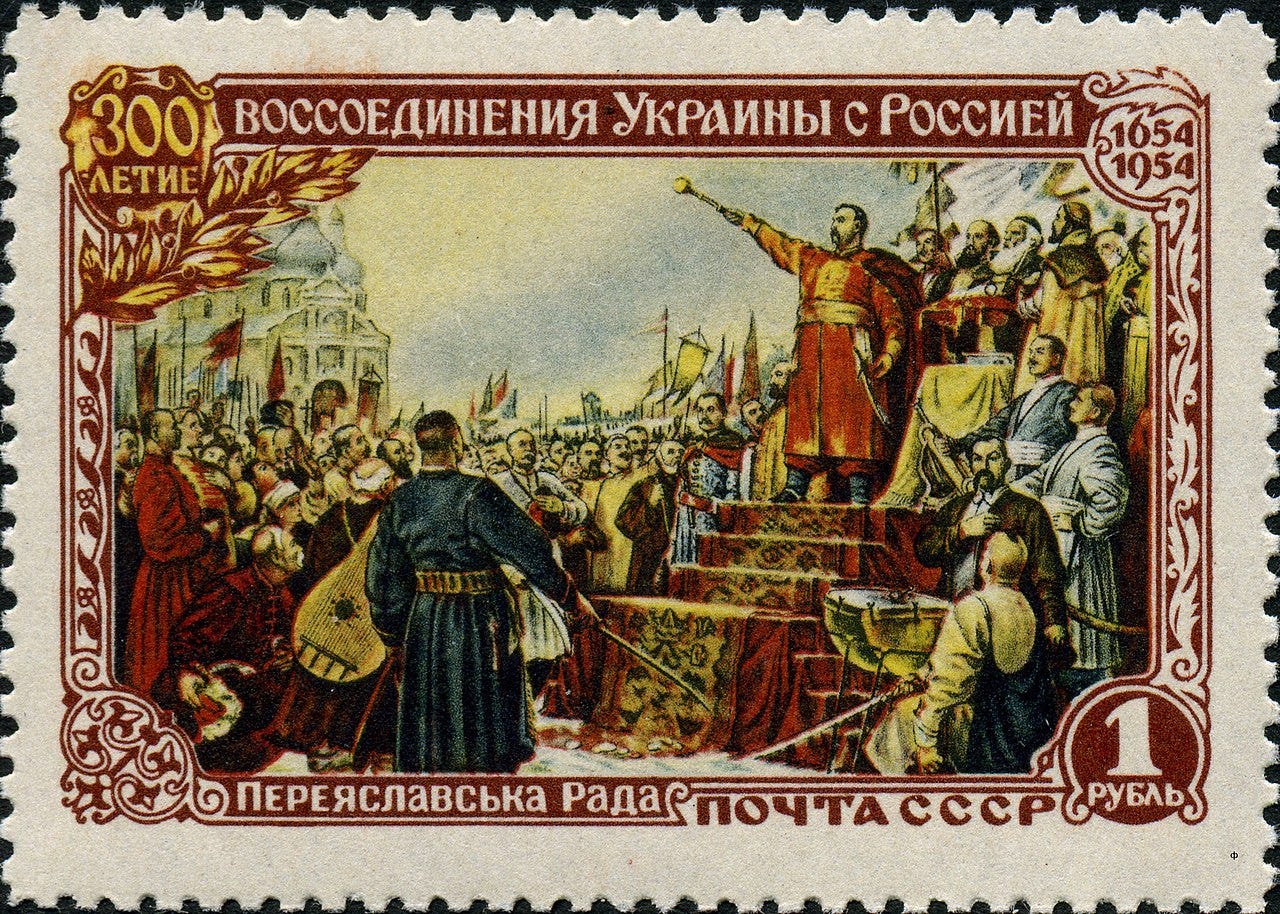
Subtelny would also ask the question: “Adherence to the party’s interpretation of the agreement remains mandatory for all Soviet Scholars.?” Speaking on the fact that a Soviet scholar challenged this new state-sponsored interpretation of history and saw catastrophic backlash and a loss of his career.
As I mentioned at the start of this article, when the Yeltsin administration faced such pressure to rewrite what would become a free and independent Ukraine, it was due to decades of this propaganda. These calls, these ideas, and these people did not die down; they only grew.
When history is weaponized
“During the recent Direct Line, when I was asked about Russian-Ukrainian relations, I said that Russians and Ukrainians were one people—a single whole.” This is how Russian President Valdimir Putin chose to start his July 21st, 2021 article entitled “On the Historical Unity of Russians and Ukrainians." In this article, Putin attempts to draw a picture of history over the lines of reality. Putin would claim many odd things about the history of Ukraine in this article, and I would like to highlight a couple:
“...the idea of Ukrainian people as a nation separate from the Russians started to form and gain ground among the Polish elite and a part of the (Ukrainian) intelligentsia. Since there was no historical basis – and could not have been any, conclusions were substantiated by all sorts of concoctions, which went as far as to claim that the Ukrainians are the true Slavs and the Russians, the Muscovites, are not.”
and
“Inevitably, there came a time when the concept of ”Ukraine is not Russia“ was no longer an option. There was a need for the ”anti-Russia“ concept which we will never accept. The owners of this project took as a basis the old groundwork of the Polish-Austrian ideologists to create an ”anti-Moscow Russia“. And there is no need to deceive anyone that this is being done in the interests of the people of Ukraine. The Polish-Lithuanian Commonwealth never needed Ukrainian culture, much less Cossack autonomy.”
Putin, in this article, would say many other nonsensical things, such as, “We respect the Ukrainian language and traditions. We respect Ukrainians’ desire to see their country free, safe, and prosperous.” It is notable to mention that in the Russian-occupied territories of Ukraine, there is an active effort being made to ban the teaching of Ukrainian altogether.[11]
Indeed, the historical revisionists, the ones who urged the “recovery” (as the Russians put it) of Crimea, did not go away; they gained power. After this article from Putin, the former president and Deputy Chairman of the Security Council of the Russian Federation, Dmitry Medvedev, would pen an article in support of Putin’s arguments. Even going farther to compare Ukrainian President Volodymyr Zelenskyy to a member of the Jewish intelligentsia asking to serve in the SS. Of course this perpetuates the major Russian historical revisionism of “Nazi Ukrainians"—the same excuse the Soviets used to ethnically cleanse the Crimean Tatar people out of Crimea. Medvedev would go on to criticize Ukraine’s efforts to help highlight the current plight of the Crimean Tatar people, who have been under Russian occupation since 2014. Referring to it as “idiotic” and “created to fool the country’s population...” Medvedev would end his article by highlighting his opinion that a Ukraine focused on “building equal and mutually beneficial relations with Russia. Only with such a leadership of Ukraine is it worth dealing. Russia knows how to wait. We are a patient people” This article came out three months before the full-scale Russian invasion of Ukraine.[13]
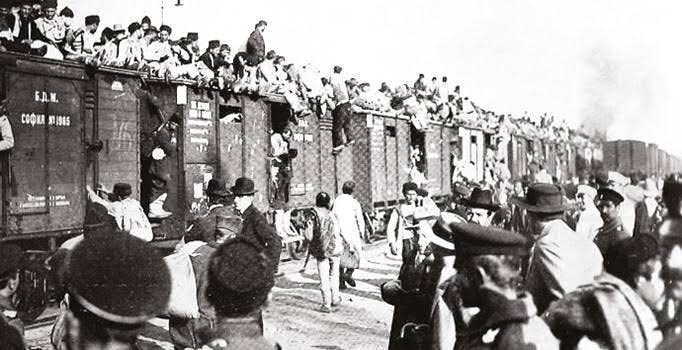
On February 15th, 2022, a man that The Atlantic describes as “The Hidden Author of Putinism,” Vladislav Surkov, would chime in on his thoughts about the current borders of Russia:
"How could it be otherwise, if it is cramped and boring and awkward... and it is unthinkable for Russia to remain within the borders of the obscene peace. (Referring to the Brest peace treaty that saw Russia's departure from WWI) We are for peace. Of course. But not for the obscene one. For the right one” … “And indeed, the peace was downright insulting. According to its terms, Russia gave up the vast territories of the Baltics, Belarus, and Ukraine that had previously belonged to it. The western border rolled back far to the east, pushing the country back to the pre-Petrine, or even pre-Romanov, times. It couldn't be more obscene," [12]
Surkov would ominously end his article with:
"And what next? Definitely not silence. There is a lot of geopolitics ahead. Practical and applied. And even, perhaps, contact." And on February 21, 2022, Putin would, in a speech, declare that: “Modern Ukraine was wholly and fully created by Bolshevik, Communist Russia.” [12]
Three days later, the full-scale Russian invasion of Ukraine would be enacted.
When the Hetman fell
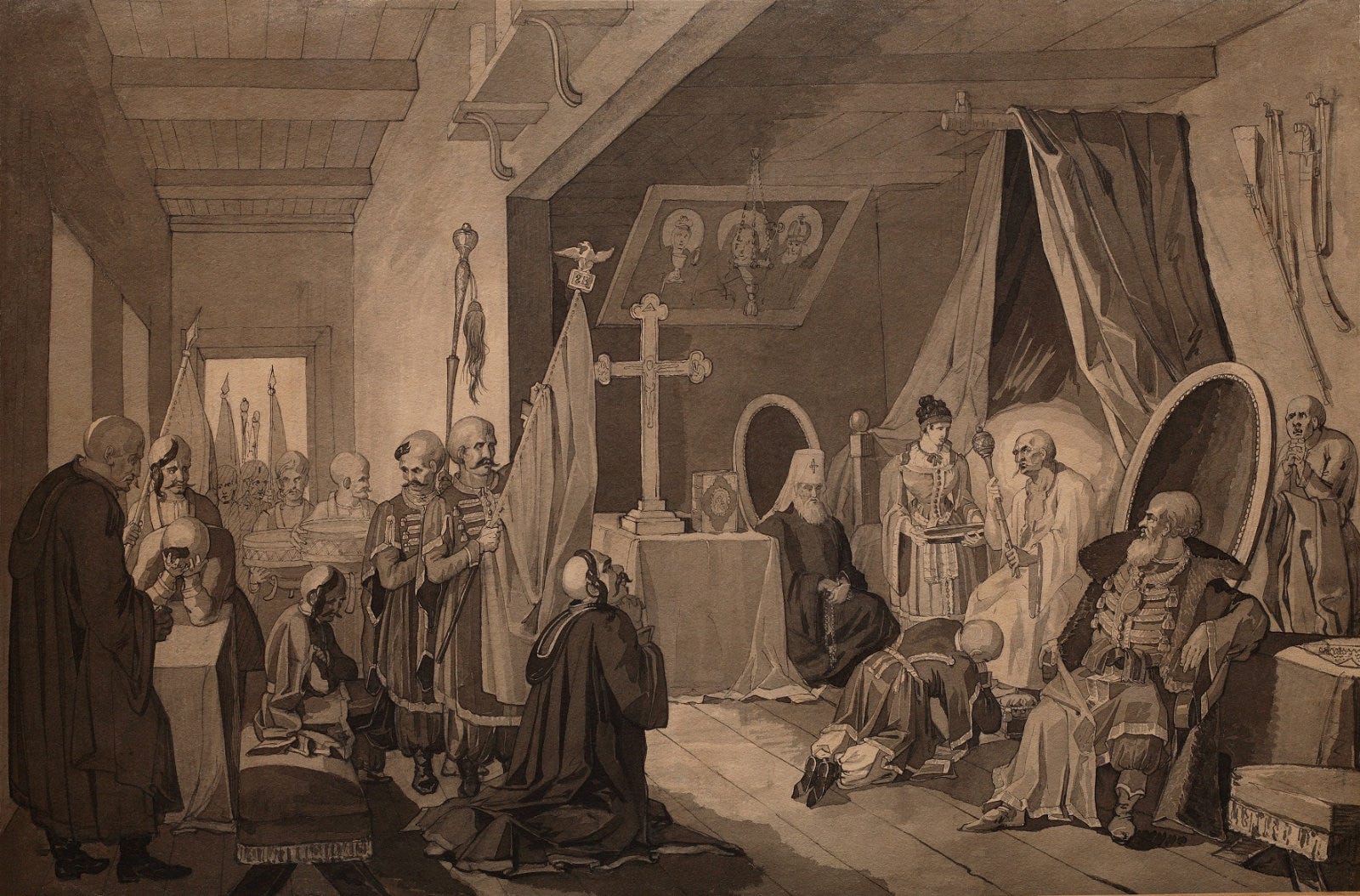
In September 1657, Hetman Bohdan Khmelnytsky died at his residence in Chyhyryn. Having seen the Tsar attack his ally of Sweden, signing a peace treaty with the Polish during the Cossacks ongoing war against them—without even consulting the Cossacks, mind you. And all while on the heels of a crushing military loss and subsequent revolts in the Cossack army—this was simply too much for the aging Khmelnytsky. The realization of who they had made an agreement with had fully sunk in. A year before his death, Khmelnytsky wrote to the Russian Tsar: "The Swedes are an honest people; when they pledge friendship and alliance, they honor their word. However, the Tsar, in establishing an armistice with the Poles, and in wishing to return us into their hands, has behaved most heartlessly with us."
[4][Subtelny - Slides 166 through 167]
When I first arrived in Kyiv back in early 2023, I came across this park with a covered set of statues (a common practice in Ukraine of covering monuments to protect them from Russian missile, bomb, and drone attacks). A year later, I returned to this same spot and found a crew removing these now-uncovered statues—statues I had never seen before. While I was still unaware of what this was a monument to, I knew it was important. Slapping on my press badge and cocking the shutter on my camera, I went to work documenting. This monument, I would later find out, was to honor the “reunification” of Russia and Ukraine. It was installed in Soviet times to help instill that historical myth-making of Ukrainians and Russians being “one people.” It depicted Hetman Khmelnytsky, the Tsar’s envoy, and Ukrainians pledging themselves to the Russian Tsar in the ceremony that followed the signing of the Pereyaslav Agreement.


Now going into the third year of warfare against the Russian invasion, I have personally seen de-russification, de-communization, and de-colonial efforts underway all across Ukraine. This process had even begun as early as 2014. Street names, Soviet monuments, and Communist symbols were torn down or renamed. Somehow this monument to the “Original Sin” of bringing Ukraine into the “Russian Sphere” remained through it all. The making of the monument was as much a declaration that “you are ours and always have been.” A symbol that stood to face the city that was the entire reason for Moscow’s existence and fueled by historical revisionism that Putin and his lackeys subscribe to—this was finally being dismantled.
Today, in Ukraine, Khmelnytsky is not seen in a negative light by a majority of Ukrainians. That might come as a shock to some, but the term “Bat’ko” was often a loving if not positive word used to speak about him. Indeed, without Khmelnytsky, many believe there would be no Ukraine. The idea of a Cossack nation, the legacy of Cossack democracy, a notion of a nation to harken back to, and hell even the regalia involved with choosing a Ukrainian president. For Ukrainians, these all harken back to the Hetmanate. The Ukrainian poet Pavlo Chubynsky would highlight the “Brethren of the Cossack Race” in his 1862 poem, Shche ne vmerla Ukrainy i slava, i volia. Quote:
   Ukraine has not yet died, neither her glory, nor her freedom.
   Still upon us, young brethren, fate shall smile!
   Our enemies shall vanish like dew in the sun;
   We too shall rule in our beloved country.
   Soul and body we'll lay down for our freedom,
   And show that we are brethren of the Cossack race,
   Hey, hey dearest brothers, onward, take to battle
   Hey, hey, time to rise, time to gain freedom!
This, of course, would later be put to music and become the starting line of the Ukrainian national anthem.
Criticism of Khmelnytsky is not hard to find, though. Polish, Ukrainian, Russian, and Jewish historians, poets, and professors all have differing views of the man. The Polish see Khmelnystky’s rebellion as a prelude to what is referred to as “The Deluge” of the Commonwealth and would lead to the eventual collapse of it. Some Jewish historians see Khmelnytsky as a villain, as his uprising would lead to a massacre of Polish Jews who moved into Ukraine to rule over the Ukrainians. Other Jewish writers, particularly those in Israel, would see Khmelnytsky and the “free frontier life” as something to aspire towards in the early days of Jewish migration to Israel. The Soviets/Russians would see him as a reasonable man who brought Ukraine and Belarus back to the Russian fold, A tentative heroic ally. Ukrainians of the late 1800s living under an increasingly oppressive and anti-Ukrainian Russian Empire would often not be so favorable about him though. The aforementioned Pavlo Chubynsky would write:
    Oh, Bohdan, Bohdan
    Our Great Hetman!
    For what purpose did you give Ukraine,
    To the evil Moskals?”
Famed Ukrainian poet Taras Shevchenko would write:
    If only you could, Drunken Bohdan
    See Pereyaslav now!”
As for modern Ukrainians, I would like to quote from the introduction to Amelia M. Glaser’s book[12], Stories of Khmelnytsky Competing Literary Legacies of the 1648 Ukrainian Cossack Uprising,
“As Mykola Borovyk showed in his 2012 study of shared authority, although twenty-first-century schoolchildren overwhelmingly ranked Khmelnytsky as Ukraine’s most important historical figure, when listing the most tragic events in the nation’s history, they also place Khmelnytsky’s signing of the Pereiaslav treaty near the top, second only to the Holodomor under Stalin.”
I would highly recommend Amelia’s book, as I believe it gives a very fair understanding of Khmelnytsky from multiple points of view. It was partly the reason I chose to quote and base this article mostly on Orest Subtelny’s work. A Polish historian who has deeply studied Ukrainian history and grew up under the Soviet Union.
Outro
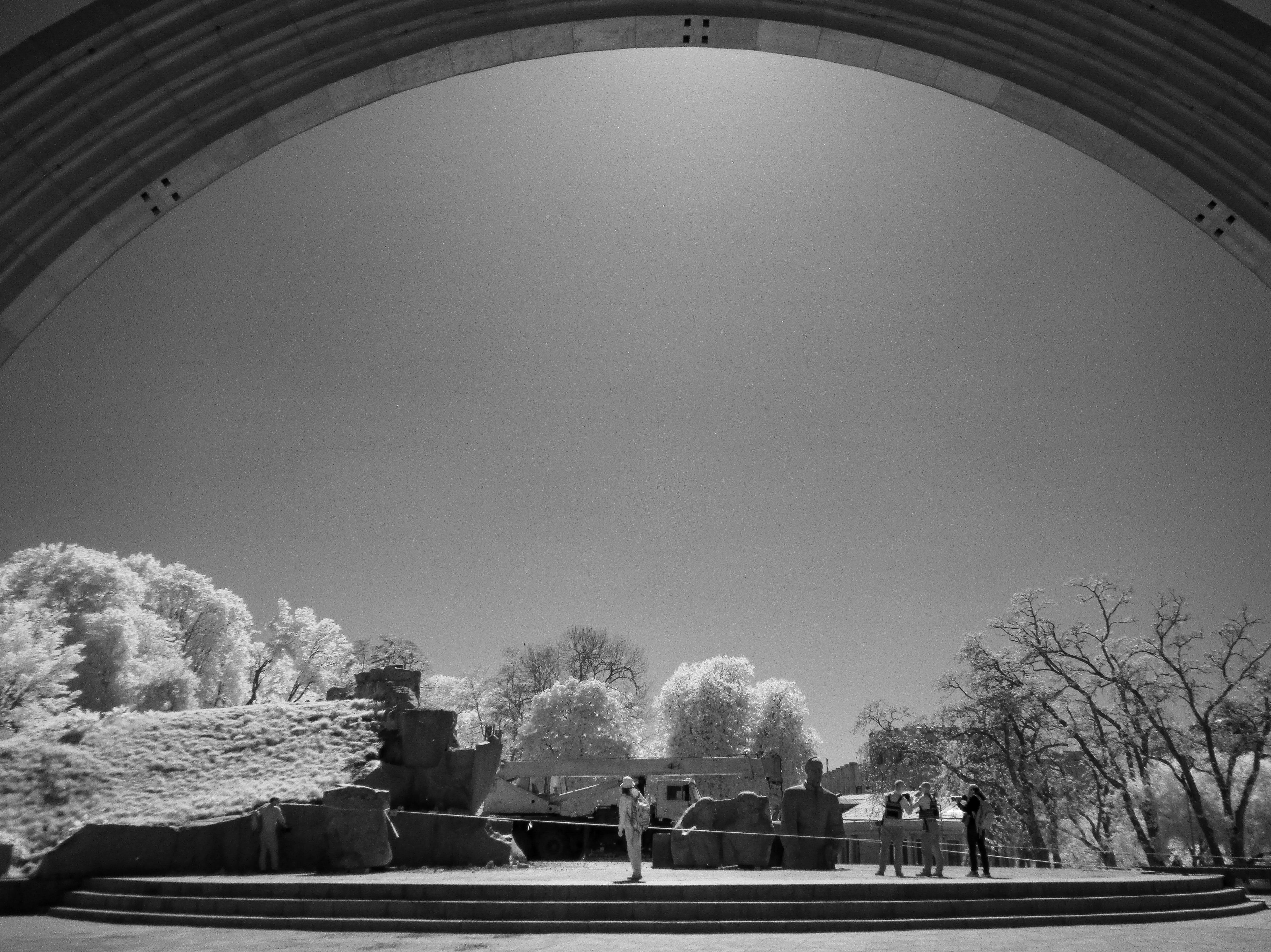
This article, was originally just going to be about this historical moment: the Pereyaslav agreement and the removal of the monument. But I soon found myself deeper and deeper in the rabbit hole of Ukrainian history. Devouring books, articles, and theories, I soon realized that my original scope for this project was painfully small. In fact, I am currently on page eleven of this and am only sparing you more out of the knowledge that most may not get this far.
Many Ukrainian leaders of old had declared the Pereyaslav Agreements broken by the Muscovites (and the Muscovites did very much break the very foundations of the agreements), from Khmelnysky himself to Mazepa in 1708. If there is one thing drowning myself in the flood of Ukrainian history this past month has taught me, it is that Ukraine has always fought for its freedom. Against the Russians/Soviets/Muscovites they fight In spite of being often alone, betrayed by allies they had, or just discounted by the rest of the wider world. They fight on. It is not something to wonder about why Ukrainians of today are wary of support for their defense drying up or their military aid being delayed by those who see Moscow and the Putin regime as something to aspire towards. The Ukrainians of the late 1990s and early 2000s put their trust in the greater international community. They handed over their nuclear stockpile and largely disarmed, and for a decade now, we have failed them.
So while taking down this monument in Kyiv will win no battles, arm no troops, and it is not going to be considered anywhere such a monumental moment as the signing of the Pereyaslav Agreement. To be looking death in the eye and choosing to spit in it. Something about that feels very Ukrainian to me.
Sources
Article referencing the pressure on the Yeltsin administration
Kyiv Independent reporting on a Russian poll showing 77% of Russians support war.
Timothy Snyder - The Reconstruction of Nations: Poland, Ukraine, Lithuania, Belarus [Full Book]
Amelia M. Glaser - Bohdan Khmelnytsky as Protagonist: Between Hero and Villain [Intro]
Article on Banning Ukrainian language in Russian occupied territories
Stealing History: How Moscovia is stealing Ukraine’s history