

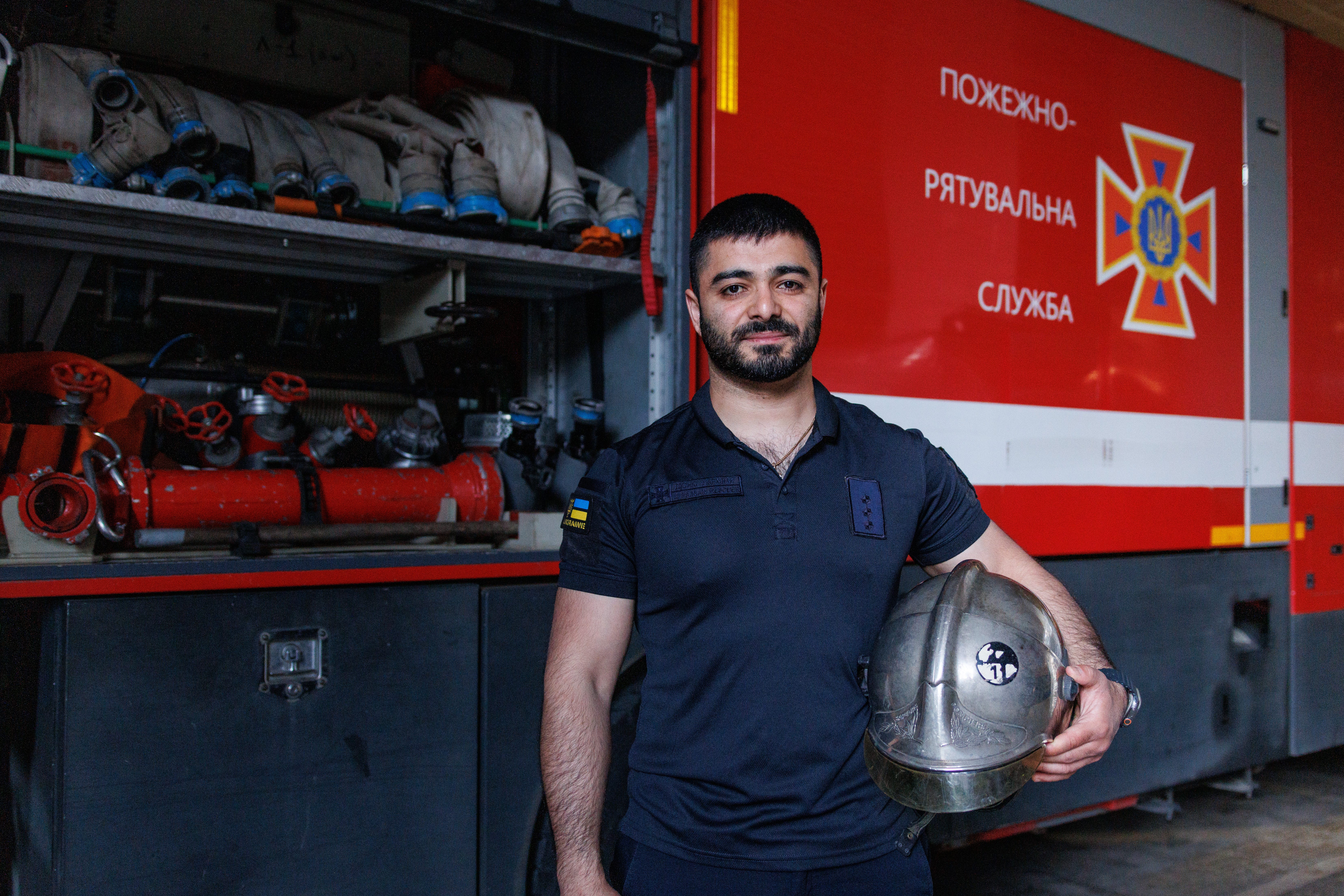
Prior to the Russian full-scale invasion of 2022, DSNS firefighters, rescue workers, and the state emergency services as a whole were just not taken seriously. The State Emergency Services lingered in limbo after the 2003 reforms that removed firefighters from being considered Ukrainian Army reservists. “The State Emergency Service today has become a completely different structure during the war compared to before,” said Bohdan Hladkykh, Director of the Department of Emergency Situations. During the full-scale invasion, Kharkiv updated nearly all of its firefighting equipment and saw to it that rescue workers, whose salary was previously 10,000 UAH (roughly $245), had it increased. Bohdan continued, “The fact that the State saw the real need for serious reform to get to the European standard in Ukraine is very good.”
In this three-part series I will be showing multiple perspectives and responses to airstrikes from those of civilians on the ground, journalists reporting on strikes, the DSNS firefighters who have faced frontline conditions, and even exclusive access inside the Kharkiv command and coordination center.
Today is the experience of one firefighter operating on the frontline of Kharkiv’s most destroyed district of Saltivka. These are not the stories of saving kittens from trees but the harsh reality of identifying the charred-to-ashes bodies of women and children, working under the threat of artillery, and risking it all to save someone.
When they arrived
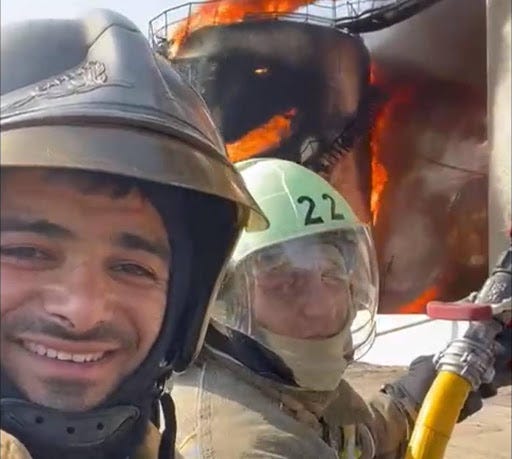
Turgut Asif-Ogku Abbasov is a Ukrainian-Azerbaijani firefighter, the head of the crew for the 22nd fire and rescue unit in the Saltivka district of Kharkiv. Prior to the Russian full-scale invasion of 2022, nearly half a million people lived in this district with a thriving community, but within the opening week of 2022, the frontline had pushed to the gate of Kharkiv, and thus Saltivka became a battlefield. Turgut would tell me, “Well, at times me and my crew question ourselves on how we even managed to survive that year (2022). Because now it’s already the third year of war, and we pretty much have all the data about MLRS launches, missile launches, etc. Back then, there were no drones. Back then there were no alerts. No one warned us; we didn’t know if something was flying our way or not.”
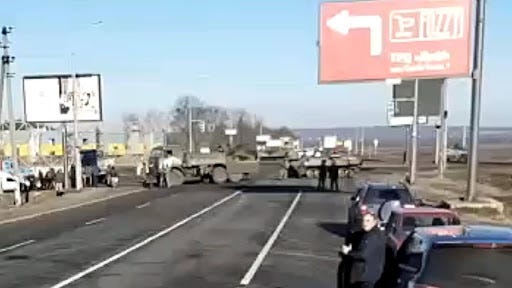
On February 24th, at 6:30 in the morning, on the first day of the full-scale invasion, Turgut’s team got a dispatch to head to the nearby village of Bobrivka. While returning to Kharkiv, they were stopped at the main crossroads just outside of the Saltivka District by an armored column of Russians preparing to assault the city. Caught behind Russian lines, they saw the mass exodus of people trying to get through, trying to escape the war zone that they had woken up in. Approaching the Russians, Turgut would demand that his fire crew be allowed through to return to their firehouse. He said, “I didn’t yet understand the full seriousness of the situation. I was still a bit like, “So what are we supposed to do? Just stand here?” I wouldn’t have spoken to them like that today, knowing what they are. But back then it wasn’t clear who they were, what they could do. That stuff happened in Donetsk and Luhansk. But we hadn’t seen it firsthand.”
Staging an escape, Turgut and his men would route their bright red fire trucks through fields and tree lines to smuggle themselves past the Russian blockade and back to their station unharmed. A column of smoke rose from the direction they had escaped from. Urban warfare had started, a street battle not far from the main crossroads. The gates of Saltivka had become the frontline.
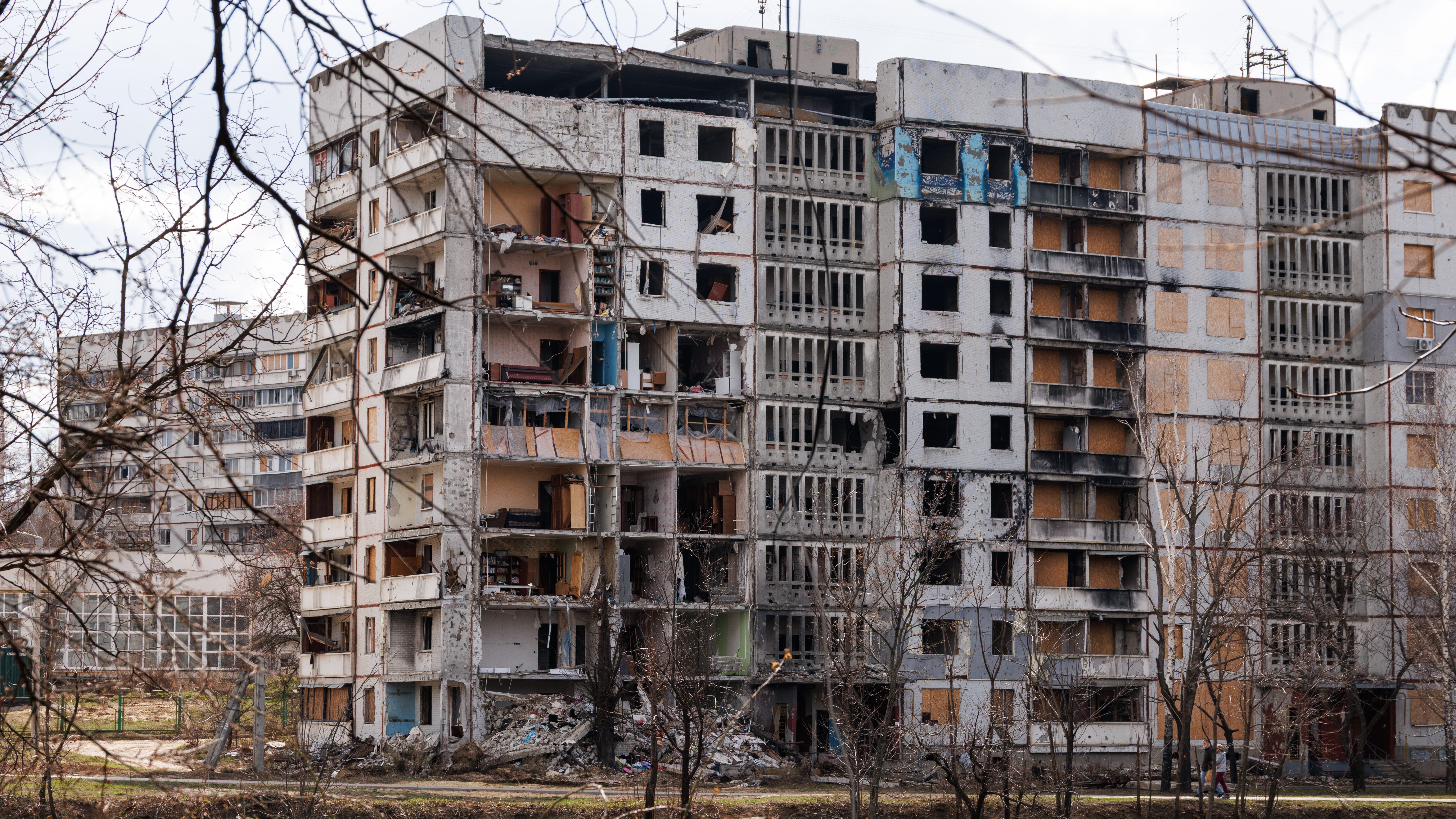
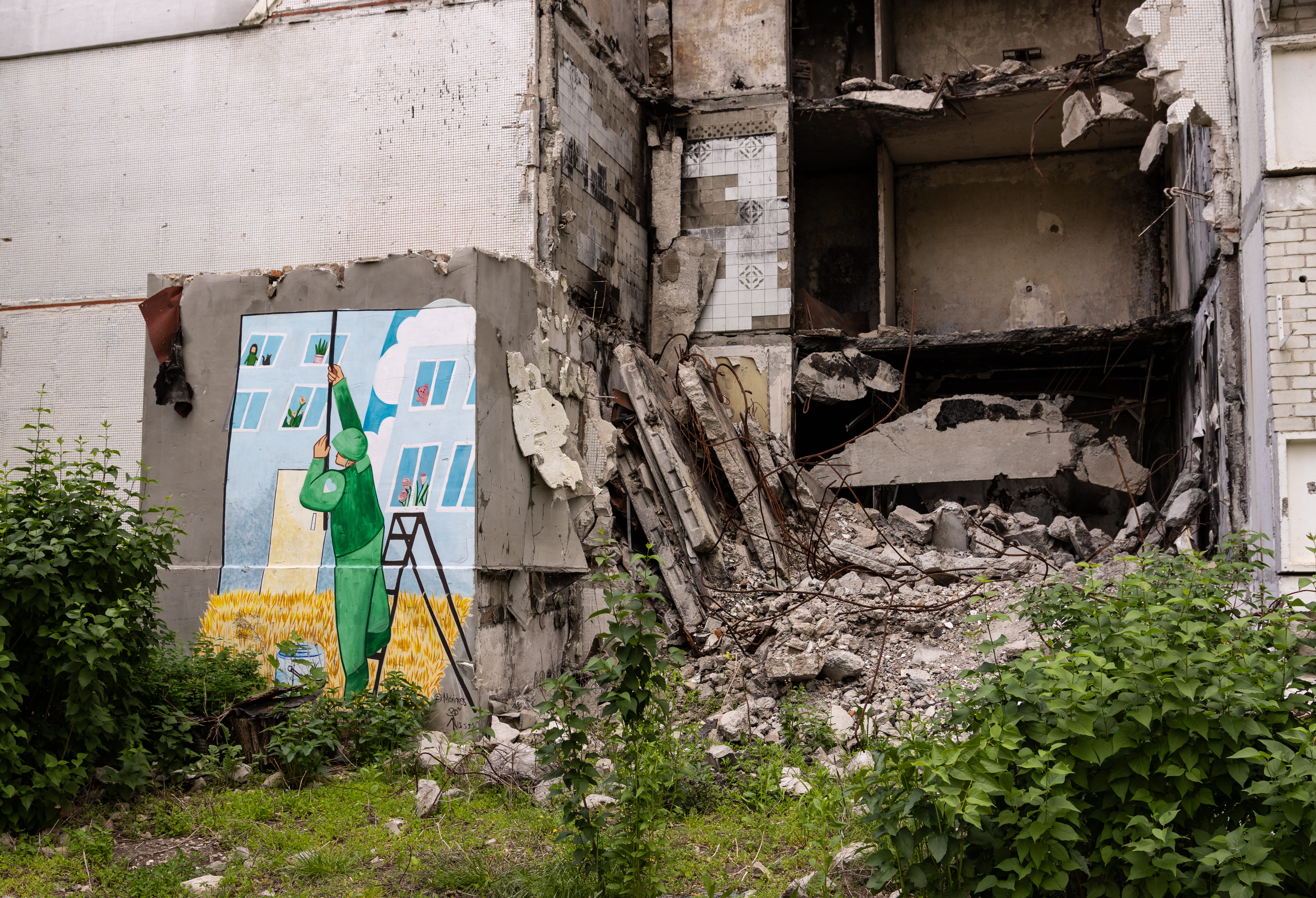
Though Russians would be held off from taking Kharkiv, the threat of MLRS, artillery fire, and tank rounds persisted until the late 2022 counteroffensive that liberated the vast majority of Kharkiv Oblast—though attacks from missiles, aerial bombs, and drones on civilian infrastructure still happen to this day. It was during this time, before the Kharkiv counteroffensive, that Saltivka would be slowly killed by the Russian attempt to take the city. High-rises were bombed out, many were killed, and the equivalent population to the State of Wyoming was forced to evacuate or bunker in place as their homes, businesses, and community were turned to rubble.
Turgut recalled “starting on the 26th, the first call to a high-rise building. The stairwell was damaged, and people couldn’t evacuate. Stairs—gone, elevator—gone. Our training, like rescue drills and knot tying for rescue loops, was all put into practice right there. Grad missiles were incoming; it all happened so fast.” He would tell me many stories he has from this time. They worked directly under artillery fire and close enough to the frontline that Turgut and his men learned the distinct sounds of outgoing Russian artillery fire and the experience of the incoming round just being seconds away. Turgut added, “We kept working, and at one point, the whole building just shook. When I came out, I saw—we were working in the third stairwell, and the strike landed in the fifth, just one or two entrances over. That was at the very beginning. It was brutal, because we weren’t prepared for war—we weren’t prepared.”
-the strike on Heroiv Pratsi Street-
“The scenes were just terrifying. The destruction went from the 4th to the 1st floor. Everything was burning inside. Everything was burning outside. Cars were on fire. It was like a mini-apocalypse.” This was the scene of an attack by a KAB aerial glide bomb, as described to me by Turgut. In 2024 KAB bombs became the Russians’ preferred way of attacking Kharkiv—particularly districts in the northern part of the city. Old Soviet stockpiles meant that these were a cheap and easy way to strike terror into the citizens of Kharkiv in a way that Ukrainian forces hadn’t yet figured out a counter to. With U.S. restrictions on American weapons striking “deep” within Russia, the bomber jets firing them could operate in safety. With sometimes fifteen or more KAB strikes a day, they were just another way to kill and terrorize a city that would not submit to the Russians.
Chaos was everywhere when Turgut arrived on the scene. “In such situations, the most important thing is not to lose control.” He would tell me. Masses of people had gathered and all looked towards the emergency responders to solve every issue instantly. There were so many civilians on the site that the fire trucks could not get through to the site of the fire, and Turgut had to run over 900 feet (300 meters) to the site of the fire. “People running up to me and crying out, ‘My child’s there,’ ‘My mom’s there,’ ‘My dad’s there,’ ‘Please help,’ and I’m basically alone.” Arriving in two trucks, there were only a total of eight people there on site, with two more teams arriving later. The trucks could not get past the narrow yard passages, so Turgut ordered his crew to grab hand tools and run to the fire. He said, “Let the cars burn outside. Because the top priority is to break down all doors and evacuate people.”
After they believed that they had rescued all those on site, Turgut grabbed a flashlight and began his last sweep of the area to make sure all those who needed help got it. “I couldn’t go in at first. Because the heating system was damaged and boiling water was pouring out. But I had to go in regardless because I had to check if anyone was still there. So I went in, with boiling water pouring down on me.” Braving this, Turgut started to shine his light around; he saw a woman at least two floors below, eyes staring back at him, not making a sound—but she was alive.
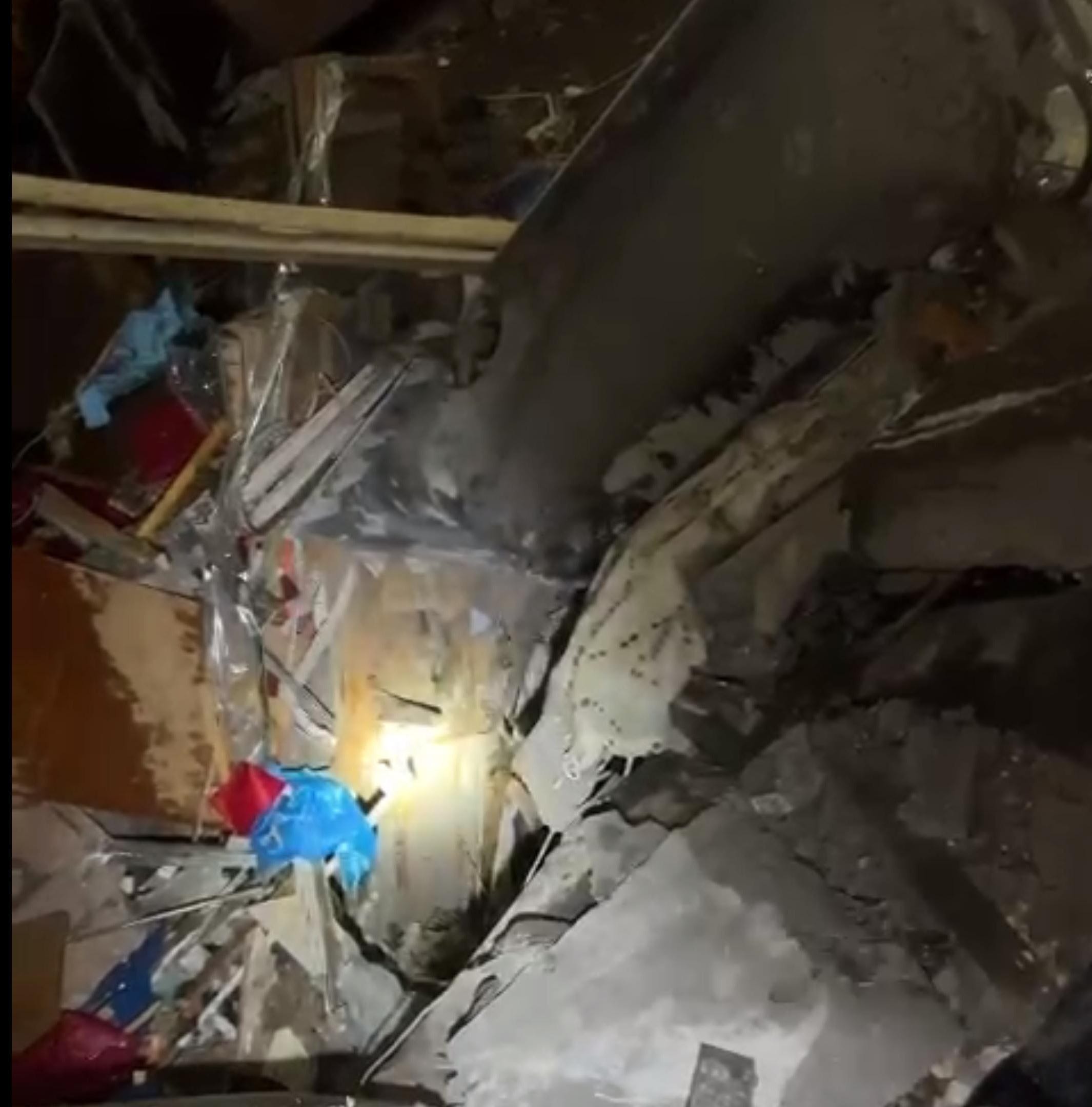
The woman was trapped under concrete slabs and rubble, and hanging above her were an old cast-iron bathtub and a block of concrete, both holding on by wires. There was only a small space around her, barely able to fit Turgut, her body twisted and in shock, but she was alive and in need of help. “There was a staff officer standing behind me. He said, “Turgut, what are you going to do?” “Well, I can’t just leave her like that; I can’t wait for the others to come. I’m going down there. Stay behind me and keep the light on that bathtub. If that tub falls, I’ll die with her.”
He could barely fit himself in this cramped position, but he started to move the stones and scoop rubble off of her. He felt as if he was making progress and that something was working. Men from the fire unit worked to try and clear rubble from the floor above and clear a tunnel to get to Turgut and this woman. He describes this as another moment in his life where he almost lost control. Panic had set in. “I had to pull her out. She was alive. I don’t know; maybe if she hadn’t been alive, I wouldn’t have had this kind of drive to get her out. Wouldn’t have been there, maybe. But I had to get her out. I start digging, digging, digging,” he told me. She was lying there in silence as he worked to free her arm and shoulders, but she was fully limp, a dead weight, and even with his impressive strength, he could not move her an inch.
Eventually forced to stop digging as exhaustion set in, he realized that his strength had left him. “I can’t do anything; I simply can’t,” he said. “At one point I just started hitting the slab, and I began screaming in desperate rage. And honestly, I didn’t know what to do. I sat down and just started wiping away the snot, tears, and drool. And I told myself, “Fuck it, Turgut, get it together. You have to do this.” So I started again, stone by stone, stone by stone.” His persistence paid off as his crew opened a tunnel, and they were able to make their way in to help him. With slabs of concrete hanging above them, they were able to pull her free.
Once the woman was free and with the medical team, Turgut took to the street, removed his mask, and sat down. Director Bohdan Hladkykh was walking by and told him, “Good job, Turgut.” “Those words, man, it was like a wave of strength hit me. I sat down, and I felt such relief.” Turgut said with pride.
He hadn’t known it at the time, but that woman that he saved from the rubble, Tanya, was an ambulance driver and close friend of the wife of a driver of his fire crew. Tanya’s husband later came to the fire station and hugged Turgut for his actions but informed him that while Tanya was saved, they had lost their son in the attack.
That speaker saved us
When asking about the morale of the crew, Turgut would choose to tell me about a loudspeaker that a store owner had gifted to him: “Honestly, every time we went to those fires, I don’t know about how others do it, but everyone always wanted to be on duty with my crew. Because our team was just so wild. When we went to places like Tsyrkuny or Northern Saltivka, we were rolling.” His crew went out in a positive mood, music blaring through a city that was empty, nothing working, only those remaining who could not leave, and filled with military positions. Laughing, he said, “Just imagine the scene: I’m driving down Heroiv Pratsi, and there were checkpoints every 300 meters. I blast “Vova, Fuck Them Up Blyat” on the loudspeaker, music blasting. Soldiers showing us thumbs up. We were in such high spirits, I’m telling you. That speaker saved us mentally.”
They would drive past tractors, local farmers, and people would come out to see them. Turgut said, “I’d throw on ‘Glory to Ukraine!’ through the speaker.” And everyone would turn around and go, “Glory to the heroes! We had fun. Never once were we down or afraid heading to a fire, like, “Oh no, what now?” We always went out fueled by adrenaline.”
In the summer of 2022 When the Russians pulled out just a few kilometers away from the northern border of the city, Turgut and his crew would once again start taking emergency calls from the suburbs like those they had gone to back in February, when they then found themselves behind Russian lines. At first the soldiers would not let them into these hot zones but started to understand that this crew was serious. “We’re standing there, waiting, and they go, ‘Are you serious? You really want to go there?’” Well, yeah. Turgut would recall, “These dudes (said), ‘Guys, you’re just, like, mental. How can you just go like that? Much respect to you.” So not only did civilians start loving us, but even the military started to love us.”
The reputation of the firefighters grew immensely during the war as people saw them working and giving their all despite going through hell. “Of course, I wish it hadn’t come at such a cost, through war, for people to realize that firefighters exist. And really work. They really do. And I think I’ll keep working in this field, probably.” You know, dear reader? I do believe him.
Watch our full documentary on the subject of DSNS rescue workers here: