

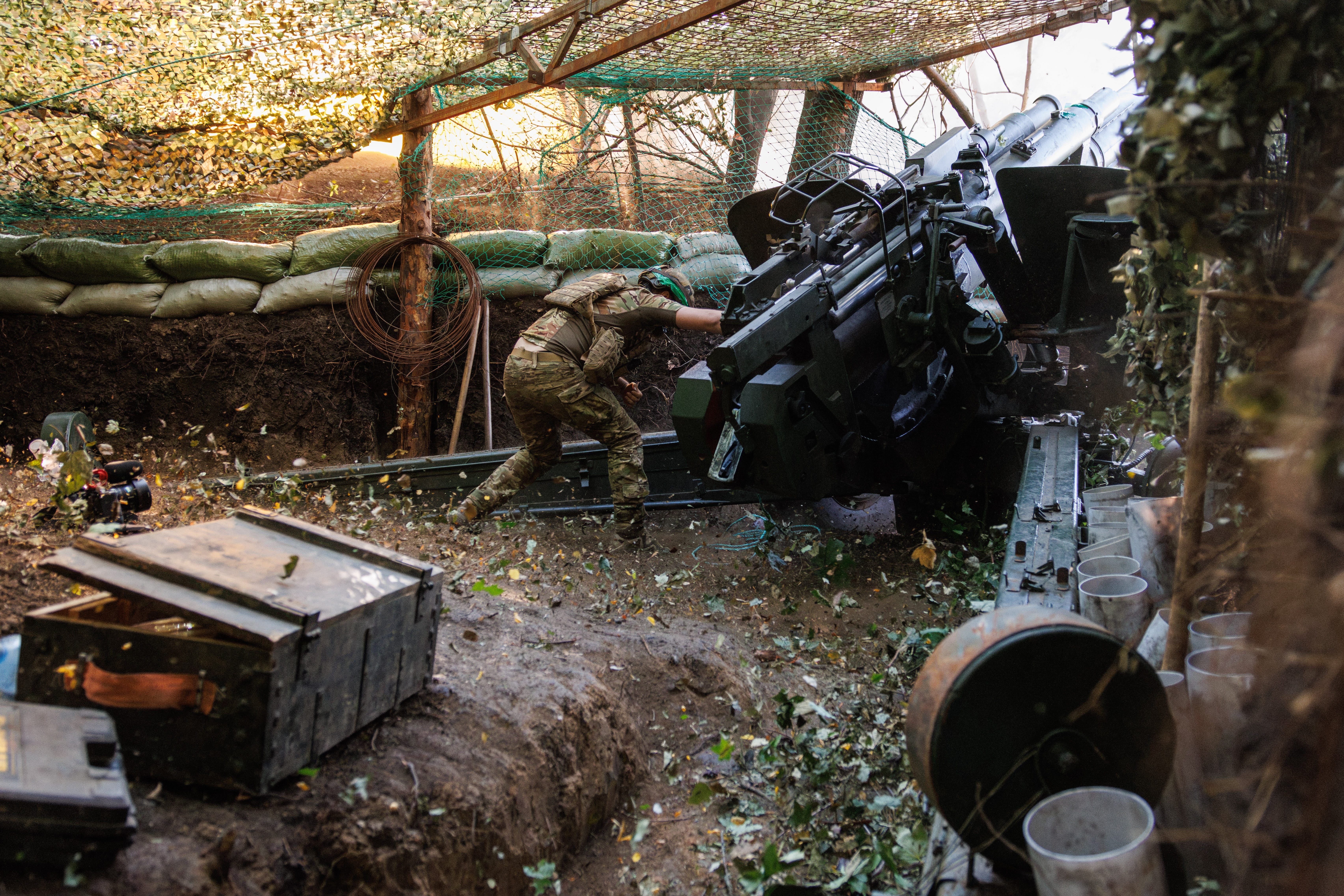
Just outside Dobropillia, the men of the 15th National Guard Brigade “Kara-Dah” are quickly putting on their armor. The situation quickly changed from having tea in the bunker to manning the gun as reports of a Russian advance began to come in. Fire coordinates are radioed in and logged as the team loads their Soviet-designed 2A65 Msta-B artillery gun. Five rounds are shot downrange, the walls of the dug-in gun position shake, and dirt falls into the tunnels that we take cover in. Smoke-filled canisters drop from the artillery gun as another is quickly loaded. All five find their target as we hear “plus” reported back on the radio.
Following the 1st Azov Corps being part of the operation stabilizing the area around Dobropillia in late 2025, National Guard forces have been holding the area here. While Russian forces target Kramatorsk via Kostyantynivka and Lyman, this axis protects the Dnipropetrovsk region, southern Kharkiv, and western Kramatorsk. One of the brigades working to hold off the Russians is the “Kara-Dah” Brigade. I would be joining the “Kara-Dah” Brigade for a day of fieldwork in the town of Bilozers’ke, a town just six kilometers from Dobropillia.
Movement is risky
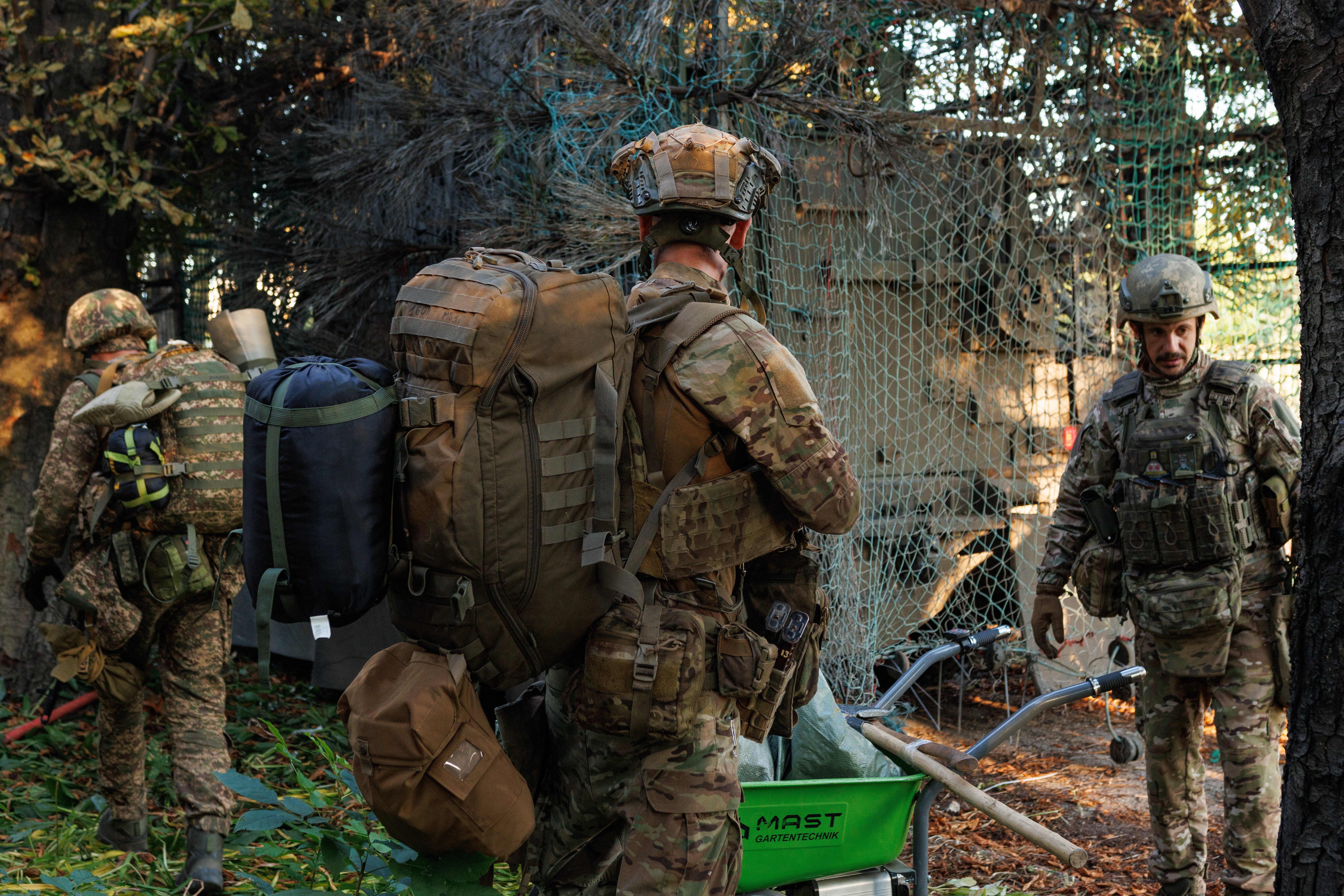
Rotation in and out of position is always the hardest part of any embed. A lot of rotation is done now by foot and with the assistance of electric bikes, scooters, and electric-powered wheelbarrows. An armored vehicle is a risk, and soldiers have often described them to me as “FPV magnets.” Rotating into Dobrapillya, I join Kara-Dah’s 4th battalion as they will be dropped off and hike the rest of the way as we work in the Bilozers’ke area.
The atmosphere is tense as the engine roars and those inside prepare for their mission. Arriving, we are given the order to exit. Two men take up positions with rifles aimed at the sky in search of FPVs as wheelbarrows and backpacks are unloaded. These troops must carry everything they need—sleeping bags, clothes, personal effects, and their equipment. Screeching out of position, the armored vehicle once again roars and bolts as quickly as possible back down the road. We say goodbye to the 4th battalion team and make our way to the center of town.
At first the destruction around us is minimal: broken windows, charred walls, and overgrown grass. However, a different picture appears as we head south. Buildings hit by KAB aerial guide bombs gape open like an abyss, apartment blocks are reduced to a concrete shell, and the buzzing of more drones—sometimes it is difficult to tell if they are Ukrainian or Russian. You feel the isolation of a town filled with people now barren and devoid of most signs of human life. Human life is all around you, with people’s belongings scattered from their apartments due to blasts, looted for survival by those who remain, and old advertisements on shops that once represented these individuals’ entire world.
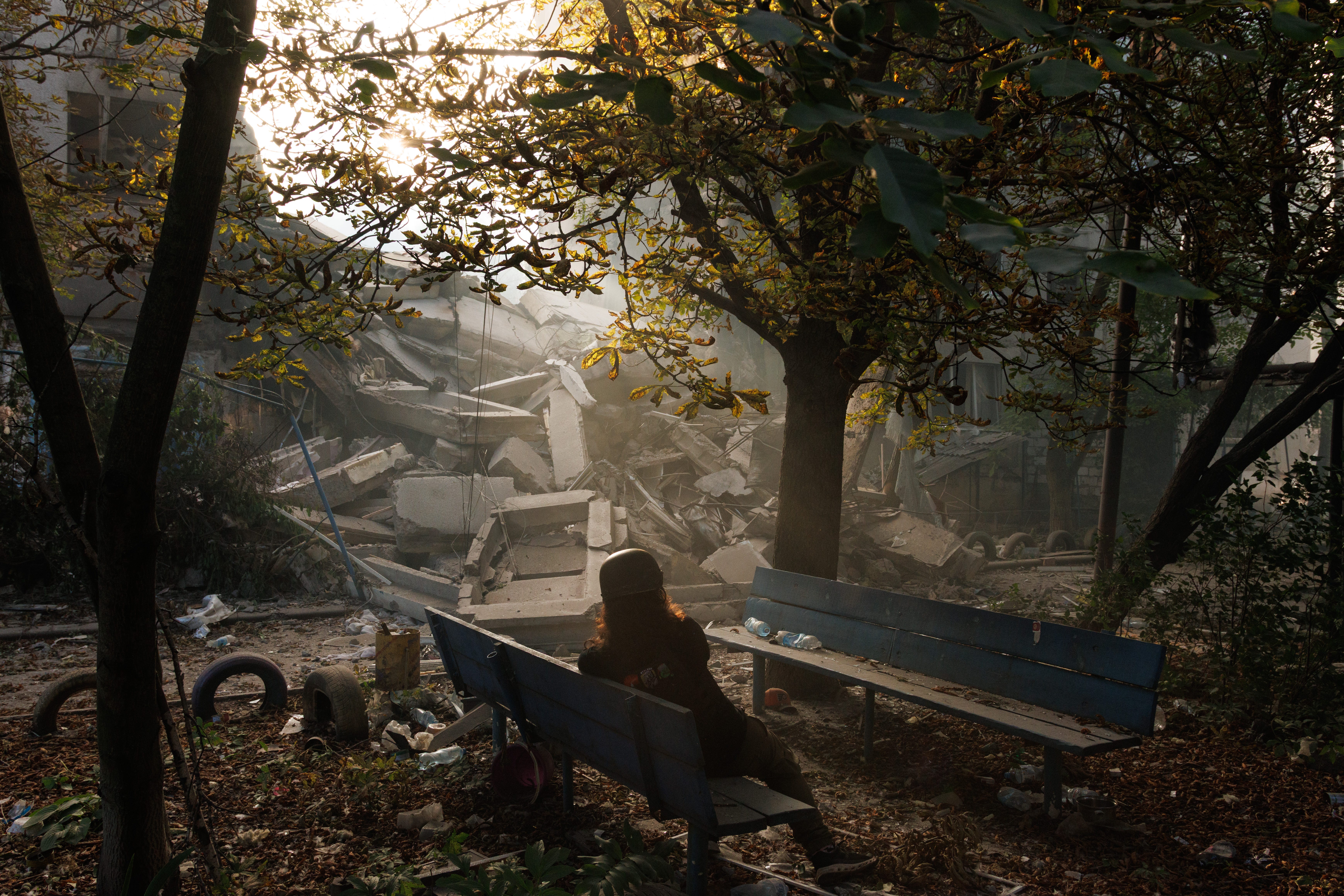
We arrived just after an aerial bomb had been dropped on an apartment block, dust filling the air, fire still raging at the heart of the impact site. The entire middle part of the building collapsed in on itself; this area is the worst of all the destruction in Bilozers’ke. The rare civilian can still be seen either on a bike or on foot; like in every war-torn town, they are mostly in basements and shelters. There are probably a few civilians still left here in this section of the town—either hoping for safer days or awaiting Russian occupation.
We ran into the same soldiers from Kara-Dah’s 4th battalion—the ones we had arrived with—along with an additional unit of men. with an additional unit of men. It’s not a good idea to ever be in one large group, as that makes you quite an enticing target for FPVs and pilots seeking to up their kill count. Sure enough, moments after converging as a group, we take turns running through the section of open field that separates us from the cover we will use to head toward our next position as the familiar buzz of FPV rotors hums to life.
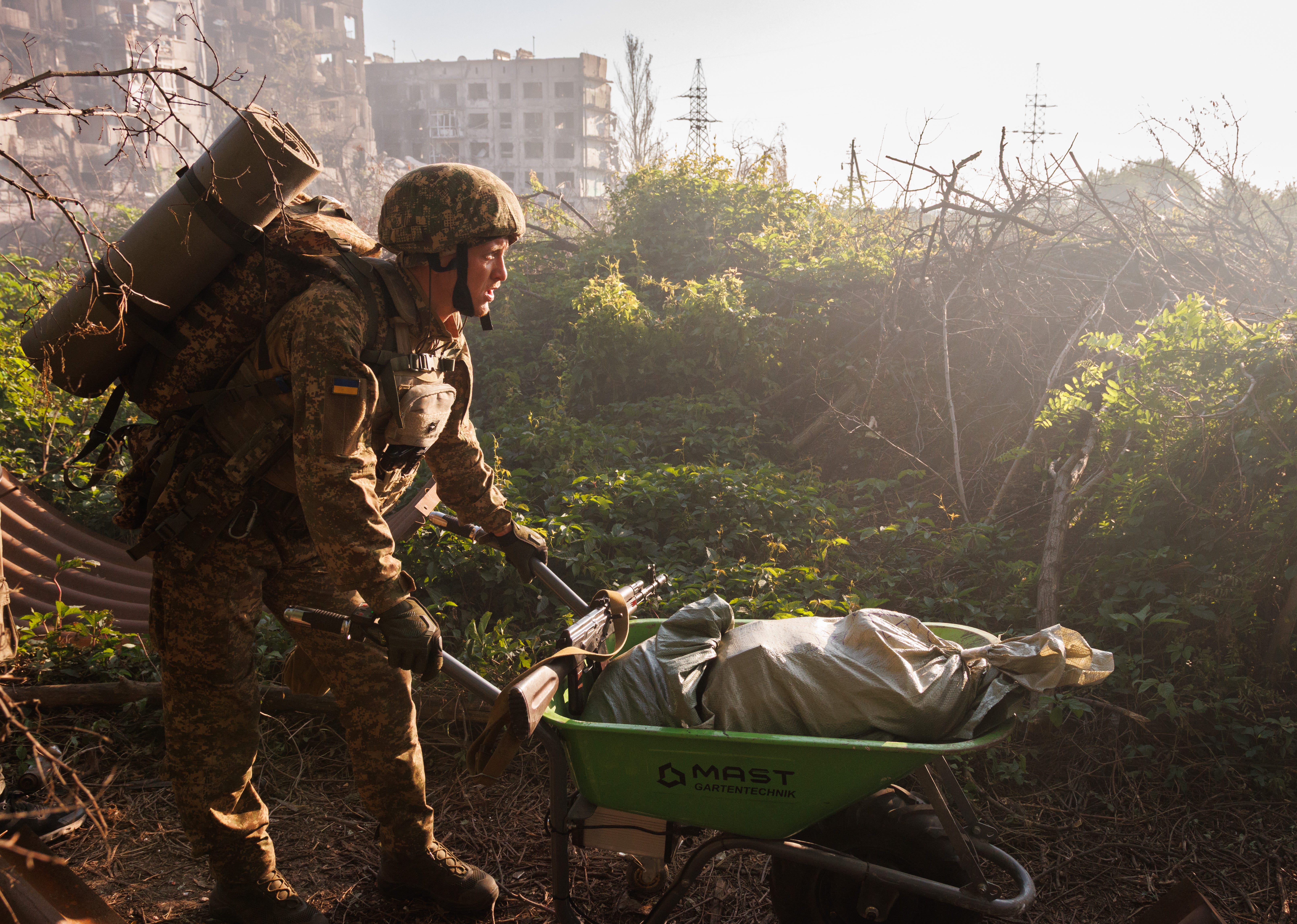
After documenting the work of Kara-Dah’s artillerymen, we soon started to make our way back to Bilozers’ke. After firing five rounds of artillery, drones are sent out to see if they can identify where those shots came from in hopes of doing anti-battery fire and robbing Ukraine of both an artillery spot and a crew. This time was no exception; we heard drones circling above us while we remained in the bunker, only leaving when it appeared that the sky was clear. About midway between our route back and the artillery position, we stop and search the skies.
I was the first one to see an FPV drone barreling down on our position. “Run!” our press officer yells out as we dash into the treeline. It doesn’t matter if it’s roots, twigs, or larger branches—you should put as much distance as possible between yourself and anything the drone could hit. As it approaches us, I dive to get as low to the ground as possible. It flies over us and off to another target—is it Ukrainian or Russian? Would you want to risk being wrong?
“Let Grandpa Show you how it’s done!”
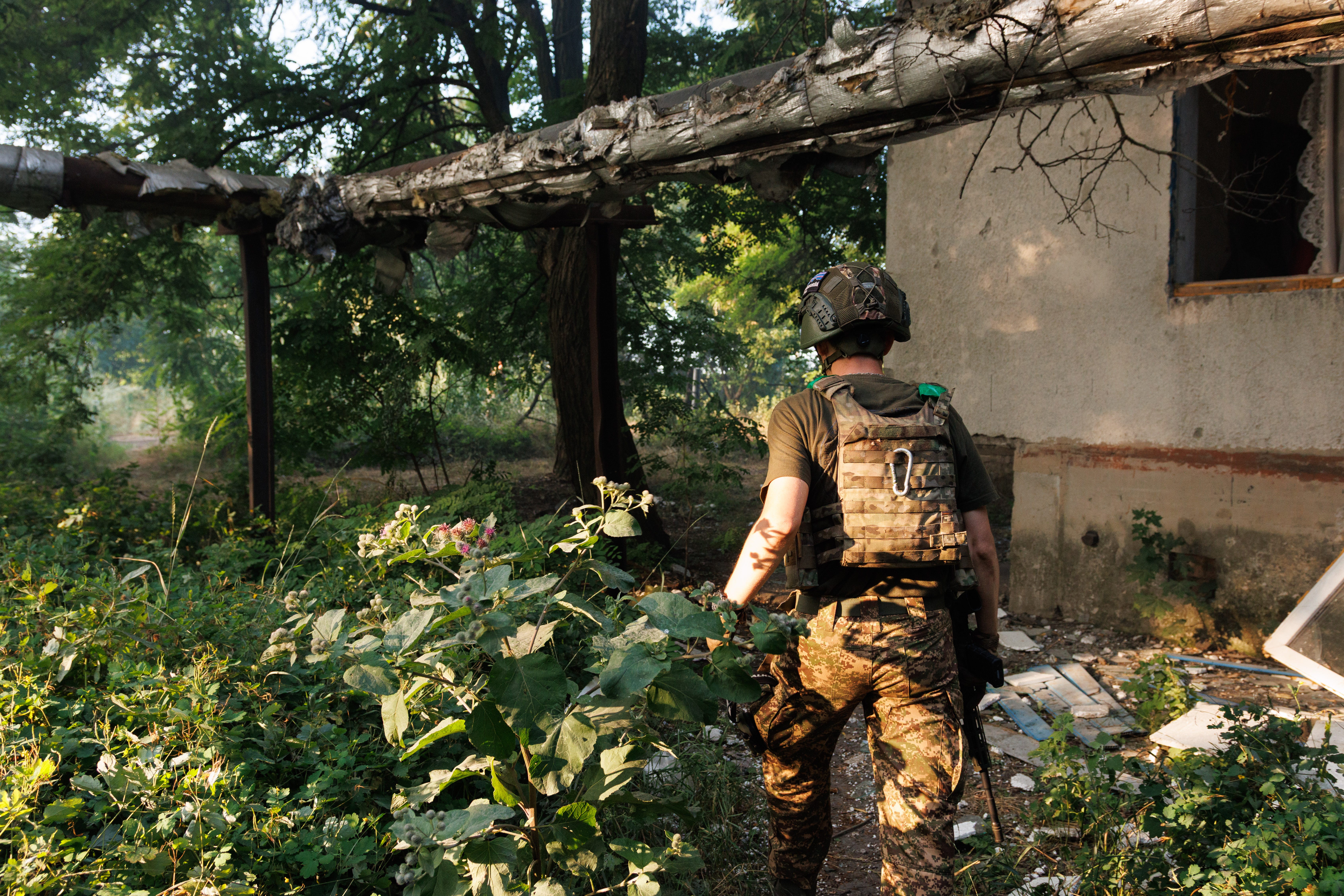
When back in town we join a group of what I have coined as “anti-drone infantry”, though other names such as “micro-PPO” or “counter-UAV” are strong contenders for second and third place. Bilozers’ke is not a frontline in the same way Dobropillia, Druzhkivka, or Kostiantynivka are, but FPV range has grown exponentially in just a year and now threatens the areas that might have been considered “safer” before.
We try to remain under the cover of trees as friendly drones take off around us, those bringing supplies via vampire drones and range-extending drones to boost the friendly FPV range to hit the Russians from angles they don’t expect. One vampire team sends their drone out with a bag of FPV bodies to resupply a seemingly busy position and requests our help for the return trip, as it seems a Russian drone had taken notice of them.
Our anti-drone infantry team starts to fire at the Russian FPV as the vampire team grabs their drone from the field and runs back towards their position further away. The team, however, just can’t hit the drone. That’s when an older soldier comes out with a lit cigarette in his hand. “Bad snipers!” he quips. “Let Grandpa show you how it is done.” Placing the cigarette behind his ear, he flicks his AK into automatic and, with three bursts of shots, knocks down the drone. “Call me if there is more!” he tells the crew before heading back where he came from.
An ATV equipped with a jammer, along with a man on the back holding a shotgun, quickly located us; our team provided cover as they drove through yards and worn-down dirt roads while FPVs pursued them on their return from the mission. In total, the team engaged a dozen or so FPVs while we were with them.
Anti-drone infantry is a position for which you must train your eyes, ears, and marksmanship sharply. You are a shield for many other units and a last line of defense if things go sideways. FPV cameras are not high-resolution, 4K, or detailed-filled image sensors. It is often better if you stand still under tree brush and blend in. With every shot you risk exposing yourself, and those in anti-drone infantry take on that risk to save others. Every drone shot down has the potential to save five men and an armoured vehicle.
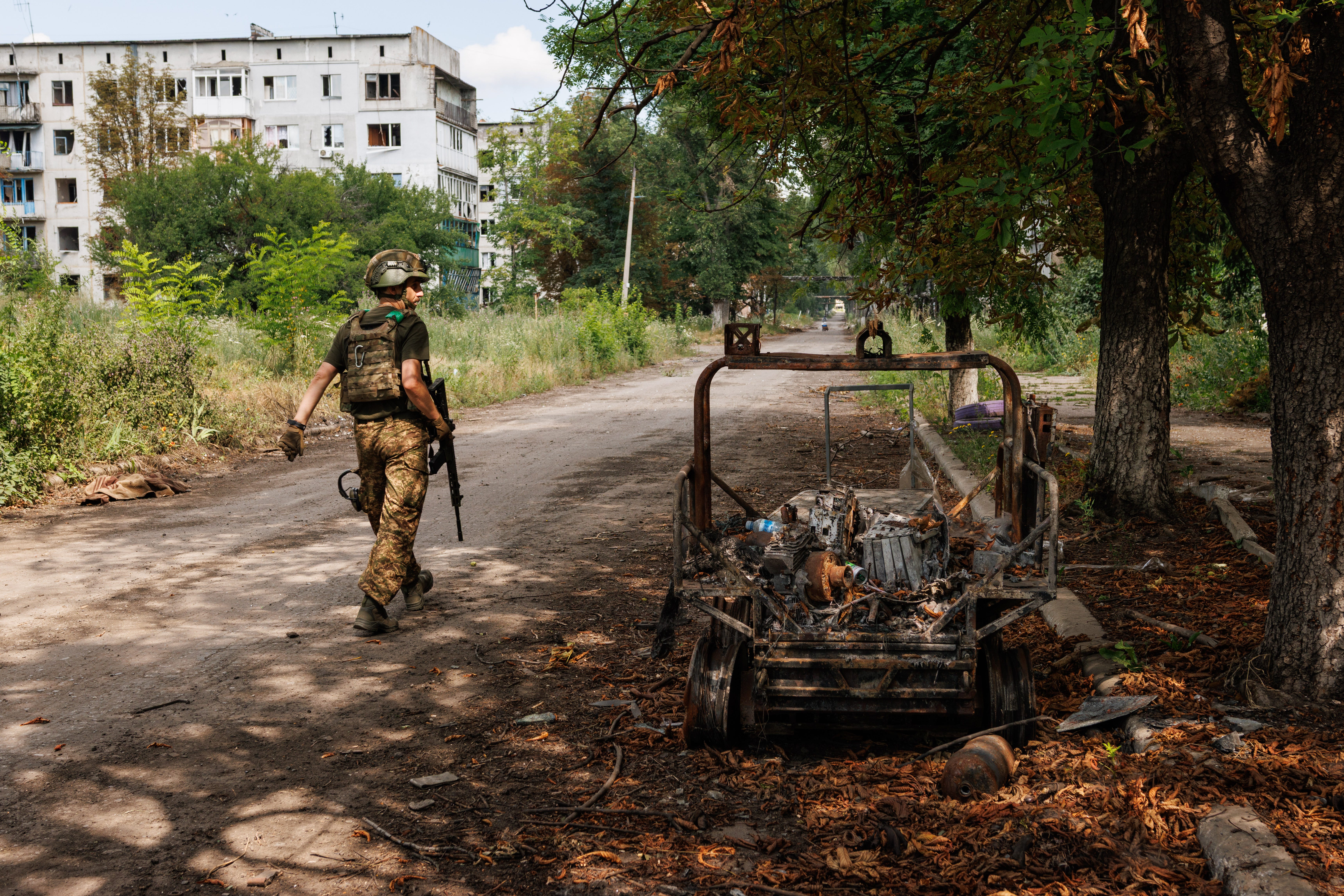
Making our way back to the meetup point, we have arranged for transport out of town – another armoured vehicle. We sprint towards it as it pulls in to offload supplies and troops. Driving through the streets we had walked earlier provides a greater appreciation for the logistical challenges that FPVs have created for soldiers, even in terms of simply coming and going from their positions. ISR, or “Intelligence, Surveillance, and Reconnaissance” drones, can detect you long before you detect them; therefore, lingering in one place for too long or being seen unloading troops may raise Russian suspicions that a position is nearby, potentially leading them to launch an attack.
You can only do your best and take as many precautions as possible.
Backline hunters
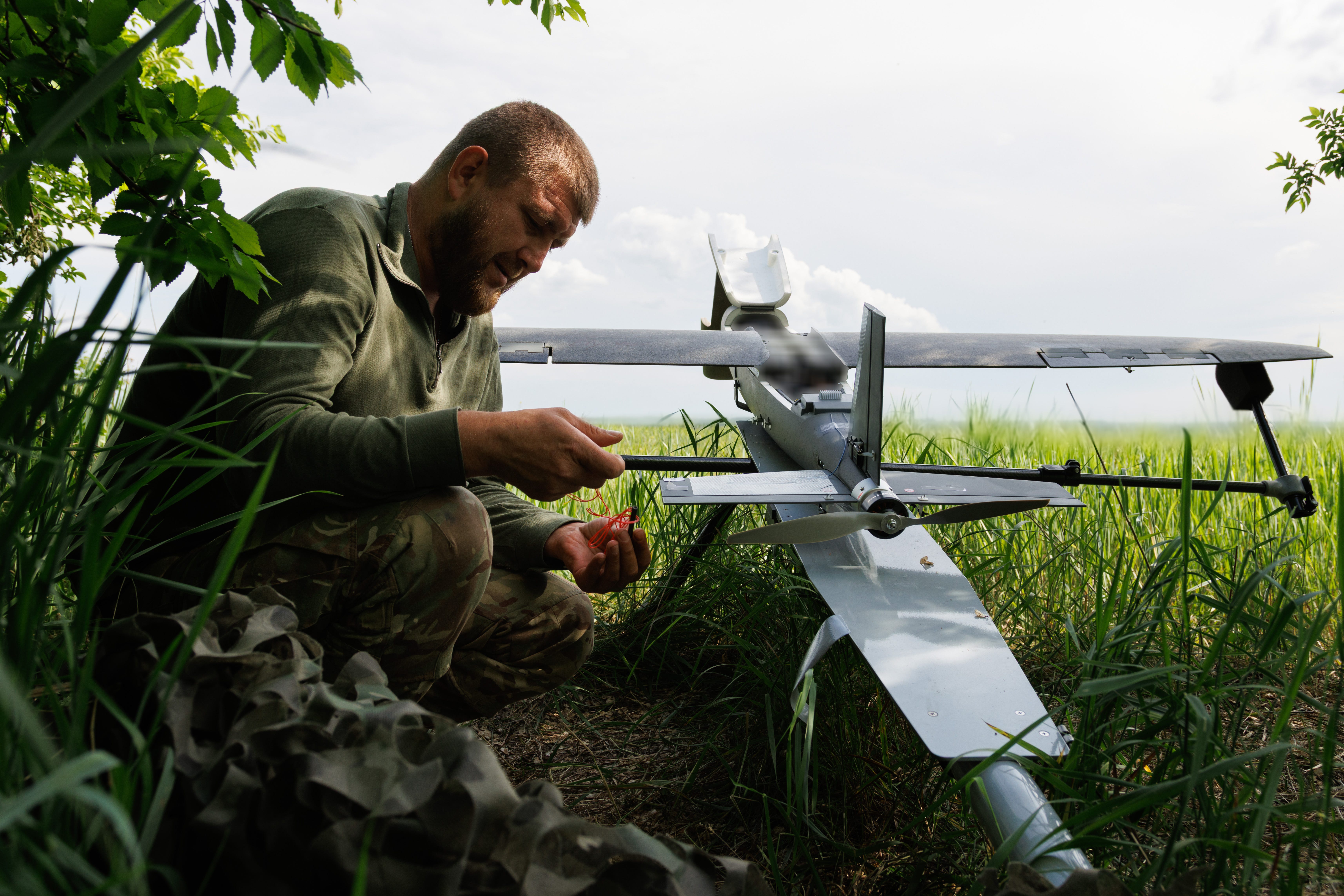
Kara-Dah forces are not just on the defensive—the “ghosts of Khortytsia” battalion are using the Hornet drone for midrange strikes to hunt Russian logistics in hopes of choking the lifeline to the front in this area. Weakening Russian positions and leading to a possible Ukrainian pushback.
When you’re in a war, attacking always comes at a greater cost than defending. Russia has advantages in both manpower and resources to spare for feeding, watering, and supplying their soldiers. Even if they only use these men as meat shields, with less-than-ideal weapons, to try to overwhelm Ukrainian lines, they just have the men to spare. If there was a way to beat them without risking Ukrainian lives and forcing the Russians to either starve or retreat, these drones are the way.
Launching from an air-powered catapult, you might know the Hornet drone from videos published by the 1st Azov Corps highlighting flights over Donetsk and Mariupol. Kara-Dah isn’t able to reach deep past the front like the brigades shown in those videos, though. They are seeking funding to purchase Starlink mobile internet systems to equip these drones, allowing them to fly past an analog signal.
AI powered drones use complex algorithms to search for targets while the team behind the controls guides this drone past the zero line and further into the occupied territory. I saw Pokrovsk for the first time in a year through the lens of this drone. They hunt Russian trucks hauling fuel, supplies, armored vehicles, anything to rob the front of what they need.
The brigade’s name, “Kara-Dah,” comes from a mountain in Crimea of the same name, “Karadah.” I told the commander of the drone position that he might one day be able to fly these drones over Crimea; he chuckled and said, “Maybe.” A week later, a video showing Hornet drones flying over the Crimean peninsula was posted. Kara-Dah still seeks to upgrade their Hornets even with the capabilities of a base model of this drone being impressive.
More than one man, but only possible because of them.
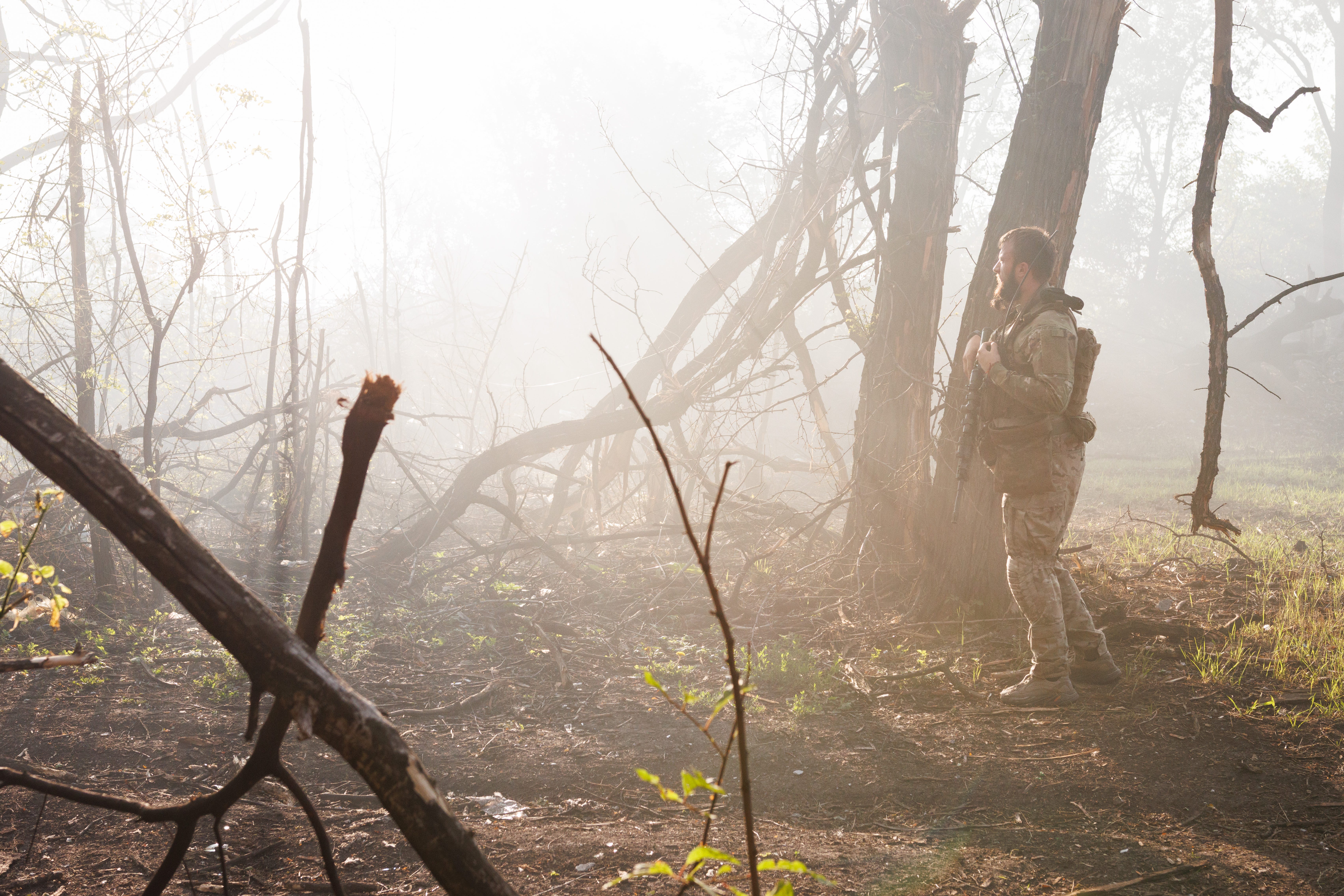
It is impossible to fully impart how these places feel—every movement carries a risk. The buzz of drone wings cutting the air fills you with adrenaline even if you know it’s friendly, and it is constant. For troops, you watch as the town where you are stationed is slowly and systematically destroyed while you hold off the Russian advance. You and your comrades find moments to smoke, laugh, and bring “precious supplies,” such as a fresh bottle of Coca-Cola, between positions when the skies are clear. You rely on each other; those who will draw the attention of FPVs lean on anti-drone infantry. Soldiers closer to the front rely on Vampire drone logistics and midrange strike drones to both maintain supply lines and take away the Russians’ supply lines, respectively.
I see it through the eye of a visitor to places like this. The defense of a town nearly 13 kilometers from the Russian advance is brutal and bloody, and with the encroaching nature of drone technology pushing the zone of risk, or “kill zone,” further back, what a “frontline town” is must be reexamined. Sloviansk and Kramatorsk, the largest free cities in the Donbas, are nearly as close as Bilozers’ke is now, and that area is under a tremendous amount of pressure as Russia throws manpower and a lot of their “elite units” in that direction.
Brigades like Kara-Dah work hard to hold their positions as the Russians slowly advance towards Dobropillia and Bilozers’ke. They work as a machine, each part working off the other for a greater goal.